
By Nelson Santana and Emmanuel Espinal
August 20, 2026
Lea en español: Top 20 dominicanos MLB por WAR: Pedro Martínez
Previous: Many Ramírez Next: Adrián Beltré
This article is part of a special ESENDOM series counting down, day by day, the 20 greatest Dominican baseball players of all time by WAR (Wins Above Replacement), the statistic that measures a player’s overall value to his team. NOTE: The list includes the WAR of baseball players up to the 2025 season, when the Spanish version of the series was published.
WAR (Wins Above Replacement) estimates how many additional wins a player contributes compared to a readily available Triple-A replacement who could fill the same roster spot. It has become the gold standard of modern baseball analysis because it combines every aspect of the game—offense, defense, baserunning, and pitching—into a single number, making it easier to distinguish players who truly change the outcome of games from those who simply occupy a roster spot.
The list includes players born in the Dominican Republic, such as Pedro Martínez and Juan Marichal, as well as United States-born players of Dominican heritage, including Alex Rodríguez and Moisés Alou. Through this series, we aim not only to revisit remarkable statistics but also to celebrate the cultural and athletic legacy these players have left on Major League Baseball and Dominican pride.
Pedro Martínez: The Artist Who Tamed the Steroid Era
In Manoguayabo, he learned to pitch with oranges; at Fenway, he turned every pitch into a statement. Pedro Martínez did not simply win games—he changed the vocabulary of dominance. From a prospect considered “too small” to a Cooperstown immortal, his combination of fastball, changeup, and a cold, calculating mind redefined what was possible for a Latino pitcher at the height of baseball’s offensive explosion. In 2004, he helped exorcise Boston’s curse; in 2015, his plaque in Cooperstown cemented his place as a Dominican legend.
Biography
Pedro Jaime Martínez was born on October 25, 1971, in Manoguayabo, Dominican Republic, the fifth of six children in a home made of palm wood and corrugated metal. His father, Pablo Jaime Abreu, worked as a janitor; his mother, Leopoldina Martínez, instilled discipline and pride despite the family’s limited means. With no money for baseballs, Pedro threw oranges; without a mound, he imagined the bottom of the ninth. His older brother, Ramón Martínez, was already making a name for himself in the Dodgers organization and became a bridge, an inspiration, and a model to follow.
Signing and Professional Breakthrough
Martínez signed with the Los Angeles Dodgers as an amateur free agent in 1988. In the minor leagues, he refined the circle changeup that would eventually become his signature pitch. He made his MLB debut with the Dodgers on September 24, 1992, but concerns about his size—5-foot-11—led the organization to view him primarily as a reliever.
His life changed when he was traded to Montreal for Delino DeShields ahead of the 1994 season. With the Expos, Felipe Alou gave him the ball as a starter and the freedom to become Pedro: command, competitive ferocity, and a fastball delivered with surgical precision. In 1997, he produced a masterpiece—17–8, a 1.90 ERA, and 305 strikeouts—and captured his first Cy Young Award.
Boston Peaks and Immortality
In November 1997, Martínez was traded to Boston and signed a record-setting contract for a pitcher at the time. What followed defied logic. His 1999 season—23–4, 2.07 ERA, 313 strikeouts, and the pitching Triple Crown—and his 2000 campaign—18–6, 1.74 ERA, 0.737 WHIP, and a 291 ERA+—rank among the greatest individual pitching seasons ever recorded.
He dominated at Fenway Park—a hitter-friendly ballpark—and against lineups loaded with sluggers at the height of the Steroid Era. Martínez became an eight-time All-Star, won the 1999 All-Star Game MVP Award, and engaged in memorable battles with Roger Clemens.
In 2004, despite physical setbacks, Martínez shut down the St. Louis Cardinals with seven scoreless innings in Game 3 of the World Series, helping Boston end an 86-year championship drought. He then joined the Mets from 2005 through 2008, producing a brilliant first season and another top Cy Young finish, before closing his MLB career with the Phillies in 2009 and returning to the World Series one final time. He officially retired in 2011.
After retirement, Pedro became a television analyst, a special assistant with the Red Sox, and an ambassador for a country that sees in him both a path forward and a source of pride. His legacy extends beyond the mound through his foundation, baseball development efforts, and continued advocacy for younger generations of Dominicans.
Statistics and Legacy
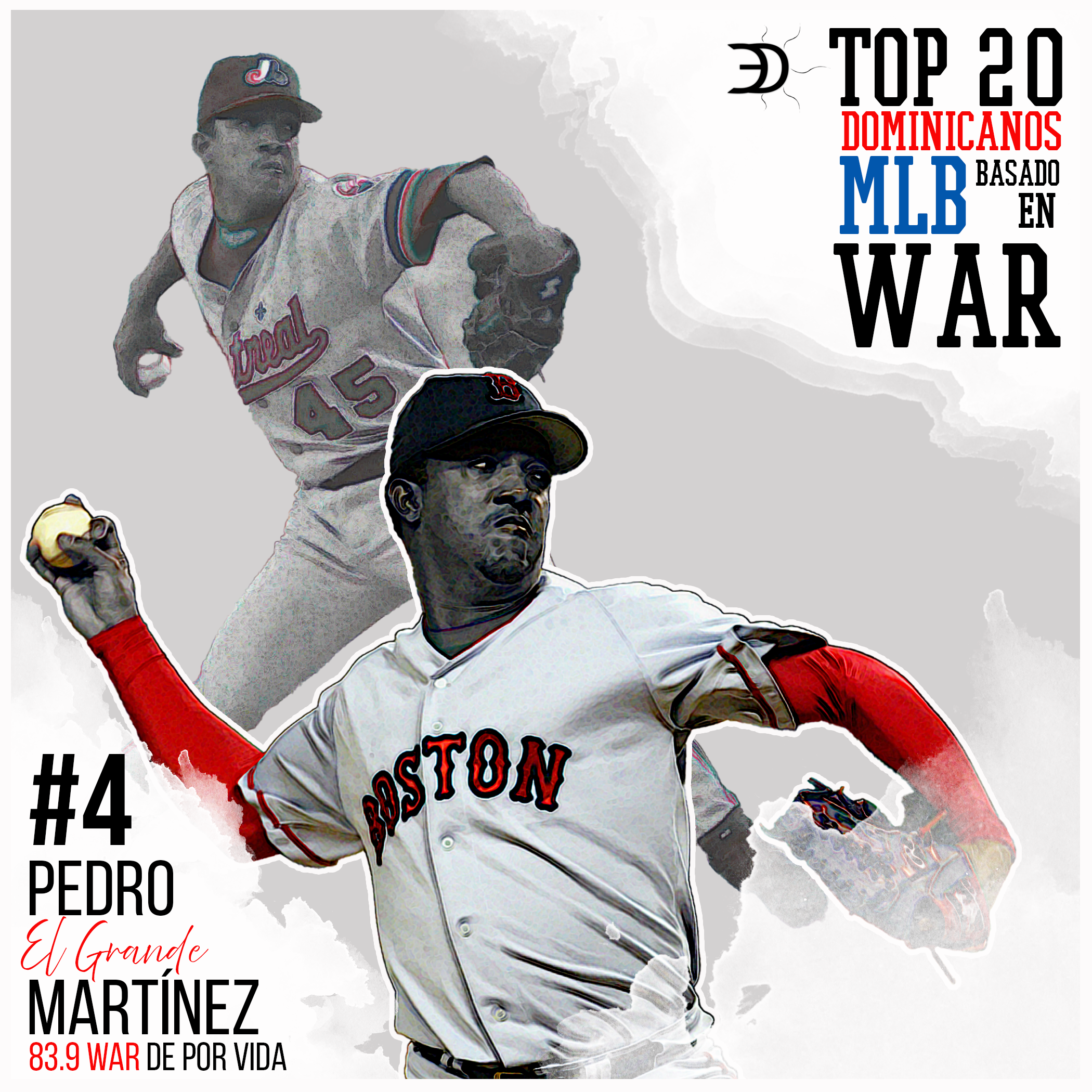
The résumé is staggering: 219–100, a 2.93 ERA, 3,154 strikeouts, and 83.9 career WAR. By WAR, Pedro ranks among the top three players born in the Dominican Republic, behind Albert Pujols and Adrián Beltré, and stands as the country’s all-time leader among pitchers—surpassing even Juan Marichal.
Martínez won three Cy Young Awards—1997 in the National League and 1999 and 2000 in the American League. He led his league in ERA five times, captured the pitching Triple Crown in 1999, won All-Star Game MVP that same year, and became a World Series champion in 2004. Boston retired his No. 45, and in 2015 he entered the Baseball Hall of Fame on the first ballot with 91.1% of the vote, at the time the highest percentage ever received by a Latino pitcher.
The context makes his dominance even more extraordinary. Pedro did it during the Steroid Era, while pitching his home games at Fenway Park—one of baseball’s most hitter-friendly environments—and facing some of the most dangerous offensive lineups of his generation.
From 1997 through 2003, Martínez went 118–36 with a 2.20 ERA, repeatedly leading his league in ERA, winning percentage, and strikeouts. His advanced metrics border on mythical: a 1.39 FIP in 1999, a 0.737 WHIP in 2000, and a 291 ERA+ in 2000, one of the greatest marks of the modern era.
But Pedro was more than numbers. He was theater. There was the 1999 All-Star Game at Fenway, where he struck out a succession of baseball legends; six hitless relief innings against Cleveland despite a back injury in the 1999 ALDS; and epic battles with Clemens that helped define an era.
For the Dominican Republic and its diaspora, Pedro represents shared pride and living proof of what is possible. He demonstrated that physical stature does not determine a player’s ceiling and that a pitcher’s intelligence—sequencing, tempo, deception, and command—can overpower an entire era.
The Pedro Martínez Foundation in Manoguayabo, his baseball development work, and his presence in the media have expanded that legacy. Talent, work ethic, intelligence, and heart: Pedro remains the gold standard for Dominican pitchers dreaming of reaching the Major Leagues.
Conclusion
Pedro Martínez is also an example worth following beyond the mound. His strong Dominican accent is immediately recognizable when he speaks English, but he speaks it confidently. More importantly, the intellectual depth with which he now analyzes baseball reflects an art cultivated over decades as a student and master of the game.
Pedro was artistry with an edge: the changeup that seemed to stop in midair, the fastball delivered to an exact destination, the competitor who smiled under maximum pressure. From a child throwing oranges to the master of Fenway, he transformed doubts into ovations and records into enduring lessons.
For any young player standing on a dirt field dreaming of something bigger, look at Pedro. It is not only about throwing hard. It is about thinking, creating, and believing until the impossible becomes routine.
Related:
Top 20 Dominican MLB Players by WAR: George Bell
Top 20 Dominican MLB Players by WAR: Moisés Alou
Top 20 Dominican MLB Players by WAR: Nelson Cruz
Top 20 Dominican MLB Players by WAR: Felipe Alou
Top 20 Dominican MLB Players by WAR: Juan Soto
Top 20 Dominican MLB Players by WAR: Julio Franco
Top 20 Dominican MLB Players by WAR: Tony Fernández
Top 20 Dominican MLB Players by WAR: Bartolo Colón
Top 20 Dominican MLB Players by WAR: Miguel Tejada
Top 20 Dominican MLB Players by WAR: César Cedeño
Top 20 Dominican MLB Players by WAR: David Ortiz
Top 20 Dominican MLB Players by WAR: José Ramírez
Top 20 Dominican MLB Players by WAR: Sammy Sosa
Top 20 Dominican MLB Players by WAR: Vladimir Guerrero
Top 20 Dominican MLB Players by WAR: Manny Machado
Top 20 Dominican MLB Players by WAR: Juan Marichal
Top 20 Dominican MLB Players by WAR: Robinson Canó
Top 20 Dominican MLB Players by WAR: Manny Ramírez
Top 20 Dominican MLB Players by WAR: Pedro Martínez
Top 20 Dominican MLB Players by WAR: Adrián Beltré
Top 20 dominicanos MLB por WAR: George Bell
Top 20 dominicanos MLB por WAR: Moisés Alou
Top 20 dominicanos MLB por WAR: Nelson Cruz
Top 20 dominicanos MLB por WAR: Felipe Alou
Top 20 dominicanos MLB por WAR: Juan Soto
Top 20 dominicanos MLB por WAR: Julio Franco
Top 20 dominicanos MLB por WAR: Tony Fernández
Top 20 dominicanos MLB por WAR: Bartolo Colón
Top 20 dominicanos MLB por WAR: Miguel Tejada
Top 20 dominicanos MLB por WAR: César Cedeño
Top 20 dominicanos MLB por WAR: David Ortiz
Top 20 dominicanos MLB por WAR: José Ramírez
Top 20 dominicanos MLB por WAR: Sammy Sosa
Top 20 dominicanos MLB por WAR: Vladimir Guerrero
Top 20 dominicanos MLB por WAR: Manny Machado
Top 20 dominicanos MLB por WAR: Juan Marichal
Top 20 dominicanos MLB por WAR: Robinson Canó
Top 20 dominicanos MLB por WAR: Manny Ramírez
Top 20 dominicanos MLB por WAR: Pedro Martínez
Top 20 dominicanos MLB por WAR: Adrián Beltré