
By Mercedita "Mecho" P. Marte
December 4, 2025
Lea en español: Stephora Anne-Mircie Joseph: racismo estructural, negligencia institucional y la urgencia de justicia
The death of Stephora Anne-Mircie Joseph, an 11-year-old Haitian girl and honor student, during a school trip organized by the Leonardo Da Vinci Institute, exposes the critical intersection between anti-Haitian racism, school violence, and systemic failures in child protection in the Dominican Republic. Her family faces a lack of transparency in the investigation and delays in the release of evidence, even as information emerges about the racist harassment she suffered at the school.
The passing of Stephora Anne-Mircie Joseph on November 14, 2024, at Hacienda Los Caballos in Gurabo goes beyond an individualized narrative of an “accidental tragedy.” This case functions as a forensic analysis of how institutional racism, educational negligence, and violence against racialized children operate in spaces that should guarantee their safety.
Institutional Failures and Investigative Opacity
From the perspective of due process, the actions of the Office of the Attorney General raise fundamental questions. Nearly three weeks after the incident, security camera recordings have still not been turned over to the family, despite official commitments. The Ministry of Education confirmed violations of established protocol: the contract specified 87 people, yet only three teachers accompanied the group. The preliminary version of “drowning” contradicts the handling of the case, in which the mother waited for hours at the site without receiving clear information about her daughter’s condition.
This is not a simple “accident,” but rather a chain of institutional decisions that failed to uphold the basic imperative of protecting life.
Racist Violence and Bullying as Structural Background
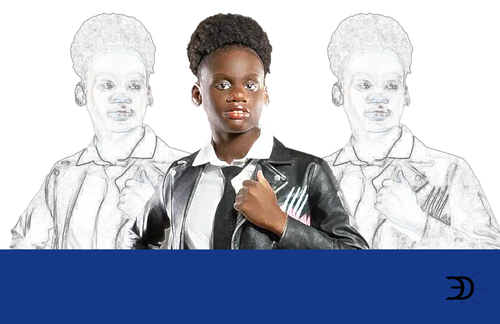
Stephora’s story does not begin at the pool. Her mother recounts that the girl—trilingual, passionate about art and soccer—endured systematic harassment because of her skin color and Haitian origin, with classmates shouting at her “maldita negra, maldita haitiana” (“damned Black girl, damned Haitian”). The girl expressed a desire to change her skin color, which led her family to enroll her in modeling classes to strengthen her self-esteem. There, Stephora delivered a message about equality, affirming that all people are “precious, beautiful, and gorgeous just as they are.”
This contradiction—between a girl who articulates a discourse of equality and a school unable to protect her from harassment—reveals the structural failure of Dominican educational institutions. The classroom reproduces the anti-Haitian rhetoric that permeates public discourse, migration policies, and media criminalization, translating into interpersonal violence among peers.
Racialized Bodies and Hierarchies of Protection
The social response to the case—which includes statements from figures such as Clarissa Molina, human rights organizations, and the involvement of the Haitian consulate—shows a crack in the usual silence. However, this mobilization takes place in a contradictory context: while the State deports Haitian people en masse in the name of national sovereignty, the death of a Haitian girl in a private Dominican school generates cross-border empathy.
From an intersectional feminist epistemology, Stephora’s case forces us to question which children’s lives are considered worthy of protection and which become expendable in the face of bureaucracy, institutional reputation, or the geopolitics of hatred. A Black, Haitian girl—academically outstanding and full of dreams—did not die in a vacuum: she died in a country where Haitian bodies are systematically made vulnerable, and where the voice of a migrant mother faces additional barriers to being heard and validated.
Transformative Justice: Beyond a Closed Case File
Justice for Stephora cannot be reduced to an administrative file. It requires immediate transparency in the investigation, the handover of evidence to the family, sanctions for school and state negligence, and—fundamentally—structural reforms. These must include verifiable safety protocols for extracurricular activities, anti-bullying policies with an anti-racist lens, and an education system that stops reproducing the border inside the classroom.
Attorney General Yeni Berenice Reynoso has ordered that the investigations be strengthened, but justice for Stephora demands that the word “equality,” which she pronounced in life, move beyond a slogan and become verifiable public policy, an everyday anti-racist pedagogy, and effective protection for all children in the Dominican Republic.
⸻⸻
Related
Muertes Civiles in Dominican Republic—Interview with Amarilys Estrella
U.S. Dominicans March in Solidarity of Dominican Haitians
Dominican Republic: Two Intellectuals Issue a Call against Racism
Yamilex Hernández: A Radiant Crown for the Dominican Soul
El significado del 25 de noviembre: la eliminación de la violencia en contra de la mujer
16 contra la violencia, memorias dominicanas: Rosaura Almonte «Esperancita»
La amarga experiencia de los cañeros brutalmente reprimidos por la policía
Alanna Lockward o como desarmar la mentira
Muros racistas y silencio progre en República Dominicana
Análisis: ¿Es cierto que prófugos haitianos han sido capturados en República Dominicana?
Tres dominicanas en Miss Universo 2025: Jennifer Ventura, Yamilex Hernández y Bereniece Dickenson
Lía Rossis, Miss República Dominicana US, en conversación con Esendom
Masculinidad fluida con Rodney Tapia - Mister República Dominicana
Presentadora y actriz dominicana Geisha Montes de Oca necesita su ayuda para costear gastos médicos