
By ESENDOM
December 8, 2025
The death of an 11-year-old honors student should never have happened. But Stephora Anne-Mircie Joseph's drowning on November 14, 2024, during a school trip from Instituto Leonardo Da Vinci reveals something far more sinister than a tragic accident. This is a story about structural racism, institutional negligence, and a system that failed to protect a Black Haitian girl—first from daily violence, then from death itself.
The Violence Before the Drowning
Let's be clear: Stephora's story didn't begin in that pool. It began in classrooms where her peers screamed "damned Black girl, damned Haitian" at her. It began when she told her mother she wanted to change the color of her skin. It began when school administrators received multiple reports of racist bullying and did nothing.
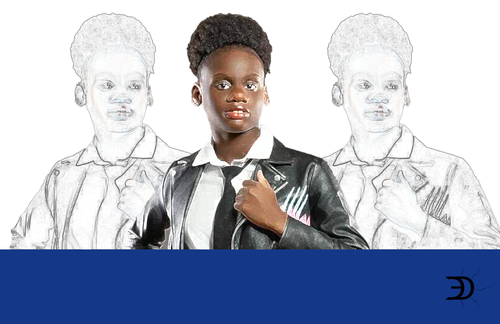
Her mother enrolled her in modeling classes to rebuild her daughter's self-esteem. In one video, Stephora stands tall and declares: "We are different from all girls... we are equal as we are, we are beautiful as we are and we are divas. We don't need to compare ourselves to other people because, just as we are, we are precious."
This is the profound contradiction at the heart of this tragedy: a child articulating principles of equality that the institution supposedly educating her refused to uphold. The classroom reproduced the anti-Haitian rhetoric permeating Dominican public discourse, migration policies, and media criminalization—translating directly into peer-to-peer violence that authorities chose to ignore.
The Day Everything Failed
On November 14, the Instituto Leonardo Da Vinci organized an excursion to Hacienda Los Caballos in Gurabo, Santiago. What happened that day represents a catastrophic chain of institutional failures:
The excursion was illegal. The Ministerio de Educación’s (Ministry of Education) Departmental Order 09-2009, Chapter VI, Article 35, explicitly prohibits extracurricular activities at rivers, beaches, or pools. The school had no permits.
Supervision was criminally inadequate. The contract specified 87 people, but only three teachers accompanied the group—87 students with three supervisors at a swimming facility.
The facility was a death trap. Hacienda Los Caballos operated without professional lifeguards, rescue equipment, first aid kits, stretchers, or mandatory safety systems. The pool had depths appropriate only for adults. After Stephora's death, the Public Ministry closed it for grave safety violations under Law 257.
The emergency response was delayed by bureaucracy. Teachers didn't call 911 immediately. Instead, they first contacted the school director for instructions—losing crucial minutes while following the chain of command. A video from that day shows a teacher checking Stephora's vital signs while holding her body in a seated position beside the jacuzzi. Students filmed with their phones. One voice is heard saying, "Loco (Dude), they're going to expel me from school"—more concerned about disciplinary consequences than his classmate's life.
The family was lied to. At 11:28 a.m., Stephora's mother received a call falsely claiming her daughter was "vomiting," concealing the true severity. After three hours of waiting, when authorities finally allowed family access, they were told Stephora was dead.
“We are different from all girls... we are equal as we are, we are beautiful as we are and we are divas. We don’t need to compare ourselves to other people because, just as we are, we are precious.”
The Video That Breaks the Silence
Twenty-one days after Stephora's death, a video from the excursion emerged, reigniting public outrage. It captures the chaos, the inadequate response, the students filming instead of helping, and that chilling statement about expulsion. It exposes what families and human rights organizations have been denouncing: a chain of negligence, racist bullying, and anti-Haitian prejudice that the school systematically ignored.
The family's lawyers report that the Ministerio Público (Public Ministry) refused to accept formal complaints while the case remained under investigation and denied them access to security footage. According to the legal team, videos provided by the establishment appear incomplete. The mother waited weeks for evidence the Ministry promised to deliver.
This opacity is not accidental. It reflects a system where a Black, Haitian, migrant child's life is valued less—where a mother's voice faces additional barriers to being heard and validated.
Four Women Arrested, But Where Are the Men in Charge?
On December 6, the Ministerio Público arrested four women from Instituto Leonardo Da Vinci on charges of involuntary manslaughter, citing "extreme negligence." The detained are Yris del Carmen Reyes Adames (administrative director), Gisela González (general coordinator and directive advisor), Francisca Josefina Tavárez Vélez (counselor), and Vilma Altagracia Vargas Morel (secondary coordinator).
According to prosecutors, they mobilized 87 students with only three supervisors, without verifying pool depths, without lifeguards, without life jackets, and without consulting families about students' swimming abilities. Video evidence demonstrates "extreme negligence" in care and organization.
But let's examine who's being held accountable. The only people arrested are women in traditionally feminized positions of educational care. Justice must proceed without exceptions—but where are the higher levels of responsibility? Who designed the excursion policies? Who profited economically from institutional prestige? Who owns this school?
This gendered pattern of accountability is not coincidental. It mirrors how caregiving failures are punished while structural and administrative decisions—often made by men in power—remain unexamined.
A School Closes Early, But Questions Remain
Days after the arrests, Instituto Leonardo Da Vinci announced it would close the school year four days early, citing concern for "families' tranquility" following a meeting with APADAVI (the Parents and Friends Association). Police patrols guarded the campus as parents attended urgent meetings with the school's lawyers.
This premature closure came three weeks after Stephora's death, without authorities providing a complete reconstruction of events. Stephora's belongings remain at the school. The family continues demanding full transparency about the exact circumstances.
The school continues operating without sanctions, while Hacienda Los Caballos remains closed.
Bodies That Matter, Bodies That Don't
From a feminist intersectional epistemology, Stephora's case forces us to interrogate which children's lives are considered protectable and which become sacrificial to bureaucracy, institutional reputation, or the geopolitics of hatred.
The social response—including statements from figures like Clarissa Molina, human rights organizations, and participation from the Haitian consulate—shows a crack in the usual silence. Yet this mobilization occurs within a contradictory context: while the Dominican State mass-deports Haitian people, invoking national sovereignty, the death of a Haitian girl at a private school generates cross-border empathy.
This reveals hierarchies of protection. A Black, Haitian, academically outstanding, dreaming child didn't die in a vacuum. She died in a country where Haitian bodies are systematically vulnerableized, where anti-Haitian racism operates as state policy and social practice, where the word "equality" exists as a slogan but not as enforceable protection.
Attorney General Yeni Berenice Reynoso ordered investigations strengthened after public outrage over the mother's treatment. But as Wendy Osirus from the Movement for Human Rights (MONDHA) noted, this case "forces us to rethink the narratives we transmit about 'the others.'"
What Justice Actually Requires
Justice for Stephora cannot be reduced to an administrative file or four arrests. It demands:
Immediate investigative transparency. Complete evidence delivered to the family, including all security footage.
Accountability at every level. Not just frontline educators, but owners, administrators, and state supervisors who failed to enforce existing regulations.
Structural reforms with teeth. Verifiable safety protocols for extracurricular activities, anti-bullying policies with explicitly antiracist frameworks, and education that stops reproducing borders within the classroom.
Recognition of what killed her. Not just water in lungs, but racism that made her vulnerable, negligence that made her expendable, and a system that valued institutional reputation over a child's life.
The question persists and demands an answer: In a pool full of 86 students and three teachers, with teenagers filming instead of helping and worried about punishment instead of lives, how was it possible that an 11-year-old girl drowned without anyone being able or willing to save her?
Stephora's body was cremated at her parents' decision. Her mother, Lovelie Joseph Raphael, continues fighting for answers. The word "equality" that Stephora pronounced in life must transcend slogans and become verifiable public policy, daily antiracist pedagogy, and effective protection for all children in the Dominican Republic—regardless of the color of their skin or which side of the island their family comes from.
Until then, we haven't just failed Stephora. We've failed ourselves.
⸻⸻
Related
Stephora Joseph: el video que expone la tragedia y el silencio de 21 días
Caso Stephora: arrestos en el Da Vinci y un cierre anticipado que no calma la indignación
Muertes Civiles in Dominican Republic—Interview with Amarilys Estrella
U.S. Dominicans March in Solidarity of Dominican Haitians
Dominican Republic: Two Intellectuals Issue a Call against Racism