
By ESENDOM
December 18, 2025
Lea en español: República Dominicana blinda áreas protegidas y lidera resolución histórica sobre sargazo en la ONU
Key Points:
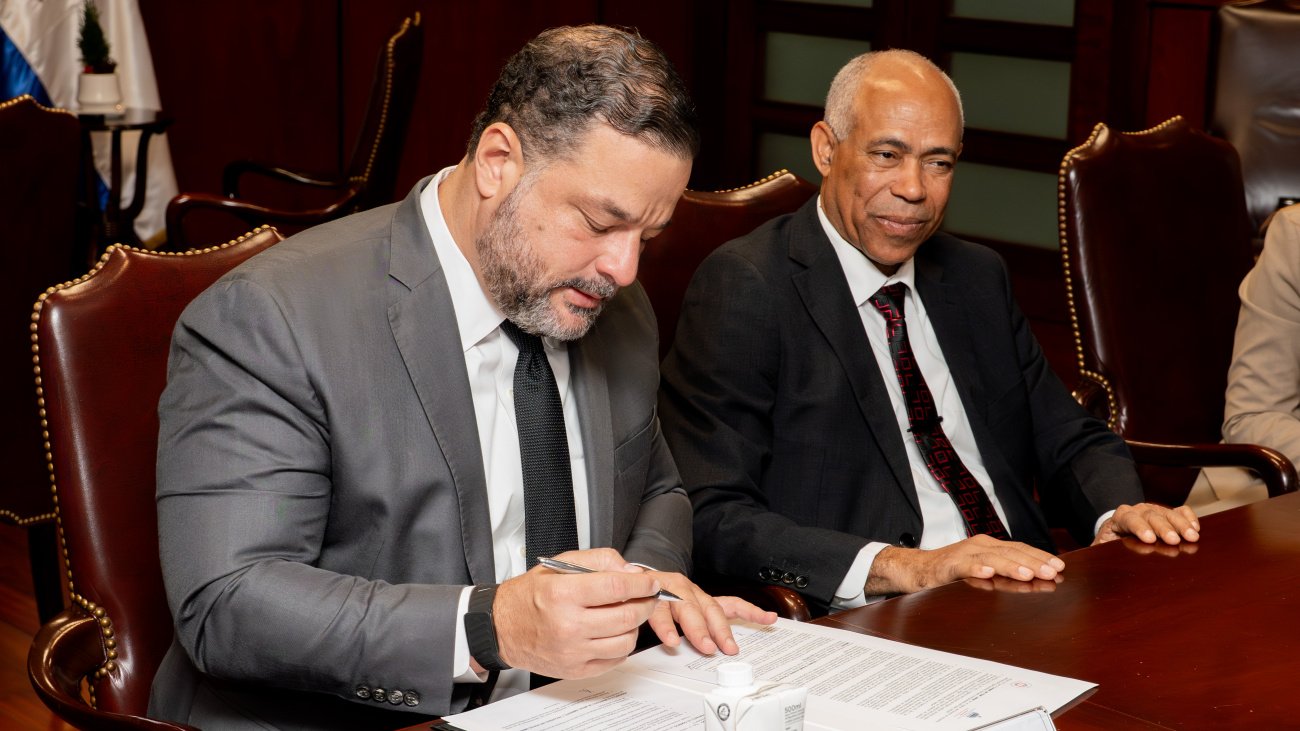
The Ministerio de Medio Ambiente and the Consejo del Poder Judicial (Judiciary) sign an agreement to title and legally protect protected areas against invasions and real-estate fraud.
The Real Estate Registry will work with official maps to curb illegal occupations and land disputes.
The Dominican Republic secures in Nairobi the United Nations’ first resolution on sargassum, co-sponsored by Barbados and Jamaica.
The resolution recognizes sargassum as a socioeconomic and environmental crisis for the Greater Caribbean and West Africa.
Santo Domingo / Nairobi.— In the same week, the Dominican Republic advanced simultaneously on two fronts of its environmental agenda: legal fortification of its domestic natural heritage and global diplomatic leadership.
Legal Certainty for Protected Areas
The Ministerio de Medio Ambiente (Ministry of Environment) and the Council of the Judiciary signed a cooperation agreement to close the loopholes that enable invasions, real-estate speculation, and fraudulent titling in protected zones.
Under the agreement, the Ministerio de Medio Ambiente will provide consolidated information on the boundaries of national parks, scientific reserves, and buffer zones, and will submit titling files for lands under state ownership. The Judiciary, through the Real Estate Registry, will provide legal assistance and cadastral support to define perimeters, identify state lands, and enable real-time digital consultations.
The agreement is valid for four years and includes confidentiality clauses that prohibit transferring or selling information to third parties, a critical safeguard amid real-estate pressure on coasts, mountains, and watersheds.
“Joint work with the Judiciary strengthens transparency, registry efficiency, and the defense of our natural resources,” said Minister Paíno Henríquez.
The measure responds to decades of conflicts in which the absence of clear delimitation facilitated irregular occupations and clashes among communities, developers, and the State.
Diplomatic Victory in Nairobi
In parallel, the Dominican delegation celebrated at UNEA-7 the adoption of the first United Nations resolution dedicated to sargassum, led by the Dominican Republic and co-sponsored by Barbados and Jamaica.
The text formally recognizes that the massive influx of sargassum constitutes a socioeconomic and environmental threat to the Greater Caribbean and West Africa, affecting tourism, fishing, marine biodiversity, public health, and coastal economies. For countries like the Dominican Republic—where tourism generates 17% of GDP—sargassum is no longer an aesthetic nuisance but a structural emergency.
The resolution instructs UNEP’s Executive Director to produce a comprehensive report on existing initiatives and to convene a high-level meeting to coordinate a global response.
Claudia Taboada, Minister Counselor and head of the delegation, emphasized that this achievement culminates more than four years of diplomatic lobbying to place the issue on the international agenda. It is the first resolution presented by the Dominican Republic to UNEA and the first instrument by that body on sargassum.
From Rhetoric to Institutionalization
Both initiatives signal a strategic transition: from reactive management to a permanent institutional architecture. The judicial agreement creates legal infrastructure to defend territory; the UN resolution builds a regional coalition to confront a shared climate-related crisis.
For Dominican communities, the message is direct: protecting forests, rivers, coasts, and seas has ceased to be an environmental slogan and has become a prerequisite for national economic viability. The question is no longer whether the Dominican Republic should protect its natural heritage, but whether the institutions being created will have the enforcement capacity to stand up to powerful economic interests that have historically captured the country’s environmental governance.
The real “test” will come when these agreements face their first trial: a fraudulent title in a high-tourism-value protected area, or the implementation of costly measures against sargassum that squeeze resort margins. That is when it will become clear whether the Dominican Republic’s environmental commitment is state policy—or diplomatic theater.
⸻⸻
Related
David Ortiz, from Batting Idol to a Hemispheric Humanitarian Standard-Bearer
Law 63-17: When Does a Vehicle Stop Being Useful in the Dominican Republic and Why Does It Matter?
Pete Hegseth Announces U.S. Military Deployment in Santo Domingo
Paliza Defends a “New Course” Against Impunity, but the Public Demands a Real Cleanup
Power Theft + the 2025 Blackout: The Hidden Bill of a System at Its Limit (Opinion)