
BY ESENDOM
December 8, 2025
Lea en español: Medio Ambiente abre registro obligatorio de animales exóticos en República Dominicana y da tres meses para regularizarlos
Key points
The Environment Ministry has launched a mandatory registry for exotic animals held by private owners, with a three-month deadline from the date of the official notice.
Owners must apply for registration, prove the animal’s legal origin, and allow technical inspections.
Failure to register on time may lead to the seizure or confiscation of the animal and sanctions under Law 64-00 and other environmental regulations.
The measure aims to curb trafficking and irresponsible handling that threaten Dominican biodiversity.
SANTO DOMINGO. — The Ministry of Environment and Natural Resources announced the start of a mandatory registry for exotic animals in private possession in the Dominican Republic. Coordinated by the Vice Ministry of Protected Areas and Biodiversity and the Directorate of Biodiversity, the policy gives owners three months to complete the process from the publication of the official communiqué.
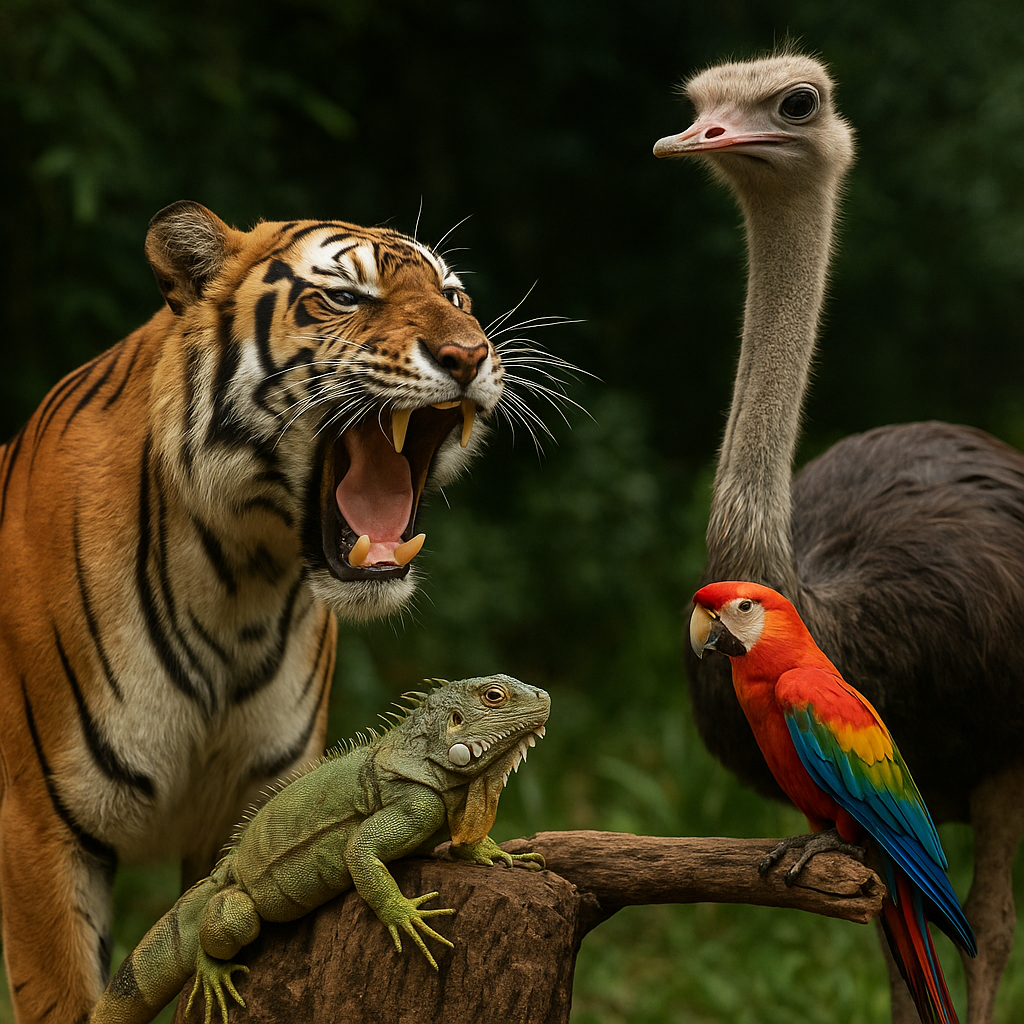
The goal is to build a real picture of which non-native species are circulating in the country, under what conditions, and with what legal backing. That information will strengthen control, traceability, and responsible management of animals that—outside their natural habitats—can become ecological or public-health risks if released, resold without oversight, or bred irregularly.
What do Owners Have to do?
The ministry outlined three requirements:
Submit a formal application to the Vice Ministry of Protected Areas and Biodiversity, via the Directorate of Biodiversity.
Attach documentation proving the animal’s legal origin, including any prior permits.
Accept technical inspections whenever authorities deem them necessary to verify keeping conditions and the accuracy of the information provided.
The warning is clear: animals not registered within the deadline may be detained or confiscated, and owners may face administrative proceedings under the country’s environmental laws, led by Law 64-00, Law 333-15, and other applicable regulations.
A Sensitive Issue, Dominican Style
In the Dominican Republic it is not unusual—on social media, in neighborhoods, or on private farms—to see uncommon animals: imported reptiles and birds, even mammals acquired outside legal channels. Fashion trends, the informal market, and international trafficking all feed the phenomenon. In a country rich in endemic species, the risk is not theoretical: escaped or released exotics can prey on native wildlife, spread disease, or disrupt fragile ecosystems.
With this registry, the Environment Ministry seeks to close the “no-paper trail” buy-and-sell loop and send a dual message: anyone keeping exotic animals must prove legality and responsibility, and the State will exercise greater control over a practice that, left unchecked, exacts a cost on Dominican biodiversity.
The ministry urged owners to regularize their status as soon as possible, noting that public cooperation is essential to safeguarding the nation’s natural heritage.
⸻⸻
Articles of Interest
Fraude eléctrico + blackout 2025: la factura oculta de un sistema al límite (Opinón)
¡Jartos! El pueblo dominicano se lanza a las calles
Marcha del Cibao: pueblo dominicano sale a la calle en Santiago