
By ESENDOM
November 16, 2025
Lea en español: Fraude eléctrico + blackout 2025: la factura oculta de un sistema al límite (Opinón)
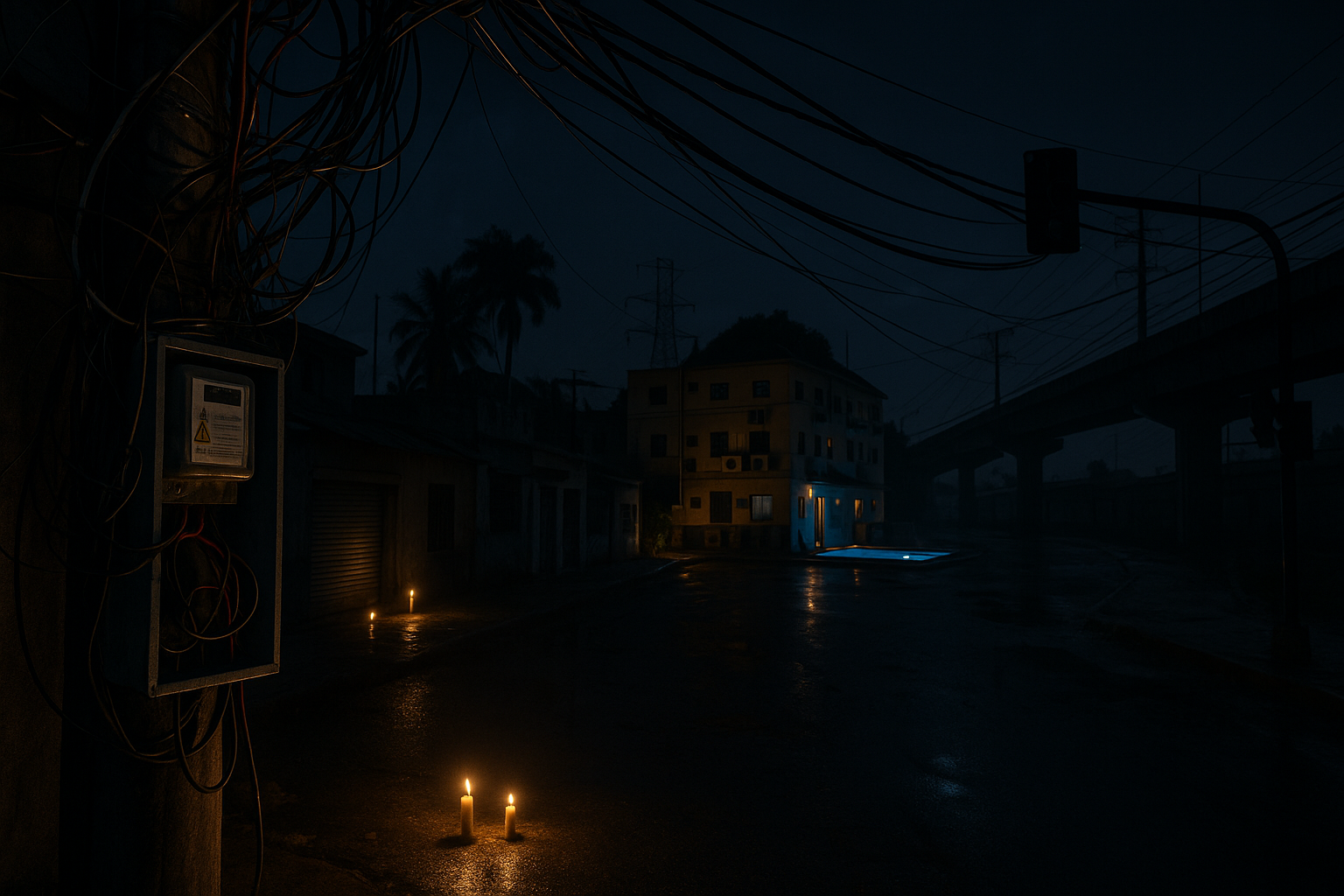
In the Dominican Republic, electricity theft is no longer a “neighborhood hustle”—it also wears a suit and tie. At the same time, the nationwide blackout of November 11, 2025, exposed a fragile grid. Bottom line: citizens pay twice—on the bill and in blackouts.
The Stat That Busts the Myth
From January to August 2025, the Procuraduría General Adjunta para el Sistema Eléctrico (Office of the Special Prosecutor for the Electricity System) (PGASE) detected 605 cases of power fraud, up +21.2% versus the same period in 2024. It is not just vulnerable households: hotels, factories, water plants, textile companies, and high-demand firms appear in the case files. Recently, PGASE—alongside Edenorte and the SIE—carried out an anti-fraud operation in the northern region.
Emblematic cases (2024–2025)
Hotel La Vía (Santo Domingo Este): transformer tampering; estimated losses to Edeeste of RD$1.2 million.
Zumo Gutiérrez (Santo Domingo Norte): irregular connection; evaded consumption valued at RD$2.3 million.
Agua Purificada Luz (D.N.): estimated fraud of RD$52.9 million (≈ RD$3 million/month).
Hielo El Grande (SDN): RD$47 million in fraud; owner faces an arrest warrant.
The uncomfortable question: how do you demand a full tariff from the poorest when a hotel or cash-rich factory decides how much to pay?
The Real Cost: We All Pay
From January to July 2025, distributors purchased energy worth US$1,754.7 million, billed US$1,175 million, and collected only US$1,124.5 million.
System gap over seven months: US$633.2 million.
Translation: if you pay your bill, you are subsidizing without consent those who do not—whether it is colmado or a resort running 24/7.
Fraud map
Edesur (Santo Domingo/southwest): 317 cases (Jan–Aug 2025), the detection epicenter.
Edeeste / CEPM (east/tourist hubs): 98 cases in the first eight months.
Edenorte (Cibao/north): 35 cases (a steep drop from 160 in 2024).
Territorial differences matter: they determine where to focus enforcement, investment, and public communication.
The 11/11 Blackout: The Symptom We Cannot Ignore
On Nov. 11, 2025, around 1:20–1:23 p.m., a transmission-system failure—tied to switching maneuvers along the San Pedro de Macorís–Quisqueya/Cumayasa axis—collapsed the SENI (national grid). The Metro and zip line services were halted, passengers evacuated, traffic lights went dark, and chaos ensued. Service returned gradually; full restoration came overnight.
Not everything is theft. There were operational errors and protection/automation gaps. If we demand stiff penalties for stealing power, we must also demand protocols, teleprotections, and well-coordinated relays from those who operate the grid.
Historical context. The country has logged 85+ nationwide blackouts since 1988. The 2010s brought stability (2016–2024 with zero blackouts)—until the 2025 event.
From Cutting Cables to Handcuffs
The Hielo El Grande case marks a turning point: arrest warrant, formal charges, and a request for coercive measures under Law 125-01. That is the standard. If the system only punishes the small actor and negotiates with the big one, the social contract breaks—and the moral blackout persists.
SIDEBAR | Express Timeline of Major Blackouts (1988–2025)
1988–1989: critical years; 9 and 12 blackouts.
2000–2005: rebound with 8 (2000) and 10 (2004); 5 in 2005.
2007–2009: one-off events; impact on the then-new Metro.
2010–2014: stability; 0 blackouts/year.
2015: last nationwide blackout until then (May).
2016–2024: 0 nationwide events.
2025 (11/11): return of the national blackout.
Closing: energy justice—with no exceptions
Pursuing fraud is necessary; hardening the grid is too. 11/11 showed that technical resilience is worth as much as the ethics of consumption. If the state puts the RD$47 million thief in the dock and corrects the protocols that left us in the dark, the message changes: one law for the corner store, the factory, and the substation. Only then do we stop paying—all of us—the bill for a few.
SERVICE | How to Report—and How to Prepare
Anonymous fraud reports: use PGASE and your EDE’s official channels (hotlines, apps, service offices).
Before a prolonged outage: keep flashlights, power banks, water, medications..
Businesses: inspect your installation, normalize contracts, and request verified metering if your usage does not add up.
ESENDOM will keep tracking: fraud cases, sanctions, investments, and restoration times. Because electricity is not a luxury; it is infrastructure and dignity.
⸻⸻
Related
Crónica eléctrica de un país donde la luz se va… y la vergüenza también (sátira)
RD: Donde la luz se va de vacaciones y los apagones gobiernan (Sátira)