By Nelson Santana and Emmanuel Espinal
August 14, 2025
Lea en español: 15 artistas dominicanos del Top 25 de ESENDOM que debes conocer: Luis Vargas
From Santiago’s mountain tops to the corners of The Bronx, Dominican music has produced artists that have marked generations, challenged genres, and conquered global stages. At ESENDOM, we celebrate the cultural power of our music with a special list: “15 Dominican Artists from ESENDOM’s Top 25 That You Should Know”—a selection curated with both heart and musical insight, where each name represents not only talent, but history, identity, and legacy.
Our list is based on ESENDOM’s Top 25, a list we publish weekly featuring the hottest songs in the music scene.
Over the coming days, we will reveal one by one the names that make up this list, with in-depth profiles that honor their trajectory, impact, and cultural relevance. This is not a ranking; it is a living tribute.
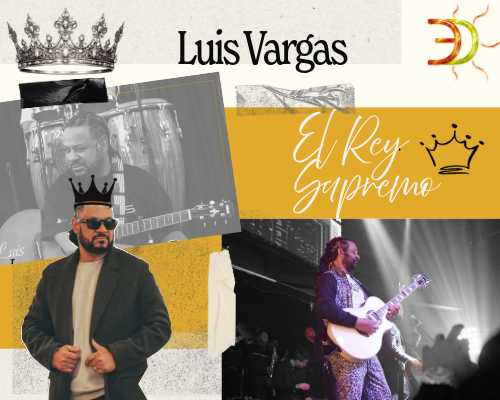
Today we continue our list with El Rey Supremo Luis Vargas. Luis Vargas is a musical revolutionary who not only pioneered modern bachata but also catapulted it from the rural fringes of the Dominican Republic into a universal language of passion and cultural resistance.
The Visionary from Monte Cristi Who Transformed a Marginalized Genre into a Global Cultural Phenomenon
🎤 Today, we present the fourteenth of our fifteen: Luis Vargas, the revolutionary who not only pioneered modern bachata but catapulted it from the rural fringes of the Dominican Republic into a universal language of passion and cultural resistance.
The Awakening of a Legend: When Destiny Calls from the Roots
In Santa María, a small town in the municipality of Pepillo Salcedo, Monte Cristi province—where the northwestern winds whisper ancestral stories and every sunset resounds with the echoes of tambora, accordion, and güira—Luis Rafael Valdez Vargas was born on May 23, 1961. He did not come into the world as just another rural musician; he emerged as the visionary who would forever transform the perception and projection of a genre once relegated to the margins of musical respectability.
Like many musical geniuses from the Línea Noroeste, Vargas first trained in the traditions of merengue típico, absorbing the techniques and sensibilities he would later masterfully apply to revolutionize bachata with a style that still resonates across generations of artists who hail him as the supreme master of the genre.
Creative Rebellion: When Military Discipline Yields to Artistic Calling
His early life was a symphony of contrasts between imposed discipline and creative rebellion. Following his father’s orders, he entered the Dominican National Army, but soon realized his soul was not designed for military rigidity—it yearned for the expressive freedom only music could offer. Choosing to abandon a secure military career to follow an “impossible” dream revealed the visionary courage that would define his path.
It was his mother—guided by that maternal instinct that recognizes exceptional talent—who gave him his first guitar, and a young man named Abilo taught him the first chords that would become the foundation of his musical revolution. This was the genesis of the artist who, decades later, would be crowned “El Rey Supremo” (“The Supreme King”) of bachata—a title earned not by marketing, but by decades of relentless innovation and unwavering artistic excellence.
The Acoustic Revolution: When Bachata Meets Its Evolutionary Destiny
At the beginning, Luis imitated the legendary guitarist Eladio Romero Santos, particularly his guitar-based merengue style. In the documentary Santo Domingo Blues: Los tigueres de la bachata (2004), Eladio recalls advising Luis: “He who imitates never progresses… You have to create your own style.” As Luis tells it, “Those words broke my heart at that moment… I left feeling crushed.”
Luis Vargas began recording bachata in 1982, but it was not until the late 1980s that his genius matured enough to fully transform the genre. Inspired by the pioneering innovations of Blas Durán—who introduced the electric guitar and multi-track recording—Vargas did not just adopt these techniques; he expanded, perfected, and pushed them into unexplored musical territory.
His revolutionary approach fused elements of merengue típico with traditional bachata, creating “merengue de guitarra.” In reality, it was something deeper—the natural evolution of Dominican music into a cultural synthesis that honored the past while building the future.
Early bachatas like “La traicionera,” “Esa mujer”, “De ti me separo,” “Te deseo suerte,” “Recogí la traicionera,” “Consejo doy,” “La niña adolescente,” “Madre,” “La espada del amor”; and merengues “Sin hueso,” “El tomate,” “El machetazo,” “A Mamey fui,”, “Las leyes del amor,” “Dale su mamá,” “No me dejes solito,” “Nueva York,” “Lo que me pasó en mi pueblo,” “El grito,” “Adagio de mi país,” “El brincaito,” “El macho,” and “El chivo,”—were not simply hits; they were artistic manifestos marking the dawn of a new era in Dominican music. His double-entendre lyrics and passionate vocal style made him an undisputed crowd favorite.
His 1990 album La maravilla served as a declaration of artistic independence, cementing his status as the supreme innovator. By 1994, with the massive success of “Con los crespos hechos (Loco de amor),” he proved his extraordinary versatility by excelling in romantic compositions without losing the rebellious edge that set him apart. That album, Loco de amor, also featured iconic tracks like “Ceniza fría,” “La mesa del rincón,” and merengues such as “Nena se fue,” “Volteate,” and “El protagonista,” a tribute to Dominican rural life. “Con los crespos hechos” is a composition by Juan Segundo Lagos that was originally popularized in the vallenato style by Los Embajadores Vallenatos. This song has since become the signature anthem of Luis Vargas.
Epic Rivalry: When Titans Forge Immortal Legends
The 1990s witnessed one of the most fascinating rivalries in Dominican music history. From within Vargas’ own band emerged another giant: Antony Santos, who began as his güira player before launching his own career. Their legendary competition—akin to the great duels of global hip hop—was not destructive but mutually elevating, pushing both artists to levels of excellence they might not have reached alone.
Songs like “El envidioso” and “El gato seco” showcased Vargas’ take on the rivalry, while Santos responded in his own reserved yet competitive way. Far from harming the genre, this rivalry enriched bachata, sparking debates, headlines, and fan passion that expanded the genre’s audience beyond its traditional base.
Innovator
Luis Vargas has always been a pioneer and innovator in music, constantly reinventing himself with each new album. For his album En serio (1993), he donned a military uniform; En serio features several hits from the legendary bachata artist, including the unforgettable merengues “El envidioso,” “Adagio de mi país,” and his most emblematic merengue, “Lo que me pasó en mi pueblo.” His album En persona (2001) offered a unique concept: the compact disc (CD) included videos demonstrating how to dance bachata. Luis has always surrounded himself with the best of the best musicians, including legends such as Ignacio Martínez “La Greña,” Isidro Güira (“La Saeta”), Danny García “Mano de seda” on bass, and Chiguete on drums.
Enduring Legacy: Between Controversy and Artistic Canonization
Over a four-decade career, Vargas has produced more than 20 albums, including undisputed classics like Rompiendo corazones (1996), Volvió el dolor (1997), and En persona (2001). His influence can be traced in younger bachateros who blend the genre with vallenato, pop, and other styles. His personal life—marked by public feuds and controversies—has not diminished his authenticity or his deep bond with the Dominican people. If anything, his humanity, complete with triumphs and flaws, has kept him relevant in an era of manufactured perfection.
Digital Era Relevance and a Possible Dynasty
Even in today’s digital age, songs like “Esa mujer” or “Los últimos” (with Romeo Santos) prove that true artistry transcends technological trends. While his current visibility may not match his golden years, Vargas remains active, performing in both the Dominican Republic and New York, adapting to modern platforms without losing his artistic essence.
The emergence of his son, Luisito Vargas, hints at a new generation ready to carry the torch, suggesting that the Vargas dynasty could extend far into the future.
Conclusion: The Immortal Titan of Dominican Bachata
At ESENDOM, we recognize Luis Vargas not just as a pillar of the genre, but as the visionary who proved that Dominican music could evolve without betraying its roots. His legacy is not measured solely in records sold or awards won, but in his achievement of transforming a marginalized genre into a global cultural force that carries the Dominican soul to every corner of the world.
Without Luis Vargas, the history of modern bachata would be dramatically incomplete.
______________
Related
15 Dominican Artists from ESENDOM's Top 25 That You Should Know: Elvis Martínez
15 Dominican Artists from ESENDOM's Top 25 That You Should Know: La Fiera Típica
15 Dominican Artists from ESENDOM's Top 25 That You Should Know: Zacarías Ferreira
15 Dominican Artists from ESENDOM's Top 25 That You Should Know: El Rubio Acordeón
15 Dominican Artists from ESENDOM's Top 25 That You Should Know: Shelow Shaq
15 Dominican Artists from ESENDOM's Top 25 That You Should Know: El Varón de la Bachata
15 Dominican Artists from ESENDOM's Top 25 That You Should Know: Natti Natasha
15 Dominican Artists from ESENDOM's Top 25 That You Should Know: Teodoro Reyes
15 Dominican Artists from ESENDOM's Top 25 That You Should Know: Ozuna
15 Dominican Artists from ESENDOM's Top 25 That You Should Know: Miguel Braho
15 Dominican Artists from ESENDOM's Top 25 That You Should Know: Lomiiel
15 Dominican Artists from ESENDOM's Top 25 That You Should Know: Los Hermanos López
15 Dominican Artists from ESENDOM's Top 25 That You Should Know: Chris Lebrón
15 artistas dominicanos del Top 25 de ESENDOM que debes conocer