
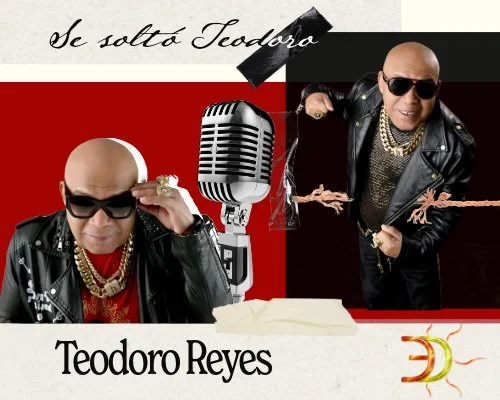
By Nelson Santana and Emmanuel Espinal
August 8, 2025
Lea en español: 15 artistas dominicanos del Top 25 de ESENDOM que debes conocer: Teodoro Reyes
From Santiago’s mountain tops to the corners of The Bronx, Dominican music has produced artists that have marked generations, challenged genres, and conquered global stages. At ESENDOM, we celebrate the cultural power of our music with a special list: “15 Dominican Artists from ESENDOM’s Top 25 That You Should Know”—a selection curated with both heart and musical insight, where each name represents not only talent, but history, identity, and legacy.
Our list is based on ESENDOM’s Top 25, a list we publish weekly featuring the hottest songs in the music scene.
Over the coming days, we will reveal one by one the names that make up this list, with in-depth profiles that honor their trajectory, impact, and cultural relevance. This is not a ranking; it is a living tribute.
Humble, sincere, loving, a fan of merengue típico, prolific songwriter, marimba player, first winner of the Soberano Award in the bachata category, a legend of bachata and bittersweet music—yet they called him a “bad singer.” The success of his talent as a composer and singer of amargue music has taken him to the United States, Italy, Switzerland, Austria, Spain, Alaska, Venezuela, and Panama, among other countries.
🎤 Today we present the eighth of our fifteen: Teodoro Reyes – The Blind Visionary Who Illuminated Bachata with Raw Emotion
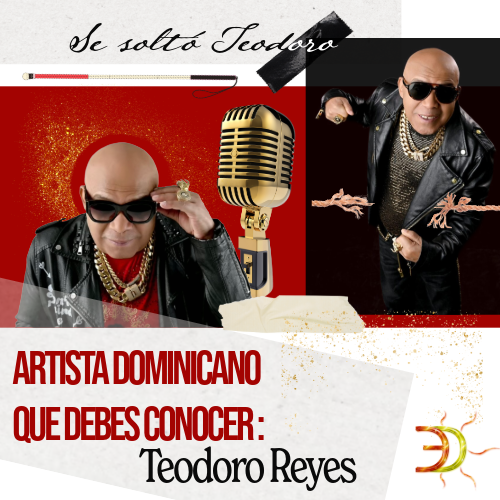
In Nagua—where the Atlantic waves whisper stories of resilience and each sunrise carries promises of redemption—a boy was born on March 27, 1954, destined to prove that true vision resides not in the eyes, but in the soul. Teodoro Reyes, reverently known as El Cieguito Sabio (“The Wise Blind Man” ), turned physical limitations into artistic superpowers, transforming every obstacle into a stepping stone toward the musical greatness that would forever define Dominican traditional bachata.
Born blind and raised in a family marked by economic hardship, he found in music not just a spiritual refuge but a sacred mission to give voice to universal sorrow. His childhood, scarred by marginalization and social disdain, forged the unbreakable character that would one day defy a society that dismissed those it deemed “different.”
His heroic decision to flee his family home and pursue studies at the National School for the Blind in Santo Domingo revealed the depth of his determination. There, while earning his high school diploma, the seeds of songwriting were planted—seeds that would one day revolutionize the bachata genre, proving that formal education and artistic sensitivity can coexist to produce transcendent art.
His first major breakthrough came in 1982 with “La Jamaquita,” a masterful composition interpreted by Fernando Villalona. This marked the beginning of a career destined to redefine the emotional depth of Dominican popular music. That initial release revealed that beneath his perceived physical fragility lay a creative titan capable of moving entire crowds.
The 1994 release of Sentimientos was more than just an album drop; it was the definitive consecration of amargue (the term bachata was initially used to demean the genre, thus it was referred to as amargue or heartbreak) as a legitimate artistic expression. Anthems like “Los pobres también aman,” “Yo no pido,” and “Vuelve con tu papá” transcended mere entertainment to become collective catharsis—healing social wounds while exposing them with brutal honesty.
His recognition as the first bachatero to be honored by the prestigious Casandra Awards—known today as Premio Soberano—meant more than personal achievement—it symbolized the victory of a once-marginalized genre over the elitist prejudices that had dismissed it for decades. Teodoro did not just break musical barriers; he tore down societal walls separating “cultivated art” from the authentic expressions of the people.
Over the course of more than 20 albums, he has proven that artistic prolificacy and emotional depth can coexist—when born from lived experience. Teodoro’s style, defined by a mournful voice that cuts like an emotional scalpel, has influenced entire generations of musicians who revere him as the supreme master of musical authenticity.
His recent collaborations with stars like Romeo Santos in “Ileso,” and with Vena and Frank Reyes in “Corazón de hierro,” confirm that his relevance transcends generations. True art does not age—because it springs from emotions that are timeless.
Now in his seventies, Teodoro Reyes remains a living testament to the truth that when authentic talent is combined with unshakable resilience and emotional honesty, it can light up the entire world—proving that physical blindness can coexist with one of the clearest and most penetrating artistic visions ever conceived.
______________
Related
15 Dominican Artists from ESENDOM's Top 25 That You Should Know: Elvis Martínez
15 Dominican Artists from ESENDOM's Top 25 That You Should Know: La Fiera Típica
15 Dominican Artists from ESENDOM's Top 25 That You Should Know: Zacarías Ferreira
15 Dominican Artists from ESENDOM's Top 25 That You Should Know: El Rubio Acordeón
15 Dominican Artists from ESENDOM's Top 25 That You Should Know: Shelow Shaq
15 Dominican Artists from ESENDOM's Top 25 That You Should Know: El Varón de la Bachata
15 Dominican Artists from ESENDOM's Top 25 That You Should Know: Natti Natasha
15 Dominican Artists from ESENDOM's Top 25 That You Should Know: Ozuna
15 Dominican Artists from ESENDOM's Top 25 That You Should Know: Miguel Braho
15 Dominican Artists from ESENDOM's Top 25 That You Should Know: Lomiiel
15 Dominican Artists from ESENDOM's Top 25 That You Should Know: Los Hermanos López
15 Dominican Artists from ESENDOM's Top 25 That You Should Know: Chris Lebrón
15 Dominican Artists from ESENDOM's Top 25 That You Should Know: Luis Vargas
15 artistas dominicanos del Top 25 de ESENDOM que debes conocer