
By Nelson Santana and Emmanuel Espinal
August 15, 2025
Lea español: 15 artistas dominicanos del Top 25 de ESENDOM que debes conocer: Antony Santos
From Santiago’s mountain tops to the corners of The Bronx, Dominican music has produced artists that have marked generations, challenged genres, and conquered global stages. At ESENDOM, we celebrate the cultural power of our music with a special list: “15 Dominican Artists from ESENDOM’s Top 25 That You Should Know”—a selection curated with both heart and musical insight, where each name represents not only talent, but history, identity, and legacy.
Our list is based on ESENDOM’s Top 25, a list we publish weekly featuring the hottest songs in the music scene.
Over the coming days, we will reveal one by one the names that make up this list, with in-depth profiles that honor their trajectory, impact, and cultural relevance. This is not a ranking; it is a living tribute.
Today, we present the greatest bachata, if not the greatest Dominican artist of all time!
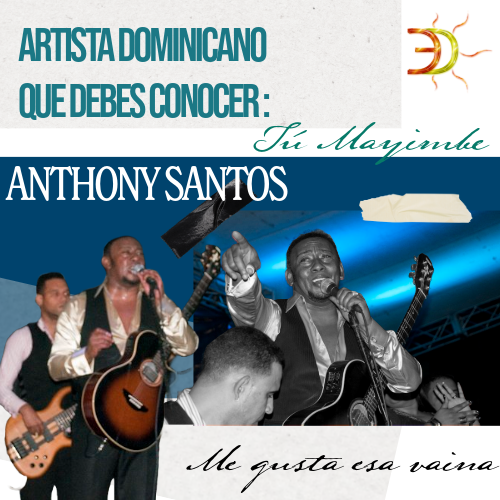
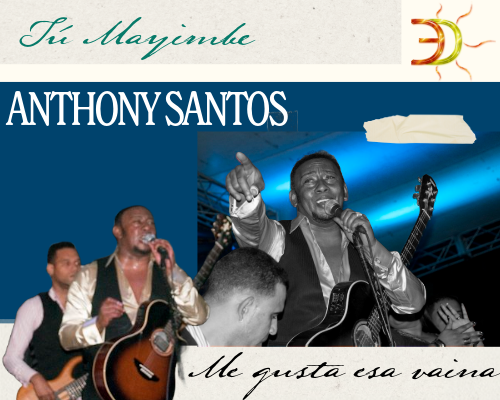
Antony Santos: The Eternal Mayimbe Who Turned Bachata into the Universal Language of the Dominican Soul
🎤 Today we present the fifteenth of our fifteen: Antony Santos: The Eternal Mayimbe Who Turned Bachata into the Universal Language of the Dominican Soul
In the arid fields of Montecristi, where the setting sun gilds the sugarcane and sorrow turns to song before fading into sobs, Domingo Antonio Santos Muñoz was born on May 5, 1967. The whole world knows him as Antony Santos, but to his people, to Dominicans scattered across the globe, and to the annals of our national music, he remains the undisputed Mayimbe of Bachata—not to be confused with “El Mayimbe” Fernandito Villalona.
More specifically, Santos was born in Clavellinas, Las Matas de Santa Cruz, Monte Cristi. His childhood unfolded within a peasant family marked by extreme poverty. Economic hardship and lack of opportunities shaped his temperament and artistic sensitivity from an early age. In an environment where daily sustenance was uncertain and prospects for advancement seemed distant, he discovered in music his emotional sanctuary, his sentimental university, and, later, his reason for existing.
Without the means to buy a guitar, young Antony found creative ways to express his musical talent. At times, for example, he would blow air into broken glass bottles, as if they were a saxophone or trumpet. It is important to note that the best documentary on “El Mayimbe” Antony Santos is by French director René Féret. The film is difficult to access, but versions are available on YouTube.
Music became his escape from a harsh reality, but also his way of processing and transforming it. In those formative years, while other youngsters dreamed of emigrating or finding jobs in the capital, Santos sensed that his destiny was tied to the six strings of a guitar and to the ability to turn suffering into art. This early connection to music would not only define his career but would become the core of his artistic identity: authenticity born from genuine pain.
The Beginnings: From Sideman to Bachata Revolutionary
Before his consecration as a legend, Antony worked as a güira player for bachatero Luis Vargas. This experience proved fundamental in his musical formation, allowing him to grasp the rhythmic complexities of the genre and develop the flawless percussion instinct that would later characterize his own productions. During this apprenticeship, he observed the inner workings of the music business, the public’s expectations, and the expressive possibilities that bachata offered.
Santos debuted as an artist in 1989, although some questioned his use of the title “El Mayimbe,” previously used by merengue legend Fernando Villalona. The two have shared the stage on multiple occasions, but some critics saw Santos’s use of the name as disrespect toward Villalona. However, this controversy did not tarnish his meteoric rise in the bachata world.
Driven by artistic restlessness, he eventually embarked on his journey as a solo performer, forging a path that would define his legacy. In 1991, his debut with the song “Voy pa’llá” from the album La Chupadera completely revolutionized the Dominican music scene. This song not only achieved immediate success but set a historic precedent: Antony Santos became the first rural-born bachatero to gain national recognition and break into Dominican communities abroad. It is important to note that artists like Blas Durán and Eladio Romero Santos had their music played in the United States and performed at parties in cities like New York; however, the Antony Santos phenomenon swept in a way never before seen for a bachatero.
“Voy pa’llá” was not just a song; it was a declaration of intent, a musical manifesto announcing a new era in bachata. The seemingly simple lyrics carried emotional depth that resonated with the migratory experiences of thousands of Dominicans. His ability to capture nostalgia, love, and separation in just three minutes of music revealed an exceptional talent that went beyond the technical.
This moment marked a turning point in a career that, three decades later, remains relevant. The success of La Chupadera not only launched his career but signaled the beginning of a profound transformation in the social perception of bachata, elevating it from the margins to the heart of Dominican music.
The Creator of Modern Romantic Bachata
Antony Santos did not just popularize bachata among the masses; he perfected it, transformed it, and dignified it. His method: romantic compositions saturated with melancholy, the integration of instruments such as the saxophone and piano years later to reinvent himself, and a cosmopolitan sensitivity that contrasted with the macho roughness of the conventional bachatero. While his contemporaries focused on barroom tales and turbulent relationships, Antony introduced a male vulnerability that was revolutionary for his time. Of course, amargue—a more humane name for bachata used decades prior as the term “bachata” was early on used to demean the genre—and bachata singers such as Ramón Cordero, Marino Pérez, Luis Segura, José Manuel Calderón, and Aridia Ventura also recorded romantic songs in their day.
Bachatas like “La parcela,” “La pasola,” “Te vas amor,” “Florecita blanca,” “Linda y difícil,” “Ay mujer,” “Vengo de allá,” “Por mi timidez,” “Dónde estará,” “Corazón bonito,” “Si tu cariño no está,” “Corazón culpable,” “Mi papá,” “Soñé con ella,” “Porque tanto problema,” “Consejo de padre,” “La jaula de oro,” “Pégame tu vicio,” “Cuántos días más,” “Ay amor,” “Creíste,” and countless others—most written by him—seem to have been crafted specifically to accompany the tribulations of the Dominican spirit. In “Por mi timidez,” for example, he explored male emotional fragility with an honesty that defied prevailing gender stereotypes in Caribbean music. “No te puedo olvidar” became a heartbreak anthem for an entire generation, while songs like “Ay amor” and “Lloro” set new standards for emotional expression in bachata.
As a trendsetter, other artists followed his example. For instance, bachata groups play more Antony Santos cover songs than those of any other bachatero. His first two ballads, “Durmiendo solo” (1996) and “Como te voy a dejar” (1997) set new emotional benchmarks, prompting most bachateros to include at least one ballad on their albums. In the late 1990s, he integrated saxophones into his band, and other bachata groups followed suit; it should be noted that Antony was not the first in amargue or bachata to use saxophones, but his adoption of them influenced others to do the same.
His ability to transform personal experiences into collective anthems showed not only his compositional genius but also his deep understanding of Dominican psychology. Each song functions as group therapy, allowing listeners to process their own experiences through Antony’s music.
Rivalry with Luis Vargas: A Duel that Elevated Bachata
The rivalry between Antony Santos and Luis Vargas has been one of the most famous in the history of Dominican popular music. Originating from a personal and professional split, this rivalry went beyond mere gossip and became a cultural phenomenon.
Each new release from either artist was scrutinized not only for its musical quality but for possible lyrical jabs at the other. Songs like “El envidioso” (by Vargas) and “El gato seco” (by Santos) are now part of the genre’s oral history, functioning as both entertainment and social commentary.
This dynamic pushed both artists to strive for artistic excellence, thus enriching the genre. The “Luis Vargas vs. Antony Santos” rivalry is comparable to legendary duels in other genres—like those between hip hop MCs—where competition fuels creativity and strengthens the cultural identity of the movement.
It is important to note that both artists have publicly downplayed their rivalry at times, recognizing that competition between them contributed to the growth of bachata and its acceptance at all levels of Dominican society. In this sense, their duel is less about animosity and more about a shared legacy.
The Bachata Innovator
One of Antony’s most notable contributions to bachata is his ability to integrate modern elements without losing the genre’s essence. Over the years, he has experimented with electric guitars, synthesized arrangements, and international influences, always maintaining the unmistakable sound that identifies him.
His willingness to adapt has allowed him to stay relevant in a constantly changing music industry. While some contemporaries faded into nostalgia, Antony reinvented himself to connect with younger audiences, without alienating his loyal fan base.
His collaborations with artists from other genres—such as urban music stars and tropical legends—demonstrate his musical versatility and ability to transcend generational and stylistic barriers.
Technical and Stylistic Legacy
While Blas Durán is credited as the first bachatero to use an electric guitar, and Luis Vargas is recognized as the first bachata guitarist to use guitar pedals, Antony Santos is the one who defined the modern sound of the genre.
He achieved this through his use of an Alvarez 5084N guitar with a humbucker mounted in the sound hole and an Ibanez PT4 pedal. He is also credited as one of the first to use Yamaha APX series guitars in bachata. This technical innovation was not merely ornamental but reflected a clear artistic vision: to expand the expressive possibilities of bachata without betraying its essence.
From La Chupadera (1991), propelled by hits like “Voy pa’llá,” “Ya encontré mi hembra,” “La parcela,” and “Te vas amor” (a version of “Tu Cárcel” by Marco Antonio Solís and Javier Solís), to merengues like “La chupadera,” “El comedor,” and “Un beso de su boquita,” Santos built a repertoire that appealed both to rural audiences and the Dominican diaspora.
His second album, La batalla (1992), reached number 14 on the Billboard Tropical Albums chart and included the massively popular merengues “El baile del perrito” and “Yo me muero por ti,” as well as bachatas like “Florecita blanca,” “Vengo de allá,” “Linda y difícil,” and “Antología de caricias” (a version of the Jean Carlos Núñez song).
In 1993, Corazón bonito produced “Por mi timidez,” which reached number 40 on the Billboard Tropical Airplay chart—a song Romeo Santos would later cover live at the MetLife Stadium in 2019 as a tribute to El Mayimbe.
His fourth album, Corazón culpable (1994), followed the tradition of producing generation-defining hits, including “Corazón culpable,” “Soy un chichi,” “La barriguita,” “El jueguito,” “Me alegaré,” Cógelo ahí,” and “No te vayas.” Many consider this album to be Antony Santos’s last truly great release in terms of cultural impact.
Bachata had been stigmatized by Dominican society for decades after its emergence in the 1960s. It finally achieved mainstream appeal in the early 1990s, thanks in part to the music Santos produced. Scholars and music experts have acknowledged his key role in legitimizing the genre.
His technical innovation also extended to music production. El Mayimbe understood early on the importance of orchestral arrangements and sound quality, investing in top-tier recording studios and working with the best musicians in the country. This attention to technical detail significantly raised production standards in bachata, setting a model that other artists began to emulate.
The introduction of instruments such as the saxophone, strings, and keyboards was not merely decorative—it stemmed from a clear artistic vision: to expand bachata’s expressive possibilities without betraying its essence. This balance between innovation and tradition became his hallmark and one of the keys to his artistic longevity.
Anthony “Romeo” Santos, Prince Royce, and the contemporary generation of bachateros consider him a key reference point. Romeo even calls him “the father of all bachateros” and regards Santos as a father figure in the music industry. They have joined forces multiple times, producing tracks such as “Ciego de Amor” (2005), “Debate de 4” (2011) with Luis Vargas and Raulín Rodríguez, “Masoquismo” (2015), and “Bellas” (2018).
The collaboration on “Debate de 4” was especially historic, as Romeo succeeded in bringing together the three musicians considered the greatest in the history of bachata. During the first three or four decades of the genre, collaborations were very rare, but they became more common in the 2010s. Although at that time El Mayimbe had personal differences with Vargas and Rodríguez, he agreed to join the project because he felt he could not say no to Romeo and understood how important it was to make the song.
His commercial success is also reflected in the charts: “Solo te amo” (2014) reached number 1 on the Billboard Tropical Airplay chart, becoming his first song to top that list. “Que cosas tiene el amor” with Prince Royce (2015) reached number 42 on the Hot Latin Songs chart and number 1 on the Tropical Airplay chart. More recently, “Señor juez” with Ozuna (2021) reached number 30 on the Hot Latin Songs chart and number 3 on the Tropical Airplay chart.
Historical Recognitions, Epic Performances, and Permanent Respect
On March 1, 2014, Santos celebrated 25 years of his career before a sold-out crowd at Madison Square Garden (MSG) in New York City. While some traditional bachata artists had performed at MSG before, Santos was the first and only traditional bachata artist—aside from Romeo Santos and Aventura—to have his own headlining concert at the venue. Guests included El Mayor Clásico, Alex Matos, Miriam Cruz, Toño Rosario, and Luis Vargas.
This achievement—reserved for global icons—proved that authentic bachata could transcend any cultural or geographical barrier. After the show, Luis Vargas stated:
“People think we are mortal enemies and want to kill each other, but we are musical rivals. In music, there are no friends because you can hug each other, but when you’re up there, you want to outdo the other. The public divides us because everyone has their favorite. People used to wait for cassette tapes to hear what I said about Antony and what he said about me. Hundreds of thousands were sold—it was something the people decided, and it continues to this day.”
The magnitude of this accomplishment becomes clear in historical context: a genre once stigmatized as “poor people’s music” and marginalized by Dominican elites had now reached one of the most prestigious stages in the world—carried there by a man who grew up in the fields of Montecristi.
He has won multiple Premios Casandra (later Premios Soberano), including five awards for Bachata Artist of the Year (1996, 2007, 2009, 2013, and 2019). In 2019, he received the ceremony’s highest honor, El Gran Soberano, recognizing his lifetime achievements. In 2013, his song “Creíste” (written by Ramón Orlando) also won Bachata Song of the Year.
On August 8, 2019, then-New York City Mayor Bill de Blasio issued an official proclamation declaring “Anthony Santos Day” in recognition of his contributions to Dominican culture and his influence on the city’s large Dominican community.
These honors go beyond ceremony—they mark the institutional validation of a genre and an artist who fought for decades for cultural respect. “Anthony Santos Day” in New York is both a personal triumph and the symbolic vindication of an entire musical tradition.
An Existence Defined by Musical Authenticity and Emotional Honesty
Beyond awards and media controversies—such as his long-standing rivalry with Raulín Rodríguez—Antony Santos stands out for his artistic consistency and deep connection with the people. His repertoire addresses love, heartbreak, desire, injustice, and redemption. Each verse becomes a confession; each chord, a heartbeat.
He has resisted fleeting trends and commercial pressures, staying true to the sound and spirit that defined him from the start. In an industry obsessed with reinvention for marketability, Santos has proven that longevity is built on authenticity and quality.
The Eternal Legacy of El Mayimbe
Throughout his career, Santos has been nicknamed El Bachatú and El Mayimbe de la Bachata. “Mayimbe,” a Taíno term meaning “village chief,” eventually came to signify “leader” or “boss.” While Fernandito Villalona was the first to claim it for merengue, Antony Santos earned it in bachata through unmatched artistry and influence.
He is considered not only the greatest bachata artist of all time but also the most successful musician to emerge from the Dominican Republic. His personal life includes fatherhood to four children—two daughters, Yamelin and Jordalin, and two sons, Anthony Jr. and Jordi (who now performs as bachata singer Yordi Saints).
Even after more than three decades, Santos remains relevant. His recent works include La Historia de Mi Vida: El Final, Vol. 1 (2018), which reached number 20 on the Billboard Tropical Albums chart, and collaborations with reggaetón stars like Ozuna, bachata peers like Romeo Santos, and merengue acts like Manny Cruz. His global touring success suggests no decline in his dominance.
His influence bridges generations—Bad Bunny sampled the intro of Santos’s “No te puedo olvidar” in the 2022 hit “Tití Me Preguntó,” connecting El Mayimbe’s legacy with urban Latin music’s current wave.
Antony Santos is more than a famous Dominican musician—he is the musical embodiment of a nation that has learned to process pain through dance. His legacy transcends music, becoming cultural heritage, collective memory, and proof of art’s transformative power when born from a people’s authentic heart.
The eternal Mayimbe continues to articulate the deepest emotions of Dominican identity—the poet who turned bachata into the universal language of the soul, and the artist who proved that musical greatness knows no borders or social limits. His story is the story of bachata itself, and his songs are the soundtrack of generations who have found in his music the mirror of their own lives.
______________
Related
15 Dominican Artists from ESENDOM's Top 25 That You Should Know: Elvis Martínez
15 Dominican Artists from ESENDOM's Top 25 That You Should Know: La Fiera Típica
15 Dominican Artists from ESENDOM's Top 25 That You Should Know: Zacarías Ferreira
15 Dominican Artists from ESENDOM's Top 25 That You Should Know: El Rubio Acordeón
15 Dominican Artists from ESENDOM's Top 25 That You Should Know: Shelow Shaq
15 Dominican Artists from ESENDOM's Top 25 That You Should Know: El Varón de la Bachata
15 Dominican Artists from ESENDOM's Top 25 That You Should Know: Natti Natasha
15 Dominican Artists from ESENDOM's Top 25 That You Should Know: Teodoro Reyes
15 Dominican Artists from ESENDOM's Top 25 That You Should Know: Ozuna
15 Dominican Artists from ESENDOM's Top 25 That You Should Know: Miguel Braho
15 Dominican Artists from ESENDOM's Top 25 That You Should Know: Lomiiel
15 Dominican Artists from ESENDOM's Top 25 That You Should Know: Los Hermanos López
15 Dominican Artists from ESENDOM's Top 25 That You Should Know: Chris Lebrón
15 Dominican Artists from ESENDOM's Top 25 That You Should Know: Luis Vargas
15 artistas dominicanos del Top 25 de ESENDOM que debes conocer