
By Dario Rosario
December 18, 2025
Lea en español: Ministra Faride Raful presenta en Bruselas la estrategia dominicana contra el tráfico ilícito de migrantes
Key Points:
Faride Raful was the only minister from Latin America and the Caribbean invited to the European Commission’s high-level conference.
In 2024, the Dominican Republic opened more than 200 investigations, prosecuted 275 people, handed down a combined 228 years of sentences, and rescued 137 victims.
The country reports a 77% increase in international cooperation and an improved position in the U.S. Trafficking in Persons (TIP) Report.
865 new specialized agents were sworn in across the 31 provinces.
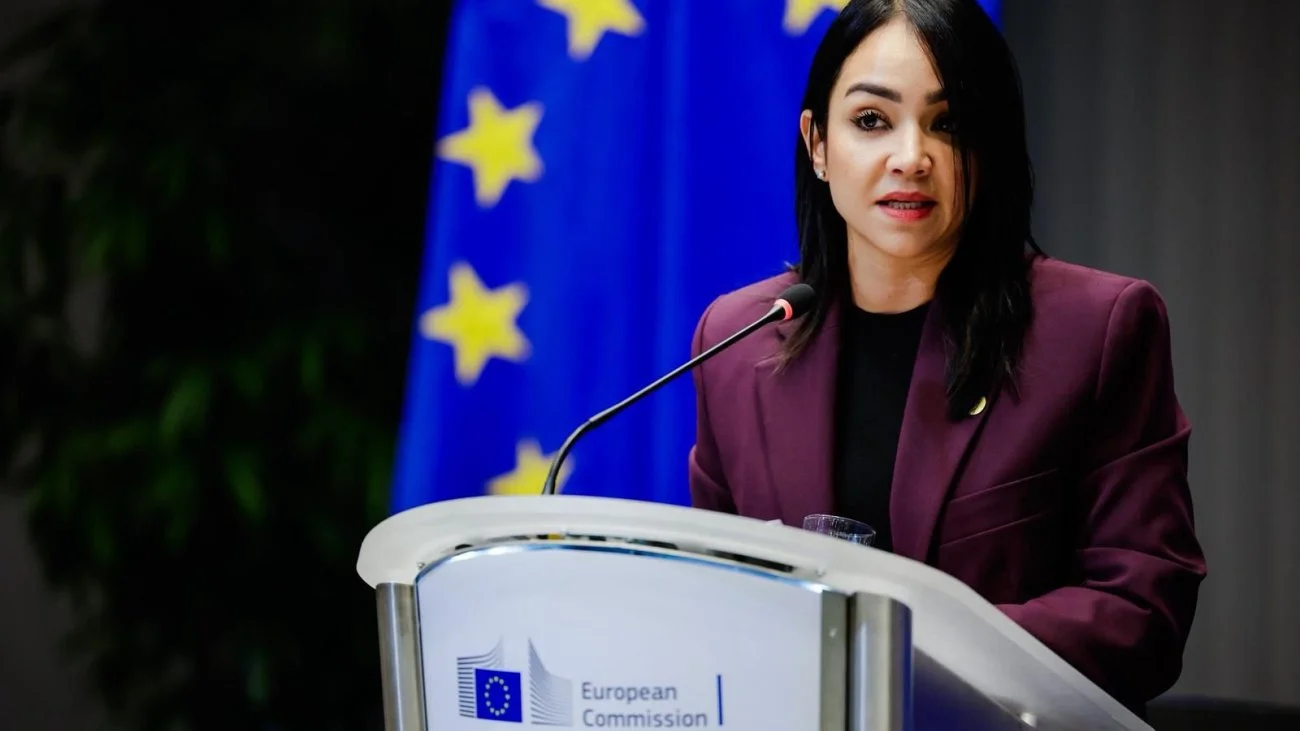
Brussels / Santo Domingo.— The Minister of Interior and Police, Faride Raful, presented in Brussels, the Dominican strategy against criminal networks involved in the smuggling of migrants, at the International High-Level Conference of the Global Alliance to Counter Migrant Smuggling, convened by the European Commission and chaired by Ursula von der Leyen. She was the only minister from Latin America and the Caribbean invited.
The Dominican Republic functions as a country of origin, transit, and destination for migrants—particularly Haitians and Dominicans seeking routes to the United States and Europe.
Figures presented by the Dominican Republic for 2024:
More than 200 investigations launched.
275 people prosecuted in court.
228 years of cumulative sentences.
137 victims rescued.
A 77% increase in international cooperation.
Raful highlighted the recent swearing-in of 865 specialized rapid-response agents, deployed across all 31 provinces.
In the “Follow the Money” session, focused on targeting illicit financial flows, she stated: “Migrant-smuggling networks generate more than $10 billion annually. We are not dealing with isolated crimes, but with transnational criminal value chains whose essential fuel is money.”
Raful emphasized that information-sharing among countries is “one of the most powerful avenues” for dismantling structures operating on routes such as Haiti–Dominican Republic–Puerto Rico or Dominican Republic–Mexico–United States.
On the margins of the conference, she held meetings with Magnus Brunner, European Commissioner for Internal Affairs and Migration, and Bernard Quintin, Belgium’s Minister of Security and the Interior, to strengthen cooperation on border security and criminal investigations.
According to the Ministry of Interior and Police, the Dominican Republic’s improvement in the U.S. Department of State’s Trafficking in Persons Report is the result of criminal prosecution, victim rescue, and institutional reforms.
For the Dominican community abroad—impacted by networks that offer irregular travel routes—the challenge remains to ensure that migration-control policies are applied with respect for human rights, both at the border with Haiti and during internal operations.
Raful reaffirmed that the Dominican Republic aspires to consolidate governance frameworks grounded in human rights, international cooperation, and shared responsibility.
Political Analysis: The Dominican Commitment Against Human Trafficking and Migrant Smuggling
Faride Raful’s presentation in Brussels represents a strategic move by President Luis Abinader’s government on multiple fronts. Let’s examine the political dimensions:
1. Regional Geopolitical Positioning
The exclusive invitation to Raful as the only Latin American minister signals European recognition of the Dominican role in Caribbean migration management. This has implications:
International legitimation: At a time when Abinader’s migration policy faces criticism over mass deportations of Haitians, the European platform offers an alternative narrative centered on “combating transnational crime” versus “human-rights violations.”
Distancing from Haiti: By presenting itself as both victim and combatant of smuggling (rather than as a perpetrator of abuses), the Dominican Republic reinforces its argument that the migration problem is a consequence of Haitian state collapse, not Dominican policy choices.
2. Domestic Political Timing
The figures presented (200+ investigations, 275 prosecuted, 228 years of sentences) arrive at a key moment:
Post-2024 elections: Abinader consolidated his re-election partly on an anti–irregular immigration platform. These numbers strengthen the narrative of “promises kept.”
Dominican abroad pressure: With Dominican communities in the U.S. and Europe increasingly vocal about deportations, the government needs to show it is fighting “criminal traffickers/smugglers,” not vulnerable migrants.
3. The “Follow the Money” Strategy
The emphasis on financial flows reveals tactical sophistication:
Reframing the debate: By focusing on dismantling lucrative criminal networks (a reported $10 billion annually worldwide), attention shifts away from humanitarian responsibility toward individual migrants.
Alignment with Western priorities: Europe and the U.S. prioritize border security and organized crime over refugee protection. The Dominican Republic strategically aligns with that approach.
4. Structural Contradictions
A central tension persists: while the government “showcases achievements in Brussels, the challenge remains to ensure that migration-control policies are applied with respect for human rights.”
This line is crucial because it exposes:
Implementation–rhetoric gap: The 137 “rescued” victims contrast with reports from organizations such as OBMICA about mass deportations without due process.
Strategic dualism: The Dominican Republic presents one face in international forums (victim protection, cooperation) and another in domestic practice (expedited deportations, construction of the border wall).
5. The TIP Report as a Political Tool
Improvement in the Trafficking in Persons Report is a significant diplomatic win:
Avoids sanctions: Moving down from the Tier 2 Watch List improves access to international financing and reduces the risk of restrictions.
Political capital with the U.S.: In an era when migration dominates politics in Washington, the Dominican Republic positions itself as a “reliable partner” in a volatile region.
6. Revealing Omissions
What the Dominican Government article does not say is equally important:
No mention of Haiti as a partner: There is no reference to cooperation with Haitian authorities, reflecting the reality of a collapsed state with limited enforcement capacity.
Lack of context on root causes: The reasons why the Dominican Republic is an “origin, transit, and destination” territory are not discussed, avoiding self-critique about economic conditions that drive Dominican emigration.
Silence on documented abuses: International organizations have documented cases of violence during deportations and in detention centers—topics absent from the official discourse.
Conclusion: An Ambiguous Commitment
The Dominican “commitment” against human trafficking and migrant smuggling is genuine in its criminal-enforcement and international-cooperation dimensions, as the prosecution figures suggest. However, it is also leveraged politically to:
Legitimize controversial migration policies
Deflect attention from human-rights violations
Position the Dominican Republic as a regional leader before European and U.S. audiences
Consolidate domestic electoral support through a “tough-on-crime” narrative
The true test of commitment is not in conferences in Brussels, but at the Haiti border and in detention centers, where “human rights” rhetoric collides with increasingly restrictive migration policies. Raful’s participation represents effective diplomacy, but not necessarily a substantive transformation of practices that human-rights organizations continue to question.
⸻⸻
Related
Pete Hegseth Announces U.S. Military Deployment in Santo Domingo
Paliza Defends a “New Course” Against Impunity, but the Public Demands a Real Cleanup
Constitutional Court Ends Penalties for LGBTQ+ Relationships in Dominican Police and Armed Forces
David Ortiz, from Batting Idol to a Hemispheric Humanitarian Standard-Bearer
Law 63-17: When Does a Vehicle Stop Being Useful in the Dominican Republic and Why Does It Matter?