
By ESENDOM
August 16, 2026
Lea en español: 5 héroes de la Guerra de la Restauración que debes conocer (completo)
Unlike most countries, the Dominican Republic celebrates two moments of independence. The Dominican Restoration War of 1863–1865 represents one of the most heroic and defining episodes in the nation’s history. Following the controversial annexation to Spain proclaimed by Pedro Santana on March 18, 1861, the Dominican people confronted a renewed form of colonial domination that threatened their sovereignty and recently consolidated national identity.
On August 16, 1863, fourteen patriots crossed into Dominican territory from Ouanaminthe, Haiti, and raised the Dominican tricolor flag on Capotillo Hill. According to historical research and sources such as the Dominican Academy of History and the Compendio de la historia de Santo Domingo, the group’s core was led by Santiago Rodríguez, accompanied by Benito Monción and José Cabrera. Pedro Antonio Pimentel joined them at Capotillo for the raising of the flag.
What began as an uprising in the rural communities of the Cibao quickly developed into a national movement that united peasants, military veterans, and political leaders. During two years of intense fighting, legendary figures such as Gaspar Polanco, Gregorio Luperón, and José Antonio Salcedo led a resistance that sought not only to recover national independence, but also to reaffirm Dominican identity in the face of foreign powers.
The war reached its political conclusion on March 3, 1865, when Spain issued the royal decree repealing the annexation. It ended definitively with the evacuation of Spanish troops in July of that year, demonstrating to the world that the Dominican commitment to independence could not be broken.
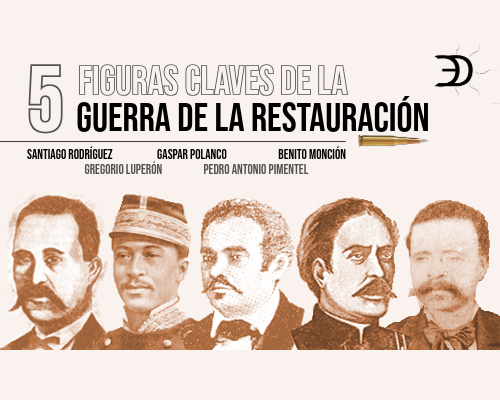
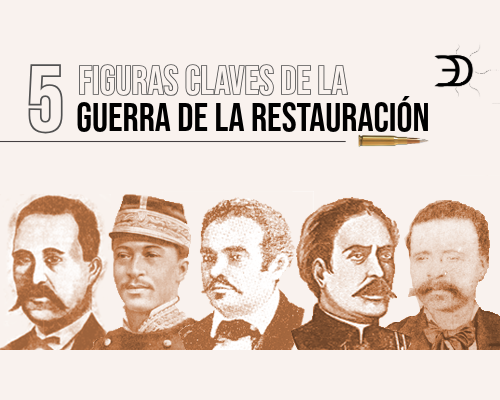
At ESENDOM, we remember five of these heroes as we commemorate the 163rd anniversary of the Dominican Restoration War.
Gregorio Luperón: The Centaur Who Forged Freedom with a Machete and Unshakable Conviction
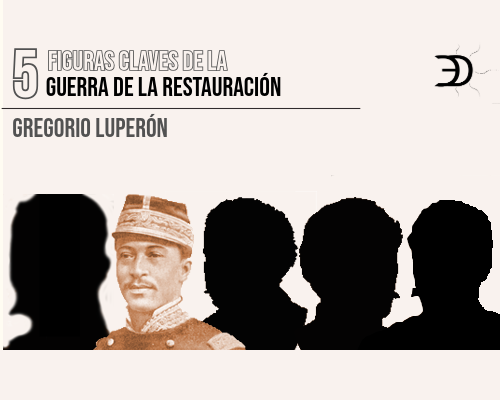
Along the cobblestone streets of Puerto Plata, where the Caribbean Sea whispers stories of resistance and the wind carries echoes of freedom, a child destined to become a legend was born on September 8, 1839.
Gregorio Luperón, the son of Nicolasa Duperrón and Pedro Castellanos, grew up amid the modest circumstances of his family’s small roadside business and dreams of greatness inspired by the heroes of Plutarch. (It is important to note that General Luperón Hispanicized his mother’s French surname, changing Duperón or Duperrón to Luperón.)
His childhood was shaped by necessity. He sold sweets on street corners, carried water for wealthy families, and helped with the family’s modest business. Under the guidance of the French merchant Pedro Dubocq, however, the young Gregorio discovered a world of literature and knowledge that would permanently transform his understanding of destiny.
To read the entire article:
5 Heroes of the Dominican Restoration War You Should Know: Gregorio Luperón
Santiago Rodríguez: The Man Who Lit the Fuse at Capotillo
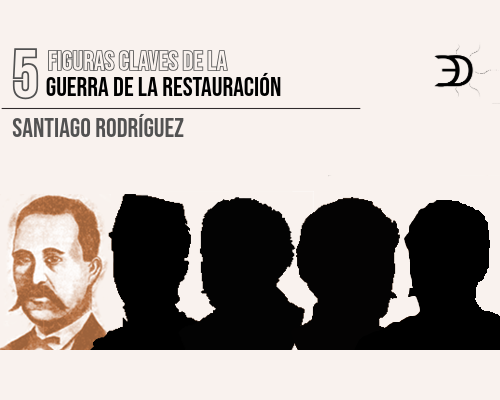
Santiago Rodríguez Masagó , commonly known as “Chago,” was born around 1809 and died in 1879. His life is embodied in a single verb: to begin.
A son of the borderlands and the tradition of transhumant cattle ranching, Rodríguez became a merchant and military leader out of necessity. His name would forever be associated with the Cry of Capotillo on August 16, 1863—the spark that ignited the Dominican Restoration War.
His precise birthplace remains disputed among historians. Some identify Cap-Haïtien or Fort-Liberté in Haiti, while others point to the area where Dajabón was later established. His biography, however, leaves little doubt about his historical identity: he was a powerful borderland leader whose networks, resources, and prestige allowed him to transform popular discontent into an organized insurrection.
To read the entire article:
5 Heroes of the Dominican Restoration War You Should Know: Santiago Rodríguez
Gaspar Polanco: The First Sword Who Forged the Restorationist Victory
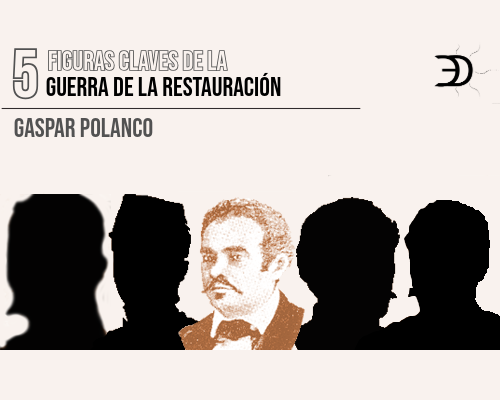
He could not read or write. He signed the decrees of his presidency with a cross. And for four months in 1863, he was the man on whom the fate of Dominican sovereignty turned.
Gaspar Polanco Borbón, the son of the prosperous Valentín Polanco and Martina de Borbón, grew up among cattle ranches and tobacco plantations. Through agricultural labor, he developed the practical abilities that he would later apply masterfully to the art of war.
His education did not come from academic halls or books on military strategy. Polanco learned to read the terrain before he learned to read words, to ride a horse before he learned to write his name, and to command men through the respect he earned in daily labor.
This practical formation proved to be ideal preparation for a leader who would confront one of the greatest military challenges in Dominican history.
The Polanco family was steeped in patriotism. His older brother, Juan Antonio, became a restorationist general; his sister Rita married Federico de Jesús García; and his niece Ana became the wife of future president Pedro Antonio Pimentel. Within this atmosphere of national commitment, Gaspar developed an early and profound awareness of his country’s destiny.
To read the entire article:
5 Heroes of the Dominican Restoration War You Should Know: Gaspar Polanco
Pedro Antonio Pimentel: The Man Who Saved the Nation Three Times
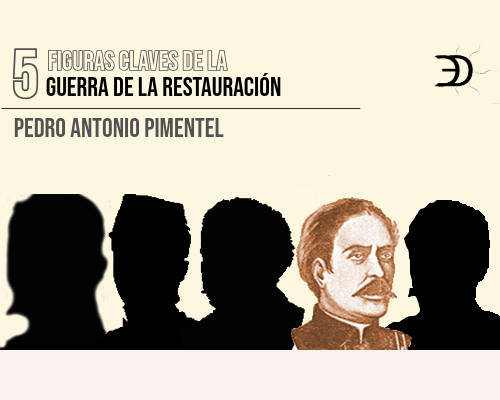
Across the vast plains of Lozano, in the municipality of Castañuelas, Monte Cristi, where the wind carries stories of freedom and the horizon appears as limitless as the dream of independence, a man destined to write his name in gold in the annals of Dominican history was born in 1830.
Pedro Antonio Pimentel, the son of Jacinto Pimentel and Juana Chamorro, emerged from the cattle-ranching countryside to become one of the most consequential leaders of the Dominican Restoration War.
Gregorio Luperón, who understood the character of men forged in war, described him with almost poetic precision: “rebellious against discipline, ill-suited to the cabinet, but bold and farsighted in the Restoration War.”
The description captures the essence of a leader shaped more by the intensity of combat than by the halls of politics—a man whose greatness became most evident whenever his country needed him.
To read the entire article:
5 Heroes of the Dominican Restoration War You Should Know: Pedro Antonio Pimentel
Benito Monción: The Eternal Sentinel of the Northwest
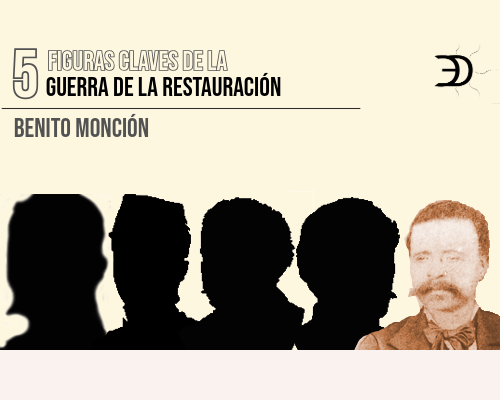
In the arid countryside of La Vega, where the rising sun illuminates extraordinary destinies, a child was born on March 29, 1826, who would become one of the most faithful guardians of Dominican freedom.
Benito Monción Durán, the son of José Monción and Sebastiana Durán, did not grow up amid the comforts of urban life. Instead, he was raised in the rugged environment of la línea noroeste (the Northwestern Line), the border region where each passing day added a quiet but crucial page to the history of the nation.
His childhood unfolded in La Visite, Dajabón, where the mountains whisper secrets between two nations and where the simple act of survival demands courage. In this land of contrasts, where patriotism required constant vigilance and loyalty was forged gradually through hardship, Monción developed the unbreakable resolve that would distinguish him throughout his life.
As a laborer on the lands of regional leader Santiago Rodríguez, he learned fundamental lessons that no military academy could teach: that true strength is born from honest work and that loyalty is the most valuable currency a man can offer.
To read the entire article:
5 Heroes of the Dominican Restoration War You Should Know: Benito Monción
Related:
5 Heroes of the Dominican Restoration War You Should Know: Gregorio Luperón
5 Heroes of the Dominican Restoration War You Should Know: Santiago Rodríguez
5 Heroes of the Dominican Restoration War You Should Know: Gaspar Polanco
5 Heroes of the Dominican Restoration War You Should Know: Pedro Antonio Pimentel
5 Heroes of the Dominican Restoration War You Should Know: Benito Monción
5 héroes de la Guerra de la Restauración que debes conocer: Gregorio Luperón
5 héroes de la Guerra de la Restauración que debes conocer: Santiago Rodríguez
5 héroes de la Guerra de la Restauración que debes conocer: Gaspar Polanco
5 héroes de la Guerra de la Restauración que debes conocer: Pedro Antonio Pimentel
5 héroes de la Guerra de la Restauración que debes conocer: Benito Monción