
By ESENDOM
August 3, 2026
Lea en español: 5 héroes de la Guerra de la Restauración que debes conocer: Gregorio Luperón
Previous: Benito Monción Next: Santiago Rodríguez
Unlike most countries, the Dominican Republic celebrates two moments of independence. The Dominican Restoration War of 1863–1865 represents one of the most heroic and defining episodes in the nation’s history. Following the controversial annexation to Spain proclaimed by Pedro Santana on March 18, 1861, the Dominican people confronted a renewed form of colonial domination that threatened their sovereignty and recently consolidated national identity.
On August 16, 1863, fourteen patriots crossed into Dominican territory from Ouanaminthe, Haiti, and raised the Dominican tricolor flag on Capotillo Hill. According to historical research and sources such as the Dominican Academy of History and the Compendio de la historia de Santo Domingo, the group’s core was led by Santiago Rodríguez, accompanied by Benito Monción and José Cabrera. Pedro Antonio Pimentel joined them at Capotillo for the raising of the flag.
What began as an uprising in the rural communities of the Cibao quickly developed into a national movement that united peasants, military veterans, and political leaders. During two years of intense fighting, legendary figures such as Gaspar Polanco, Gregorio Luperón, and José Antonio Salcedo led a resistance that sought not only to recover national independence, but also to reaffirm Dominican identity in the face of foreign powers.
The war reached its political conclusion on March 3, 1865, when Spain issued the royal decree repealing the annexation. It ended definitively with the evacuation of Spanish troops in July of that year, demonstrating to the world that the Dominican commitment to independence could not be broken.
At ESENDOM, we remember five of these heroes as we commemorate the 163rd anniversary of the Dominican Restoration War.
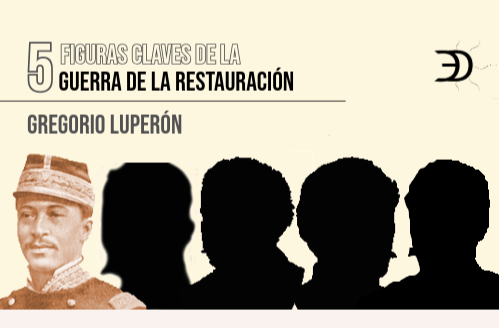
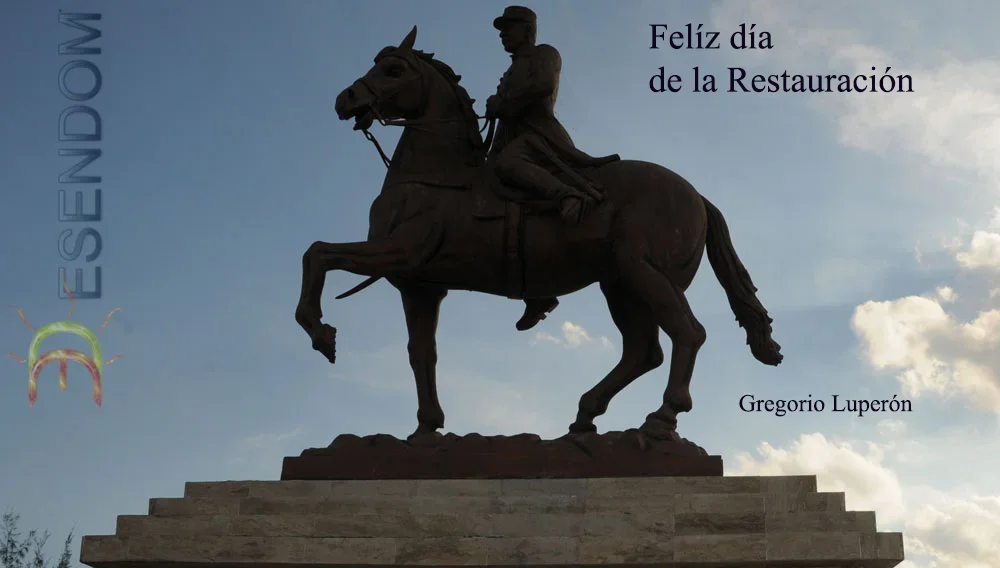
Gregorio Luperón: The Centaur Who Forged Freedom with a Machete and Unshakable Conviction
Along the cobblestone streets of Puerto Plata, where the Caribbean Sea whispers stories of resistance and the wind carries echoes of freedom, a child destined to become a legend was born on September 8, 1839.
Gregorio Luperón, the son of Nicolasa Duperrón and Pedro Castellanos, grew up amid the modest circumstances of his family’s small roadside business and dreams of greatness inspired by the heroes of Plutarch. (It is important to note that General Luperón Hispanicized his mother’s French surname, changing Duperón or Duperrón to Luperón.)
His childhood was shaped by necessity. He sold sweets on street corners, carried water for wealthy families, and helped with the family’s modest business. Under the guidance of the French merchant Pedro Dubocq, however, the young Gregorio discovered a world of literature and knowledge that would permanently transform his understanding of destiny.
Plutarch’s Parallel Lives became his personal gospel, shaping a conception of heroism that history would soon put to the test.
At the age of sixteen, during an episode remembered as “The Gollito Fight,” Luperón displayed the courage that would characterize him throughout his life. Armed with a machete, he repelled an assault in Jamao, earning the respect of those who knew him and announcing to the world that a warrior had been born.
From Merchant to Conspirator: The Awakening of a Patriotic Consciousness
When Pedro Santana proclaimed the annexation to Spain on March 18, 1861, Luperón was working as a merchant in Sabaneta de Yásica. His response was immediate and unequivocal: he publicly refused to sign the annexation manifesto, instantly becoming an enemy of the new regime.
Persecuted by Governor Juan Suero, he went into exile in the United States and the Caribbean. The experience strengthened his anticolonial outlook and deepened his commitment to Dominican sovereignty.
In 1862, he secretly returned under the alias “Eugenio de los Santos,” posing as a traditional healer to conceal his conspiratorial activities. This period of silent resistance prepared him for the decisive moment that would change not only his own destiny, but also the course of the Dominican nation.
The Cry of Capotillo and the Birth of a Military Legend
On August 16, 1863, when Santiago Rodríguez, Benito Monción, and Pedro Antonio Pimentel raised the Dominican tricolor on Capotillo Hill, Luperón understood that his historic moment had arrived.
He joined the siege of Santiago, where Gaspar Polanco recognized his abilities and granted him the rank of colonel. During the battle of September 6, Luperón demonstrated not only personal bravery, but also an extraordinary capacity for military strategy. His performance earned him recognition as one of the war’s most brilliant commanders.
His rise was meteoric. Within a matter of months, he advanced from colonel to general and became Military Commander of Santiago. More than his ranks, however, Luperón was defined by his relentless military activity.
He participated in decisive campaigns in Bonao and Cotuí, critical operations in the south alongside Pedro Florentino, and legendary battles in the east against the forces of Pedro Santana. These included the victories at Bermejo and El Paso del Muerto.
By the age of twenty-five, he had become a major general, with a military record extending across nearly the entire country. His strategy of mobile warfare and guerrilla combat became a model for future generations of Dominican military leaders. His refusal to enter into any compromise with the annexationists established him as an uncompromising guardian of absolute independence.
Beyond the War: The Statesman and Visionary
Following Spain’s withdrawal in 1865, Luperón demonstrated that his greatness extended beyond the battlefield.
His confrontation with Buenaventura Báez, whom he considered as willing as Santana to surrender Dominican sovereignty to foreign powers, led him to head the opposition during the Six Years’ War of 1868–1874.
As leader of the Blue Party—whose members were also known as Los Bolos—Luperón promoted a revolutionary liberal program that defended national sovereignty, stronger institutions, and secular education.
His provisional presidency from 1879 to 1880 sought to stabilize the country and promote economic progress. His decision to entrust political power to Ulises Heureaux, however, helped open the way for a dictatorship that would persecute and torment Luperón during the final years of his life.
The experience demonstrated the complexity of political leadership in a nation fractured by decades of civil war.
The Eternal Legacy of the Centaur
Gregorio Luperón died in Puerto Plata on May 20, 1897, reportedly declaring words that defined his existence:
“Men like me should not die lying down.”
His legacy transcends military victories and political office. He embodies the authentic patriot who rose from humble beginnings to the highest levels of national leadership through merit, courage, and unwavering conviction.
His uncompromising opposition to every form of colonialism, together with his vision of a modern and sovereign country, established him as one of the eternal guardians of Dominican independence.
Some historians believe that Luperón deserves to be recognized as the “fourth founding father of the nation.” Such recognition honors not only his heroic accomplishments, but also his moral consistency and absolute dedication to the ideals of freedom and national dignity.
Bibliography on Gregorio Luperón
Cassá, Roberto. Historia social y económica de la República Dominicana. [6a ed.]., Editora Alfa y Omega, 1985.
Luperón, Gregorio. Notas autobiográficas y apuntes históricos. Editora de Santo Domingo, 1974.
Moya Pons, Frank. Manual de historia dominicana. 6a ed., UCMM, 1981.
Rodríguez Demorizi, Emilio. Luperón y Hostos. Editora Montalvo, 1939.
Rodríguez Objío, Manuel. Gregorio Luperón e historia de la Restauración. Editora Universitaria UASD, 2004.
Tolentino Dipp, Hugo. Gregorio Luperón : biografía política. Quinta edición., [Editora Búho, S.R.L.], 2014.
Welles, Sumner. Naboth’s Vineyard : The Dominican Republic, 1844-1924. Payson & Clarke Ltd, 1928.
[Tomorrow: Another name you will not want to miss.]
Related:
5 Heroes of the Dominican Restoration War You Should Know: Gregorio Luperón
5 Heroes of the Dominican Restoration War You Should Know: Santiago Rodríguez
5 Heroes of the Dominican Restoration War You Should Know: Gaspar Polanco
5 Heroes of the Dominican Restoration War You Should Know: Pedro Antonio Pimentel
5 Heroes of the Dominican Restoration War You Should Know: Benito Monción
5 héroes de la Guerra de la Restauración que debes conocer: Gregorio Luperón
5 héroes de la Guerra de la Restauración que debes conocer: Santiago Rodríguez
5 héroes de la Guerra de la Restauración que debes conocer: Gaspar Polanco
5 héroes de la Guerra de la Restauración que debes conocer: Pedro Antonio Pimentel
5 héroes de la Guerra de la Restauración que debes conocer: Benito Monción