

Por Emmanuel Espinal y Nelson Santana
30 de diciembre de 2025
Lea en español: Once pérdidas culturales que marcaron el 2025: cuando se apaga la memoria
The year 2025 was especially harsh for Dominican culture. We lost voices from merengue and bachata, towering figures of theater, pioneers of cinema, chroniclers of political history, essential visual artists, and television personalities who defined an era. This reckoning honors their legacies—who they were, what they built, and why, in a country that tells its story through music, performance, and image, their deaths carry such weight.
Editorial note: Mario Vargas Llosa is included because, although Peruvian, his most influential work in the Dominican and international imagination is rooted in our history: The Feast of the Goat, one of the most important fictional treatments of the Trujillo dictatorship. His passing also touches the Dominican symbolic archive.
1) Félix Cumbé /Francisco de la Cruz (Critz Sterlin)
Name: Félix Cumbé / Francisco de la Cruz (Critz Sterlin)
Born: 1961 or 1964 (Haiti) [Note: sources differ; Wikipedia lists August 4, 1964]
Died: February 11, 2025 (Santo Domingo)
Age: 60
Field: Merengue and bachata; composer, performer
Legacy: “El Gatico,” “Félix Cumbé,” “Déjame volver,” “Tú no ta’ pa’ mí,” “Fui Fuá”
Key fact: Migrated to the Dominican Republic as a child; naturalized Dominican in December 2022
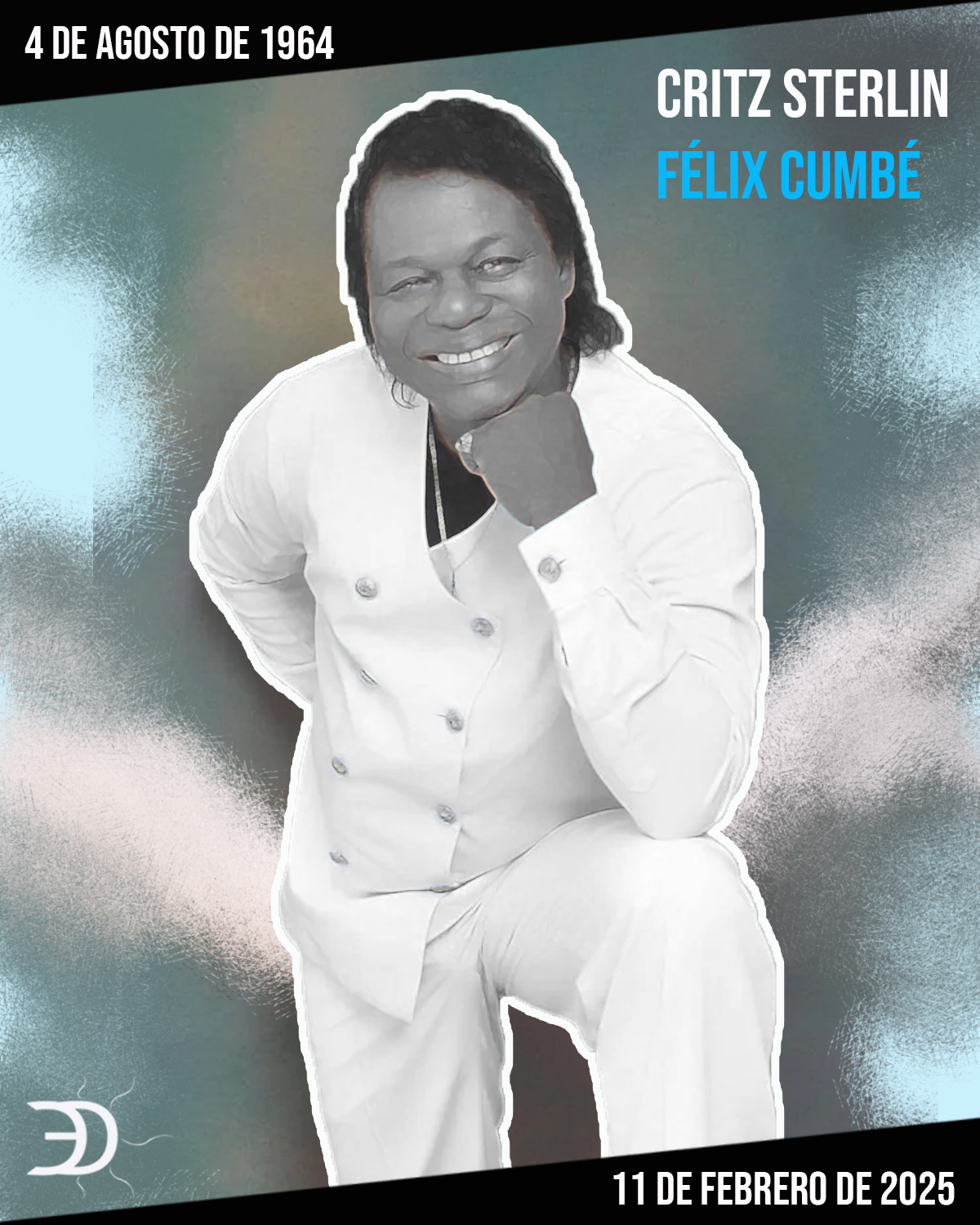
Félix Cumbé embodies a profound chapter of the Caribbean borderlands: an artist born in Haiti who ultimately became part of the Dominican emotional soundtrack. He died during a cardiac catheterization after suffering multiple cardiac arrests, and the news felt like a merengue we assumed would play forever, suddenly going silent.
Cumbé was not merely a performer. He was a composer whose songs, interpreted by Dominican orchestras, embedded themselves in collective memory. He also experienced a late-career revival when his music surged again on social media—most notably “Fui Fuá” and its remix with Crazy Design—proving that popular culture is not a museum but a moving river. In that river, Cumbé is no longer “the one who arrived”; he is the one who stayed.
2) Diómedes Núñez Guzmán (March 9): voice and trumpet of the golden years
Born: February 3, 1967 (Santa Cruz de Mao, Valverde)
Died: March 9, 2025 (Santo Domingo)
Age: 58
Field: Merengue; singer, trumpeter, composer
Legacy: Leader of El Grupo Mío; hits such as “Las estrellas brillarán,” “Balsié,” “Esto se encendió,” “Aguilucho desde chiquitito”
Cause: Complications from kidney failure; heart attack after intubation for pulmonary problems
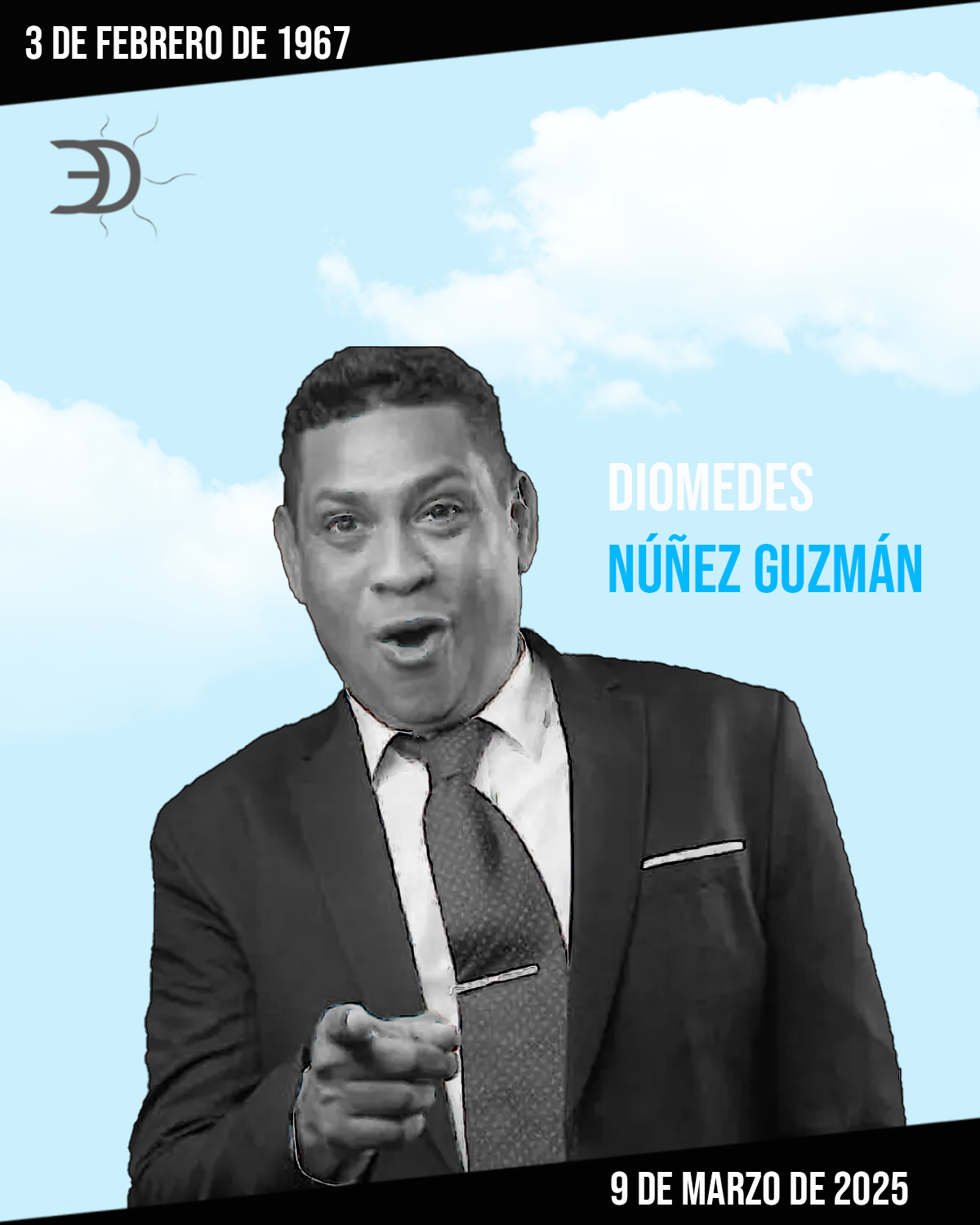
Diómedes Núñez belonged to a generation of merengueros who understood the stage as a full discipline. Trained in trumpet and harmony at the National Conservatory, he was both a musician’s musician and a singer with a distinct voice. His death at 58 shook the country precisely because his career was defined by steadiness—Los Hijos del Rey, Ramón Orlando’s orchestra, and finally El Grupo Mío as his own artistic identity.
If one image captures him, it is merengue as a finely tuned engine of joy—constructed with conservatory rigor. His passing is not simply the loss of a singer; it marks the fading of a way of making merengue in which voice and brass spoke the same language.
3) Iván García Guerra (March 22): Theater as Homeland, Teaching as Legacy
Born: February 26, 1938 (San Pedro de Macorís)
Died: March 22, 2025
Age: 87
Field: Theater (actor, director, playwright); cultural journalism
Recognition: Gran Soberano (2015)
Legacy: Formative figure and institutional pillar of Dominican theater
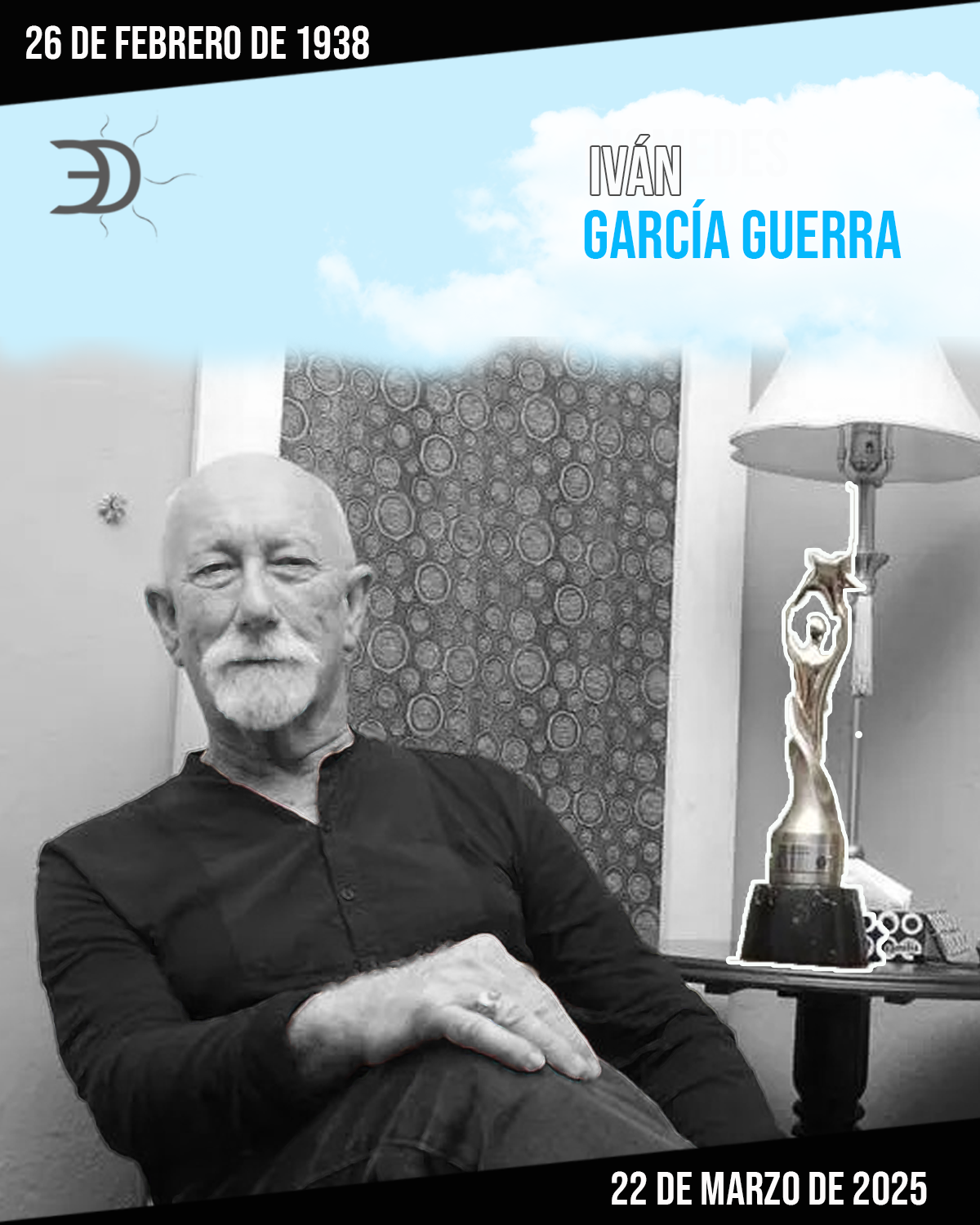
For Dominican theater, Iván García was what a great tree is to a neighborhood: shade, direction, and reference. His career spanned acting, directing, playwriting, and journalism, but his greatest contribution was the patient construction of a theatrical ecosystem. His death at 87 felt like the removal of a load-bearing column.
What mattered most about Iván was not just his résumé but the authority he embodied—the kind that does not raise its voice. When someone like that is gone, it is felt in everyday practice: rehearsal discipline, respect for the text, the way one generation addresses another. Iván leaves behind method and character.
4) Rubby Pérez (April 8): “The Highest Voice in Merengue” and a National Tragedy
Name: Rubby Pérez (Roberto Antonio Pérez Herrera)
Born: March 8, 1956
Died: April 8, 2025 (Santo Domingo)
Age: 69
Field: Merengue (singer)
Legacy: Lead voice with Wilfrido Vargas; solo career; “the highest voice of merengue”
Context: Collapse of the Jet Set roof during a performance; more than 200 fatalities
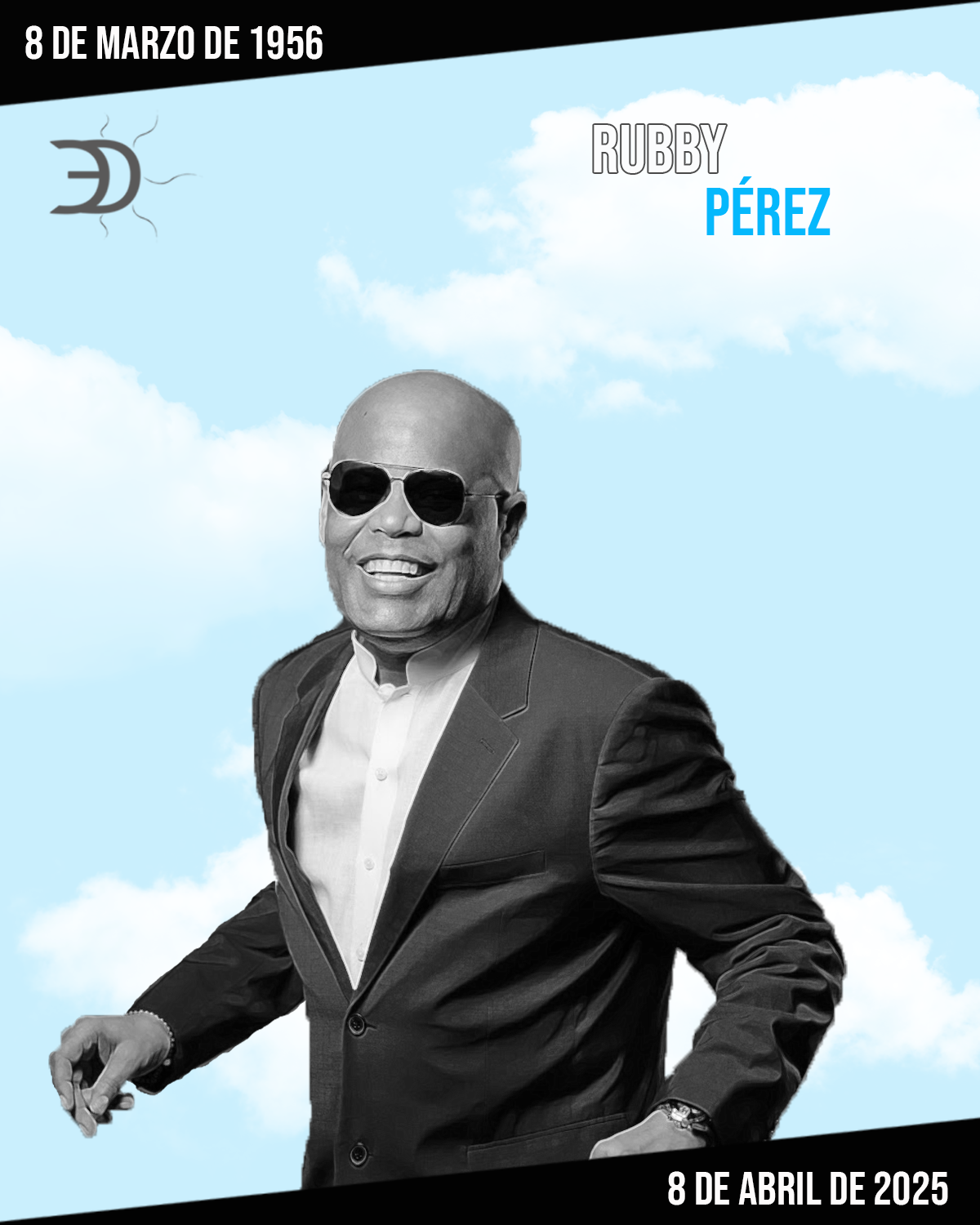
Rubby Pérez died in circumstances the country is still processing: the collapse of the Jet Set nightclub roof while he was performing. This was not a private death but a collective trauma that transformed a night of music into an unforgettable national wound. International coverage underscored the magnitude of the disaster and its impact on cultural memory.
Rubby’s life was also a story of reinvention. He dreamed of baseball until an accident redirected him toward music, where he built a career defined by extraordinary vocal power. Calling him “the highest voice in merengue” was not a slogan—it was an accurate technical and emotional description. His loss hurts not only because of what he sang, but because of what he symbolized: that merengue still had giants.
5) Mario Vargas Llosa (April 13): Not Dominican, Yet Central to Dominican Memory
Born: March 28, 1936 (Arequipa, Peru)
Died: April 13, 2025 (Lima, Peru)
Age: 89
Field: Literature, journalism; Nobel Prize in Literature (2010)
Link to the DR: The Feast of the Goat (a central novel about Trujillo)
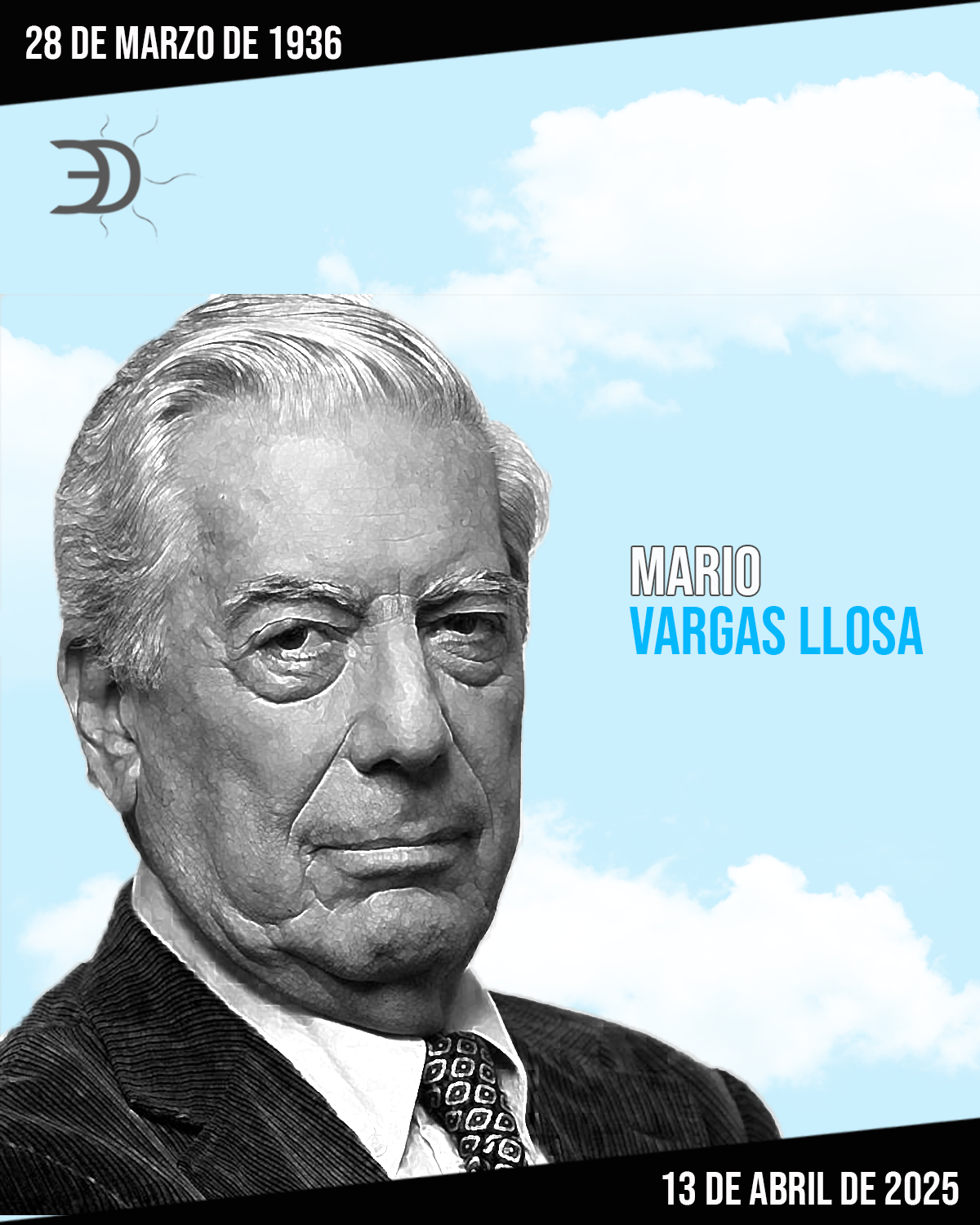
Fuente de foto: catedravargasllosa.org
Vargas Llosa was not Dominican—this must be said plainly—but his work deeply shaped how the world understands key chapters of Dominican history. The Feast of the Goat became required reading: for Dominicans, for the Spanish-speaking Caribbean, and for international audiences encountering the mechanics of political terror and the human cost of Trujillo’s dictatorship.
His death at 89 prompted global tributes to one of Latin America’s major literary figures. In the Dominican context, his presence here serves as a reminder: national memory is sometimes written from the outside—and still speaks directly to us. The relevant question is not whether he was Dominican, but what his work did to Dominican memory.
6) Agliberto Meléndez (July 2): Dominican Cinema Before It Was an Industry
Born: August 8, 1942 (Altamira, Puerto Plata)
Died: July 2, 2025
Age: 82
Field: Film (director); cultural manager
Legacy: Un pasaje de ida, considered a foundational milestone of Dominican feature film
Other contribution: Founder of the National Film Archive (Cinemateca Nacional)
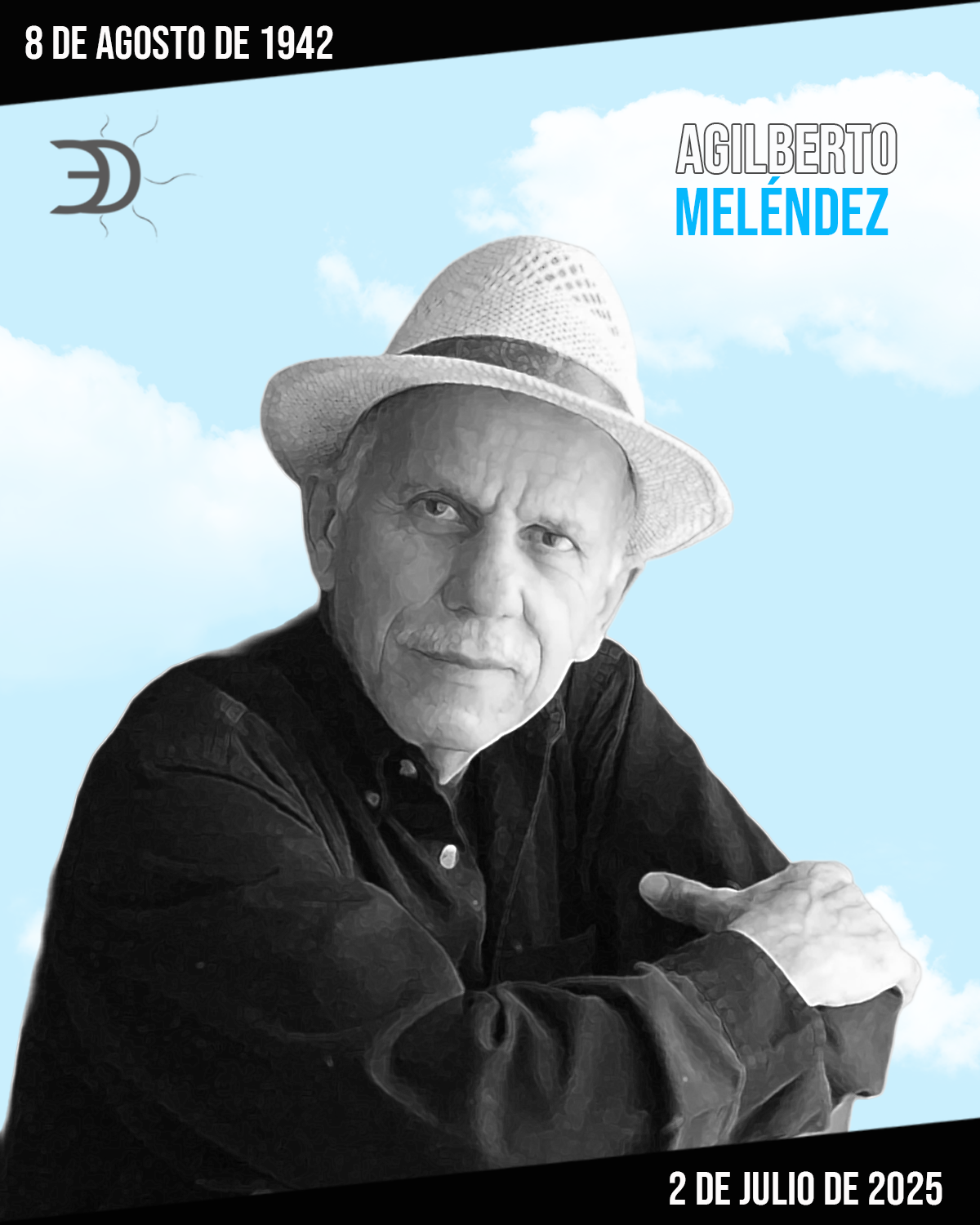
Agliberto Meléndez represents the era before Dominican cinema had infrastructure—when making a film meant proving it could be done at all. Un pasaje de ida is more than a movie; it is a foundational statement about one of the defining themes of Dominican modernity: migration, escape, survival. Its raw, unsettling narrative expanded both possibility and imagination.
As founder of the National Film Archive, Meléndez also became a guardian of audiovisual memory. That role is critical: a country without archives is a country without continuity. His death leaves a clear mandate—to sustain the institutions that preserve film heritage and make it accessible.
Read the article: Con un pasaje de ida Agliberto Meléndez hace su partida y fallece a los 82 años
7) José Cestero (July 16): Expressionism as Urban Chronicle
Born: March 19, 1937 (Santo Domingo)
Died: July 16, 2025 (Colonial City)
Age: 88
Field: Visual arts (painting); expressionism
Recognition: National Prize for Visual Arts (2015)
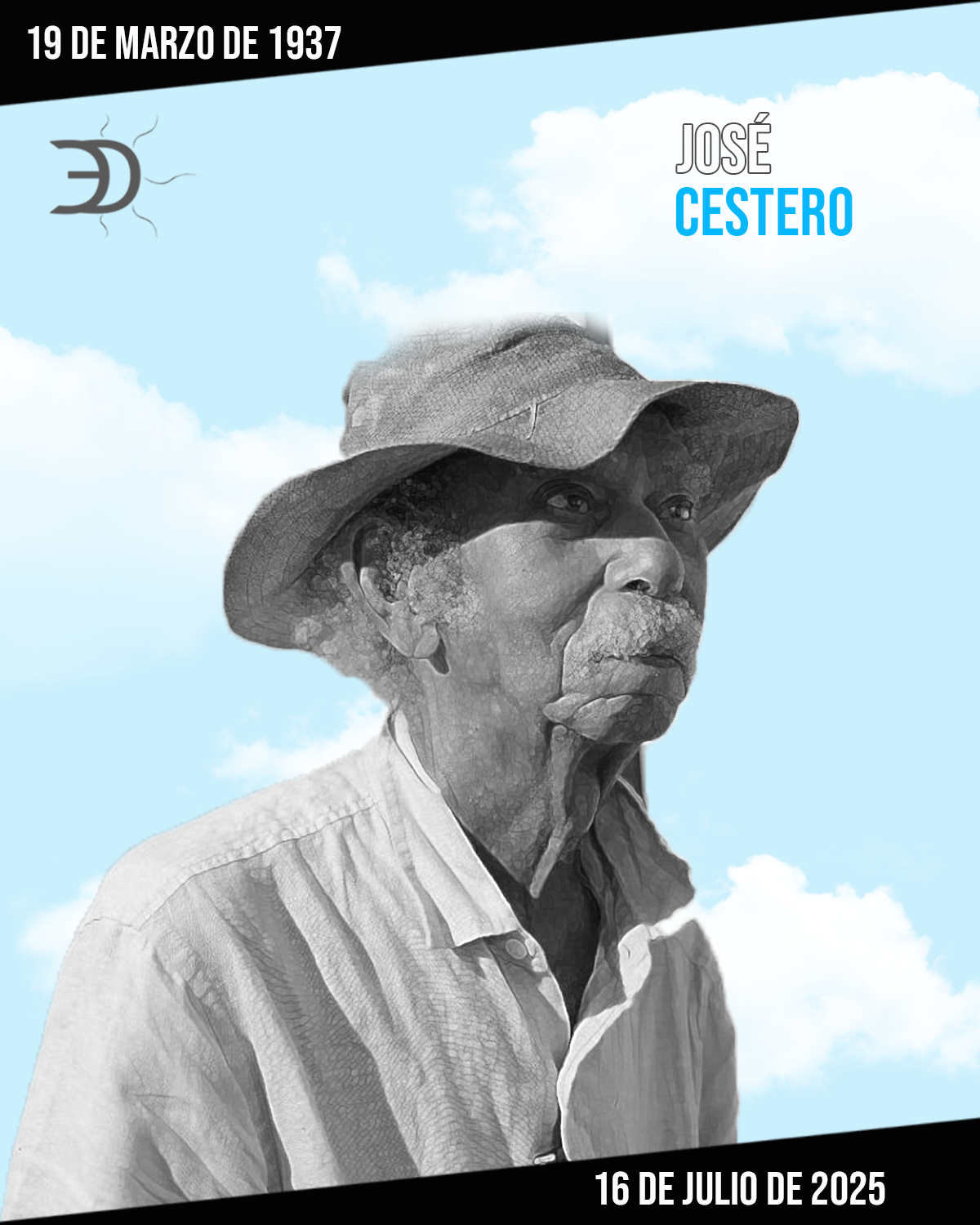
José Cestero was a visual chronicler of the nation—not postcard Dominicanidad, but tension, movement, and nerve. His work belongs to a generation that understood art as an act of freedom amid political and social pressure. His death at 88 marks the end of an era when visual artists were also public intellectuals.
For Cestero, expressionism was not a stylistic label; it was a language. Through it, he built an emotional archive that cannot be replaced. His work endures not out of nostalgia, but because the country still recognizes itself in those distortions that tell uncomfortable truths without apology.
Read the article: José Cestero: The Expressionist Soul of Dominican Visual Art
8) René Fortunato (July 18): The Filmmaker Who Made History Public
Name: René Antonio Fortunato
Born: February 1, 1958 (Santo Domingo)
Died: July 18, 2025 (Santo Domingo)
Age: 67
Field: Documentary film (director, producer, screenwriter)
Legacy: Historical documentaries on Trujillo, Balaguer, Bosch, the 1965 War
Reported cause: Cancer
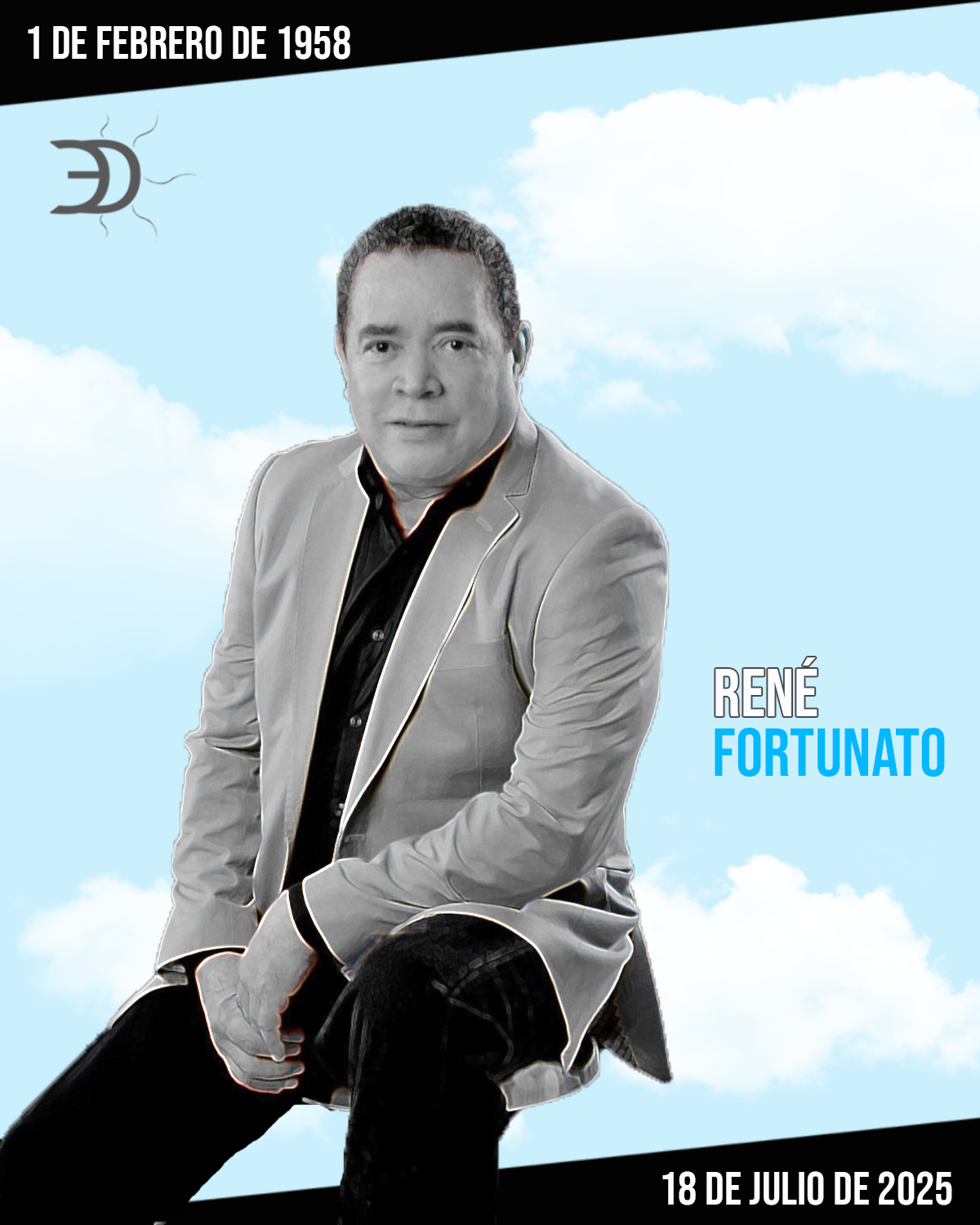
René Fortunato achieved something rare: he made demanding historical cinema widely accessible. His documentaries were not confined to classrooms; they became national conversations. With works such as Abril: la trinchera del honor and his Trujillo trilogy, he taught generations to see Dominican politics as both historical process and human drama—without propaganda.
His death at 67 left a palpable void: the loss of a national storyteller. When a country loses one of its narrators, it must either accept silence or cultivate new voices. Fortunato’s legacy demands the latter—more archives, more investigative cinema, more critical storytelling in a language people can reach.
9) Miguel Ángel Martínez (August 23): The Actor Who Felt Like Family
Born: November 26, 1954 (Sánchez Ramírez)
Died: August 23, 2025 (Santo Domingo Este)
Field: Theater and film (actor; theater director)
Legacy: Constant presence in Dominican cinema; teacher and mentor; linked to the Fine Arts
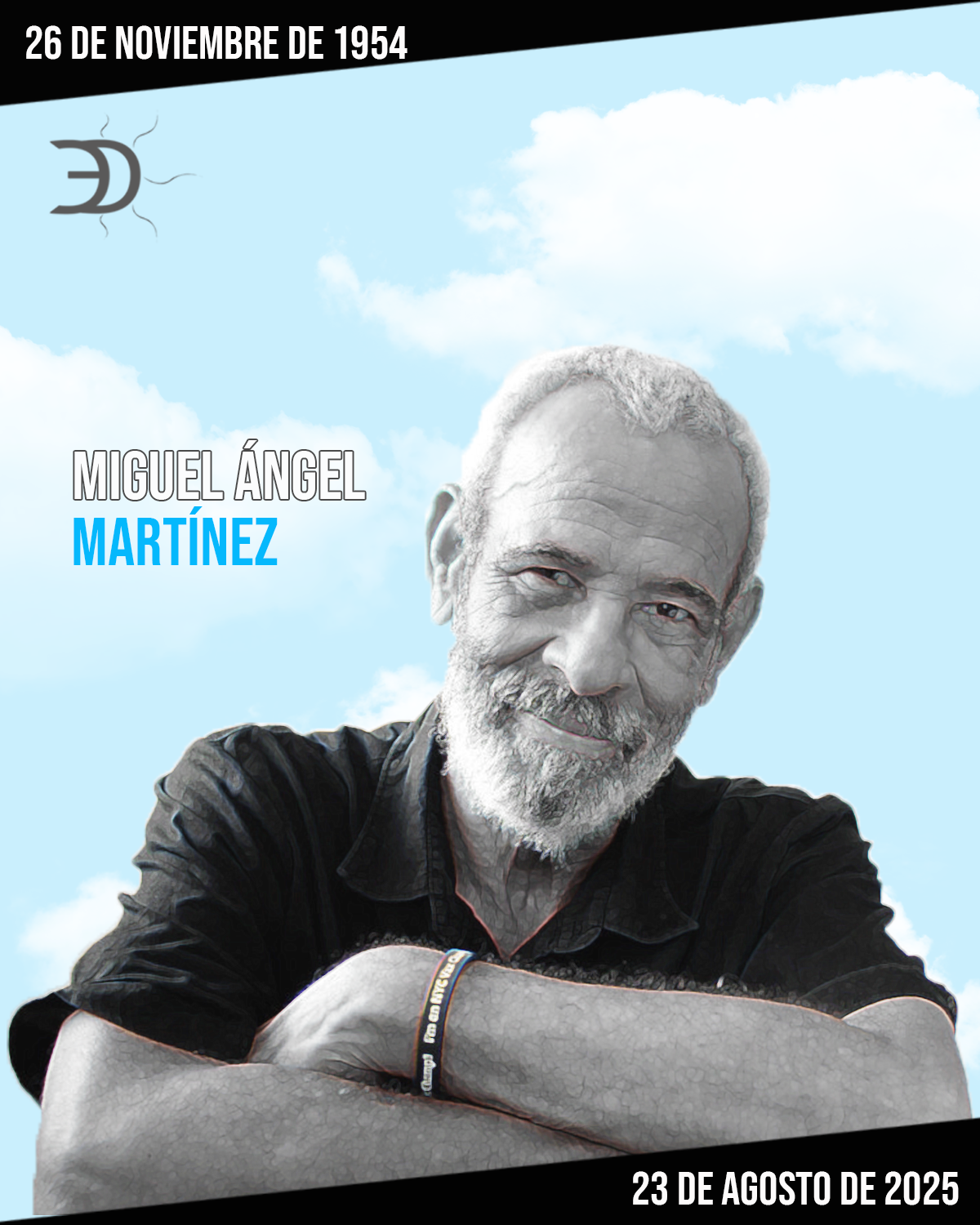
Miguel Ángel Martínez was one of those actors who felt familiar because he had always been there—on stage, on screen, on television, and in classrooms. Colleagues confirmed his death, and beyond specific roles, what remains is the image of a versatile, respected, and generous professional.
In fragile cultural ecosystems, actors who also teach are double heritage: they sustain the present and build the future. Martínez was one of those figures. His absence is felt not only as the loss of a performer, but as the loss of a bridge between generations.
10) Angelita Curiel “La Mulatona” (August 23): Television, Showmanship, and Dignity
Name: Angelita Curiel (“La Mulatona”)
Died: August 23, 2025 (Santo Domingo; Plaza de la Salud)
Age: 66
Field: Vedette, actress, comedian; television figure (1980s–90s)
Health context: Kidney complications; hospitalization after a fall and femur fracture
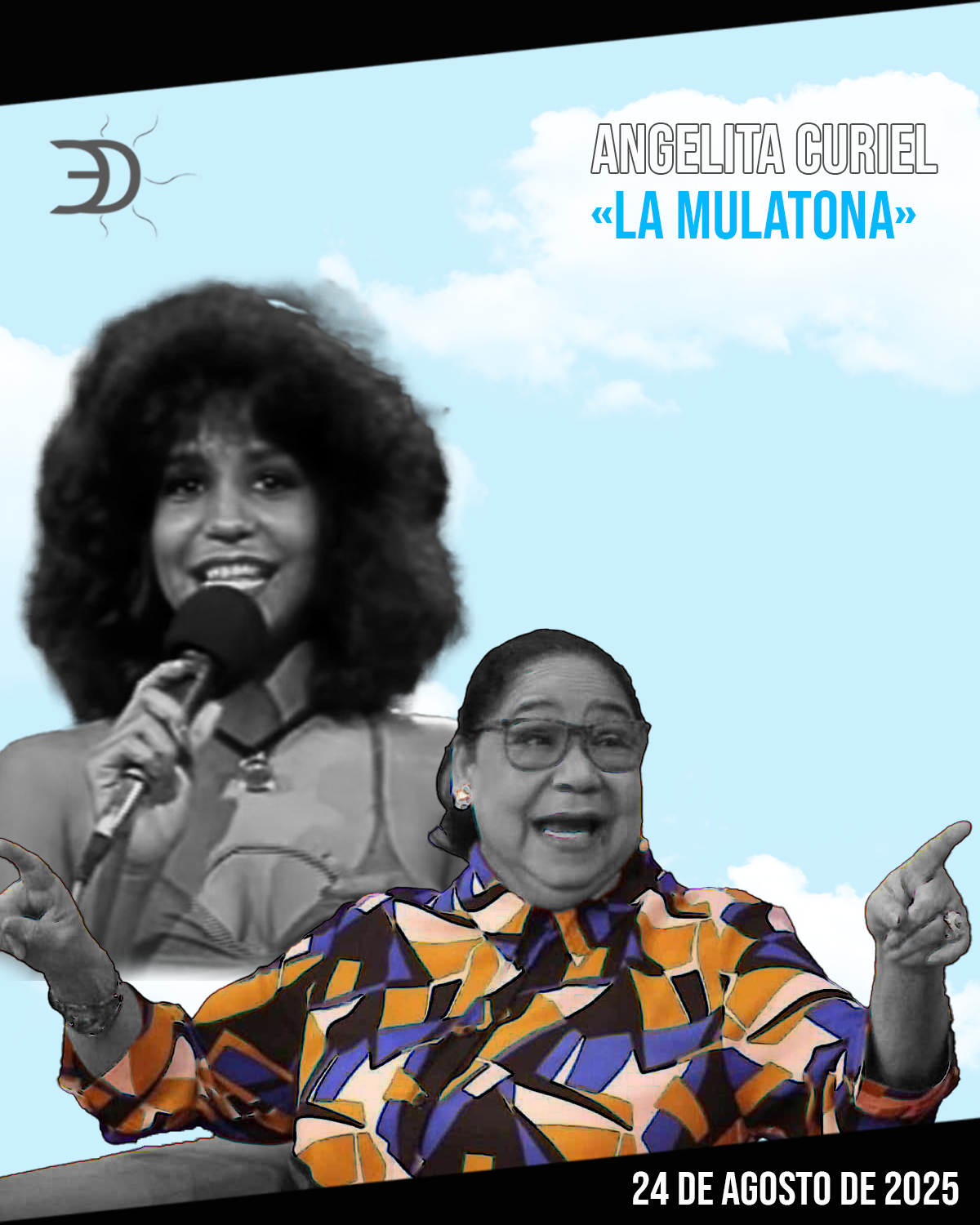
Angelita Curiel was a defining television presence of her era—a vedette with undeniable stage charisma, but also an actress and comedian on iconic programs. Her death at 66, following serious health complications, reopens an uncomfortable national question: how we remember figures of popular entertainment without reducing them to caricature.
La Mulatona was more than glamour. She was craft, timing, and endurance. Her career also included behind-the-scenes work as a writer, and her legacy deserves a full reading—as part of a television culture that shaped humor, language, and mass identity. Ultimately, she marked an era, and that matters.
11) Ada Balcácer (December 25): Architect of a Caribbean Visual Language
Name: Ada Balcácer
Died: December 24–25, 2025, Miami
Age: 95
Field: Visual arts (painting, printmaking, muralism)
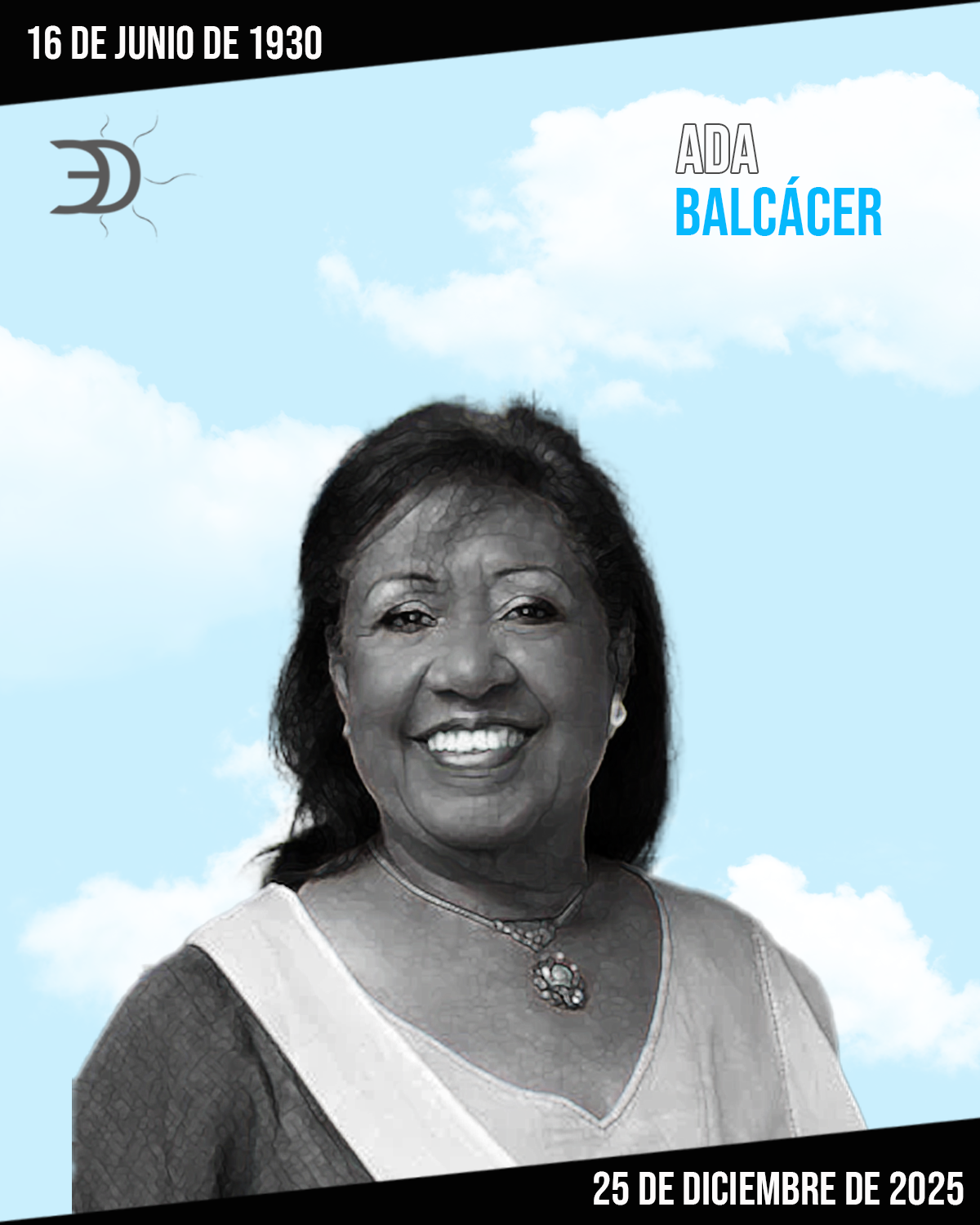
Ada Balcácer represents a foundational chapter of contemporary Dominican art: an artist who transformed adversity into method and Caribbean light into a personal visual language. She died in Miami between December 24 and 25, 2025, at 95, and the news felt like the silencing of a voice we assumed was structural.
Balcácer was not only a painter. She was a teacher of generations at the School of Fine Arts and the Autonomous University of Santo Domingo, a recipient of the National Prize for Visual Arts, and a designated Cultural Reserve of the Nation. After losing her left arm in a horseback-riding accident, she went on to define six decades of work rather than retreat from them. Honored in life with the retrospective Wings and Roots, she demonstrated that her art was not elitist display but a tool for identity, myth, and Caribbean memory. In that sense, Balcácer has not “left”; she built a school of thought that endures.
Read the article: Remember the Legacy of Ada Balcácer, Master of Dominican Art and Architect of a Distinct Caribbean Visual Language
Cierre: lo que se nos fue… y lo que nos toca cuidar
Si algo conectó estas once despedidas fue lo mismo que siempre conecta el arte dominicano: la necesidad de contarnos. Se nos fue gente que cantó, filmó, pintó, actuó, documentó y escribió para que el país se entendiera a sí mismo —a veces con alegría, a veces con rabia, a veces con memoria dura.
Y lo que queda es claro: cuidar lo que construyeron. Sostener instituciones, formar nuevas voces, proteger archivos. Porque cuando se apaga la memoria, se apaga el país.
________
Related
José Cestero: The Expressionist Soul of Dominican Visual Art
Family Spices with Cuban Dominican Artist Julisa Mugica
Tragedy at Jet Set Club in Santo Domingo
A Goat, a Nobel, a Novel and a Snake
Con un pasaje de ida Agliberto Meléndez hace su partida y fallece a los 82 años
«Rubby Infinito»: Homenaje histórico celebra la leyenda del merengue en el Teatro Nacional