
By Nelson Santana
January 6, 2026
Lea en español: Imponen impedimento de salida a dominicana acusada de «ultraje» al Himno Nacional y el caso reabre el debate sobre libertad de expresión
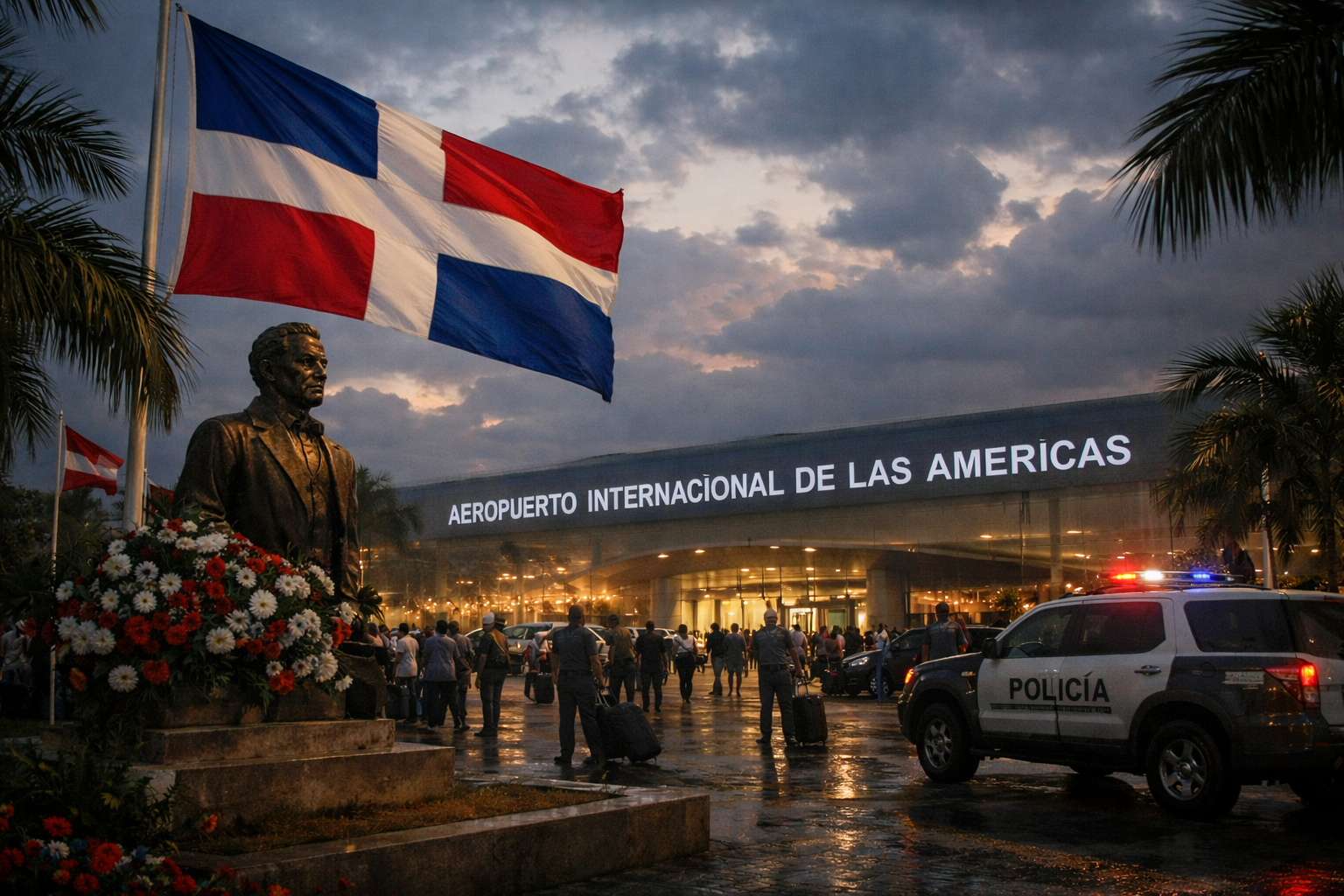
Alicia Anabel Santos Díaz was arrested at Las Américas International Airport (AILA).
A court ordered periodic reporting and a travel ban while the case proceeds.
Prosecutors base the charge on Law 210-19, which defines “insult” as altering the anthem’s lyrics; penalties range from one to three months in prison and a fine.
The investigation also references Yoseli Castillo Fuertes and a cultural event in the Colonial Zone where a version with altered lyrics was allegedly performed.
SANTO DOMINGO. A court ordered three months of periodic reporting for Alicia Anabel Santos Díaz, who is accused of insulting the National Anthem after allegedly altering its lyrics at a cultural event. The case has reignited debate over the limits between artistic expression and respect for national symbols.
Santos Díaz, a U.S. resident, was arrested last week at Las Américas International Airport (AILA) pursuant to a judicial order issued months earlier. The arrest was carried out under Judicial Order No. 2025-AJ0051862, issued on August 7, 2025, by Judge Fátima Veloz of the Tenth Investigative Court of the National District.
The investigation also involves Yoseli Castillo Fuertes. According to the Public Prosecutor’s Office, both defendants organized the circulation of a text titled “Birds, lesbians and queers—fly!”, an event during which attendees were invited to stand and sing what the organizers called the Dominican “National Anthem,” using the same music but with altered lyrics. The event reportedly took place in one of the halls of the Centro Cultural de España in the Colonial Zone.
Prosecutors ground the charge in Law 210-19, which regulates national symbols. Article 37 defines “insult to the National Anthem” to include actions such as “changing its lyrics and musical timing.” Those who commit an insult against the proper use of any national symbol may be punished with one to three months in prison and a fine of five to twenty public-sector minimum wages. The same law establishes that the justice of the peace court has jurisdiction over violations of this statute.
The case began after formal complaints were filed by the Permanent Commission of Patriotic Anniversaries, the Instituto Duartiano, and other civic organizations.
Beyond the case file, ESENDOM—which addressed the issue in an opinion piece when the controversy first erupted—summed it up with an uncomfortable truth: in the Dominican Republic, freedom of expression operates “with terms and conditions.” The case reflects a recurring tension: what may be interpreted as artistic performance within the community abroad (e.g., in the United States) contexts can activate the criminal justice apparatus in the Dominican Republic. Law 210-19 applies throughout the national territory, including diplomatic representations abroad.
The proceedings continue. What is now under debate is no longer only whether an “insult” occurred in strict legal terms, but how much space exists for symbolic dissent in a democracy when it touches what is considered sacred: homeland, morality, and national identity.
________
Relacionado
15 artistas dominicanos del Top 25 de ESENDOM que debes conocer: La Fiera Típica
Imágenes del rechazo de la comunidad LGBTQ a la homofobia institucional
EE.UU. recomienda seguro de viaje para turistas en República Dominicana