
By ESENDOM
January 5, 2026
Lea en español: Abinader reafirma rechazo a Maduro y vincula postura con impacto migratorio regional
Key Points
President Luis Abinader reiterated that the Dominican Republic “will always stand on the side of democracy” and does not recognize the legitimacy of Nicolás Maduro’s proclamation following the July 2024 elections.
The Dominican government frames its position as a continuation of the Santo Domingo Declaration (August 2024), which called for respect for the will of the Venezuelan people.
The statement comes amid heightened regional tension following the events of January 3, 2026, in Venezuela, with migration and security implications for the Caribbean.
For the Dominican Republic, the issue is not distant: there is a significant Venezuelan population in the country, and any escalation increases pressure on public services, migration regularization, and internal political discourse.
SANTO DOMINGO. – President Luis Abinader reiterated this weekend that the Dominican Republic maintains its non-recognition of Nicolás Maduro following Venezuela’s disputed elections of July 2024. In a message posted on X, the president stated that the country “will always stand on the side of democracy, wherever it may be, whenever it may be, and whoever it may be against,” while confirming that his government is closely monitoring developments in Venezuela.
The statement follows the diplomatic line established in the Santo Domingo Declaration of August 2024, a document that demanded respect for electoral results and defended democratic principles, human rights, and fundamental freedoms in Venezuela. The Dominican government presents its stance as continuity in foreign policy rather than a reactive response to the immediate situation.
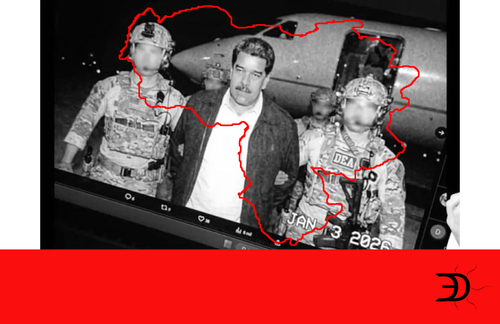
This reaffirmation comes at a moment of heightened regional tension, following the recent escalation in Venezuela and the announcement by the United States government regarding the “capture” of Nicolás Maduro. The events of January 3, 2026, marked a turning point in the Venezuelan crisis, elevating it from a prolonged political dispute to a scenario with military, diplomatic, and humanitarian implications for the entire region.
For the Dominican Republic, this is not a distant scenario. The country hosts the largest population of Venezuelan migrants and refugees in the Caribbean, and each episode of political or military escalation in Venezuela tends to translate into new migration flows. Regional experience shows that when the conflict intensifies, pressures increase on migration regularization, informal employment, public services, and domestic political discourse in host countries.
Abinader added a note of historical solidarity between the two nations, offering collaboration to help restore “democracy, peace, and national harmony” in Venezuela. The message seeks to balance a commitment to democratic values with regional stability, acknowledging that any deepening of the Venezuelan crisis directly affects the Caribbean.
Domestically, the statement carries practical weight. The Dominican Republic faces growing pressures related to Venezuelan migration, with effects on public services, the labor market, and migration regularization. By positioning itself early, the government aims to shape the narrative before internal debate intensifies on these issues—particularly if a new wave of migration follows the events of January 3, 2026.
For the Dominican Republic, defending democracy in Venezuela is not merely a matter of principle, but a decision with concrete consequences. Migration, regional stability, international cooperation, and the management of internal tensions converge on the same board. The challenge for the Dominican government will be to sustain coherence between discourse and action: maintaining a firm foreign policy stance while retaining the capacity to manage the collateral effects that a prolonged crisis may generate within the country.
⸻⸻
Relacionado
Estados Unidos ataca Venezuela y anuncia «captura» de Maduro: impacto regional y migratorio
Pete Hegseth Announces U.S. Military Deployment in Santo Domingo
Eva Golinger Denounces the Maduro Dictatorship and Rejects US Intervention
Paliza Defends a “New Course” Against Impunity, but the Public Demands a Real Cleanup