
By Nelson Santana y Emmanuel Espinal
June 30, 2025
Leer en español: Sammy Sosa regresa a casa: Un momento de redención en Wrigley Field
Sammy Sosa Comes Home after More than Two Decades of Unjust Institutional Neglect
After more than twenty years in exile, Samuel Sosa Peralta returned to where he always belonged. On June 20, 2025, when his feet touched the sacred grass of Wrigley Field once more, it was not just an athlete coming home: an entire nation was celebrating the return of their most beloved ambassador.
The Beginning: Building a Legend from San Pedro de Macorís
Born in San Pedro de Macorís on November 12, 1968, Sosa embodied the dream of millions of young Dominicans from an early age. His philosophy was always revolutionary: to turn the diamond into his kingdom and demonstrate that Caribbean talent could conquer any stage.
His rise was no coincidence. With unwavering determination and that smile that became his trademark, the young man from San Pedro transformed every plate appearance into a statement of principles. It was not just about hitting balls; it was about overcoming barriers, prejudices, and limitations imposed on Latino players.
The Epic Duel: When David Faced Goliath in 1998
The 1998 season was not simply a sporting competition. It was the moment when Sosa placed the Dominican Republic at the center of the world stage. His historic rivalry with Mark McGwire to surpass Babe Ruth’s single season record of 61 home runs became something bigger than baseball: it was an epic battle that resurrected the heart of an American nation wounded by labor strikes.
While McGwire represented U.S. American tradition, Sosa symbolized the new face of the Major Leagues: multicultural, charismatic, and genuinely human. Each of his home runs was a victory for all immigrants who arrived in the United States with dreams in their suitcases and determination in their souls.
Building an Indelible Legacy
The numbers speak for themselves, but they transcend statistics. With 545 home runs wearing the Cubs uniform, Sosa did not just accumulate records; he built cultural bridges. His multiple seasons surpassing 60 homers and his magnetic charisma transformed him into something more than an athlete: he became a cultural phenomenon that redefined what it meant to be a Latino sports star in the United States.
His impact was revolutionary. Before Sosa, Latino players, especially those of Dominican descent, were acknowledged as being talented but invisible in baseball’s mainstream narrative. Of course, Roberto Clemente, Orlando Cepeda, Sosa’s compatriot Juan Marichal, and countless other players were recognized. However, Sosa’s presence pushed Latino blood into the mainstream, demonstrating that Caribbean passion and sporting excellence could coexist in perfect harmony.
The Years of Exile: When Ingratitude Stained History
The bitter departure of 2004 marked the beginning of a painful chapter. The stigma of the steroid era, which affected an entire generation of players, was especially harsh on Sosa. While other players from his era received forgiveness and recognition, he was demanded a public apology that, out of personal dignity, never came on the terms demanded.
For more than two decades, the Cubs ignored the man who had brought their franchise to glory. It was a historic injustice that hurt not only Sosa but the entire Dominican community that saw him as their most dignified representative in the Major Leagues.
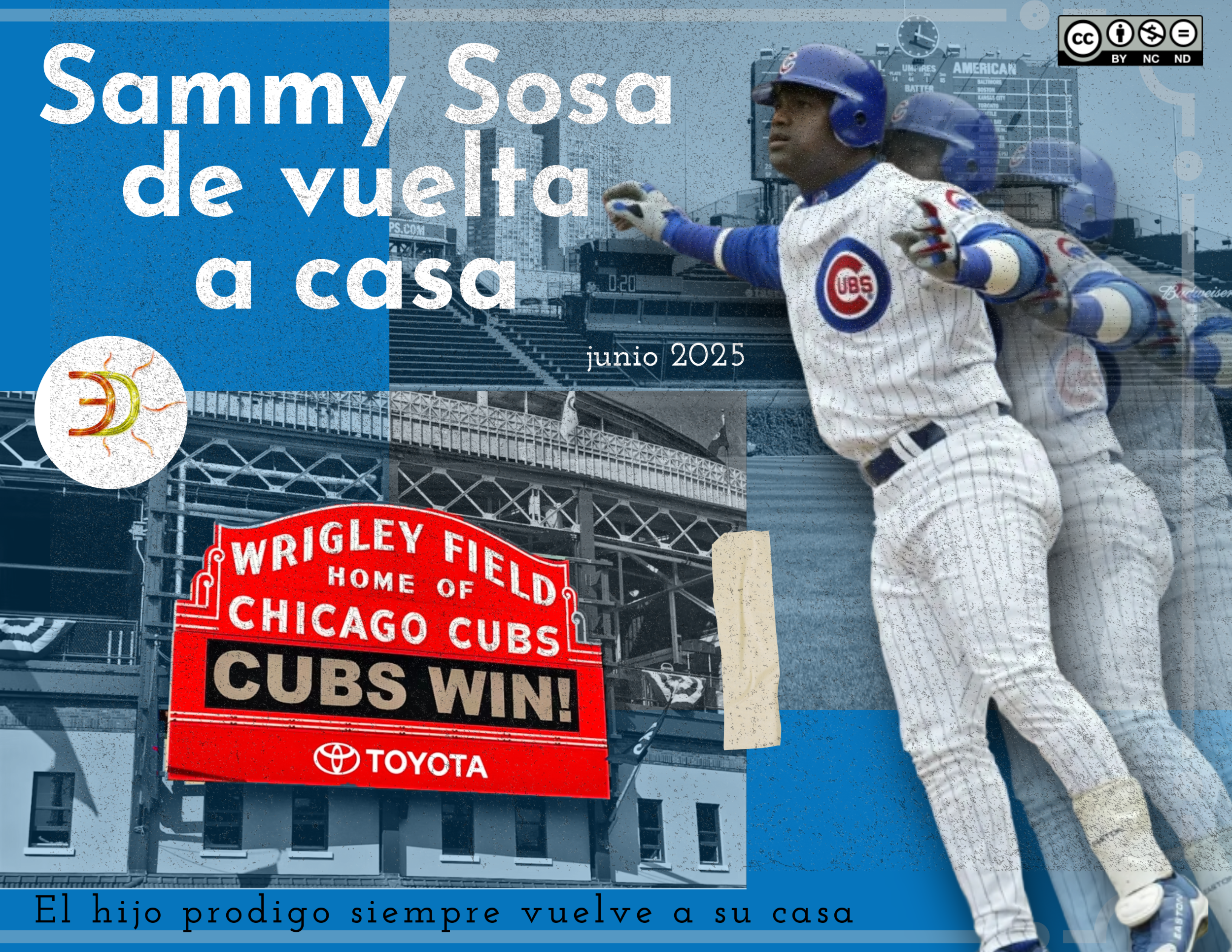
Collage of photos: Esendom
The Moment of Redemption: 2025, the Year of Belated Justice
As Dominican wisdom teaches, time puts everything in its place. In 2025, the Cubs finally made the right decision and extended the invitation that should have come decades earlier. Sosa’s response was that of a true champion: elegant, humble, and full of class.
“This is my home,” he declared with a mixture of nostalgia and pride that encapsulated decades of forced silence. The stadium responded with an ovation that lasted several minutes, confirming what had always been evident: Sosa’s true home had never been anywhere other than Wrigley Field.
The Embrace of a Community That Never Forgot Him
The fans’ reception was the most powerful testimony that authentic legends transcend temporary controversies. The chants of “Sammy! Sammy!” resonated like a hymn of vindication, demonstrating that people’s genuine love surpasses any institutional silence.
The contained tears in his eyes reflected not only the emotion of the moment but the liberation from years of unjust ostracism. It was the image of a man who had kept his dignity intact while waiting for history to do justice.
A Legacy That Transcends Statistics
Sosa’s return represents something much deeper than a simple sporting reconciliation. It is the belated but necessary recognition of a man who elevated the Dominican Republic’s name to unreachable heights. It’s confirmation that Dominican talent, regardless of the adversities faced, can never be erased from the universal history of sports.
For new generations of Dominican players, Sosa’s story contains invaluable lessons: that sporting excellence must be accompanied by personal dignity, that obstacles are temporary, but legacy is eternal, and that maintaining personal integrity is worth more than any immediate recognition.
Looking to the Future: A Symbol of Resistance and Authenticity
Today, in Chicago and in every corner of the Dominican community, we celebrate more than the return of an exceptional player. We celebrate the vindication of a symbol, historic justice for a cultural ambassador, and confirmation that true legends, though temporarily silenced, never lose their shine.
Sosa’s smile, intact after decades of adversity, his humility refined by time, and the warm reception from a loyal fanbase constitute definitive proof that authenticity always triumphs over political convenience.
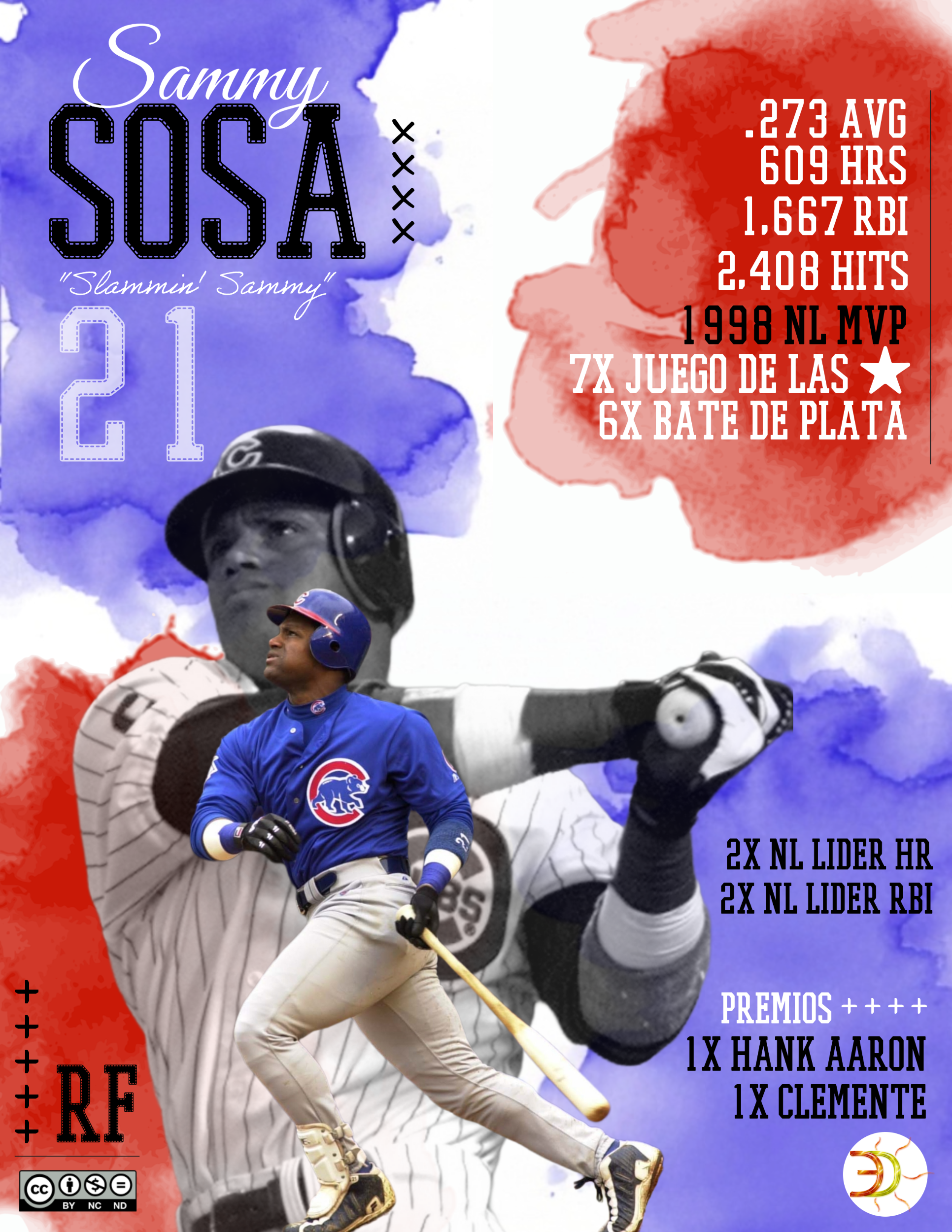
Statistics of Sammy Sosa’s career
Collage de fotos: Esendom
Conclusion: Celebrating the History We Write Together
Sammy Sosa’s story does not end with his return to Wrigley Field; it merely begins a new chapter of deserved recognition. His experience reminds us that in sports, as in life, justice may arrive late, but when it comes, it must be accompanied by sincere gratitude and historical memory.
In a world where celebrities crumble at the first sight of adversity, Sosa’s trajectory shines as a beacon of resistance, authenticity, and unbreakable dignity. It is not just a story of sporting survival; it’s a masterful lesson on how to maintain personal integrity when the entire system seems to be against you.
His legacy transcends the 609 home runs of his career, or the multiple records established. His true contribution was demonstrating that a Dominican from San Pedro de Macorís could conquer the heart of Chicago, of the United States, and of the entire world, simply by being authentic.
Like the greats of our history who have known how to turn adversity into strength, Samuel Sosa Peralta demonstrated that truth, though late, always finds a way to shine. His story reminds us that justice may be delayed, but it can never be denied indefinitely.
Today we celebrate Sammy. Tomorrow, his example will continue inspiring generations of young Dominicans who dream of conquering the world without ever losing their essence.
Brief Biography of Sammy Sosa
Ramón Samuel Sosa Peralta, globally recognized as Sammy Sosa, was born on November 12, 1968, in the town of Consuelo, Dominican Republic. Raised in a family of limited resources, Sosa dedicated his childhood to shining shoes and cleaning vehicles to contribute to the family economy after his father's premature death. His trajectory, from childhood poverty to becoming an iconic figure in baseball, represents one of the most moving narratives in the sporting world.
Signed by the Texas Rangers at age 16, he made his Major League debut in 1989 at the legendary Yankee Stadium. However, it was wearing the Chicago Cubs uniform where he reached his professional peak. Sosa became a legendary figure for the franchise: he received seven All-Star selections, won the National League Most Valuable Player award in 1998, and starred alongside Mark McGwire in the epic pursuit of the home run record that revived baseball after the 1994 labor stoppage. He remains the only player in Major League history to achieve 60 or more home runs in three different seasons (1998, 1999, and 2001), totaling 609 home runs during his professional career.
His personal magnetism, devastating hitting, and emblematic hop when connecting home runs established him as a favorite of fans around the planet, particularly among Latino and Dominican communities. Beyond the diamond, Sosa distinguished himself through his philanthropic commitment: he was designated as an ambassador by the Dominican president and personally delivered assistance to disaster victims in his homeland.
Although his professional career was stained by speculation about the use of performance-enhancing substances and his conflicted departure from the Cubs, Sosa invariably maintained that he competed with dedication and fervor. In 2025, he offered public apologies and achieved reconciliation with Cubs management, being received with acclaim at Wrigley Field and being incorporated into the organization's Hall of Fame.
Sammy Sosa’s heritage transcends statistical figures. He constitutes a cultural emblem, representation of Dominican tenacity and honor, and faithful testimony that from the most modest beginnings, it’s possible to achieve excellence.
Relacionado
Albert Pujols se convierte en el líder de jonrones por un extranjero con un swing
Teoscar Hernández se convierte en el campeón del Derby de Jonrones 2024
Los nuestros hicieron del Juego de las Estrellas 2017 un espectáculo
Silenciosamente Beltré entra al exclusivo club de 3000