

Collage: ESENDOM
By Amaury Rodríguez
20 de noviembre de 2026
TWO YEARS AGO, the author of this fictional work moved to a new apartment in Manhattan and stumbled upon a shoe box full of miscellanea: an incomplete stanza printed on handmade paper, a bottle opener in the shape of a llama, a menu from a Vietnamese restaurant on Walker street, a mixed cassette tape and six imaginary film scripts scrawled by hand in red ink. It took two long years to transcribe a brief sketch of each film, and re-imagined each film as one would envisage the borders of a nation, and finally, publish said transcription here for the world to sit down, read and feel.
-The Editors
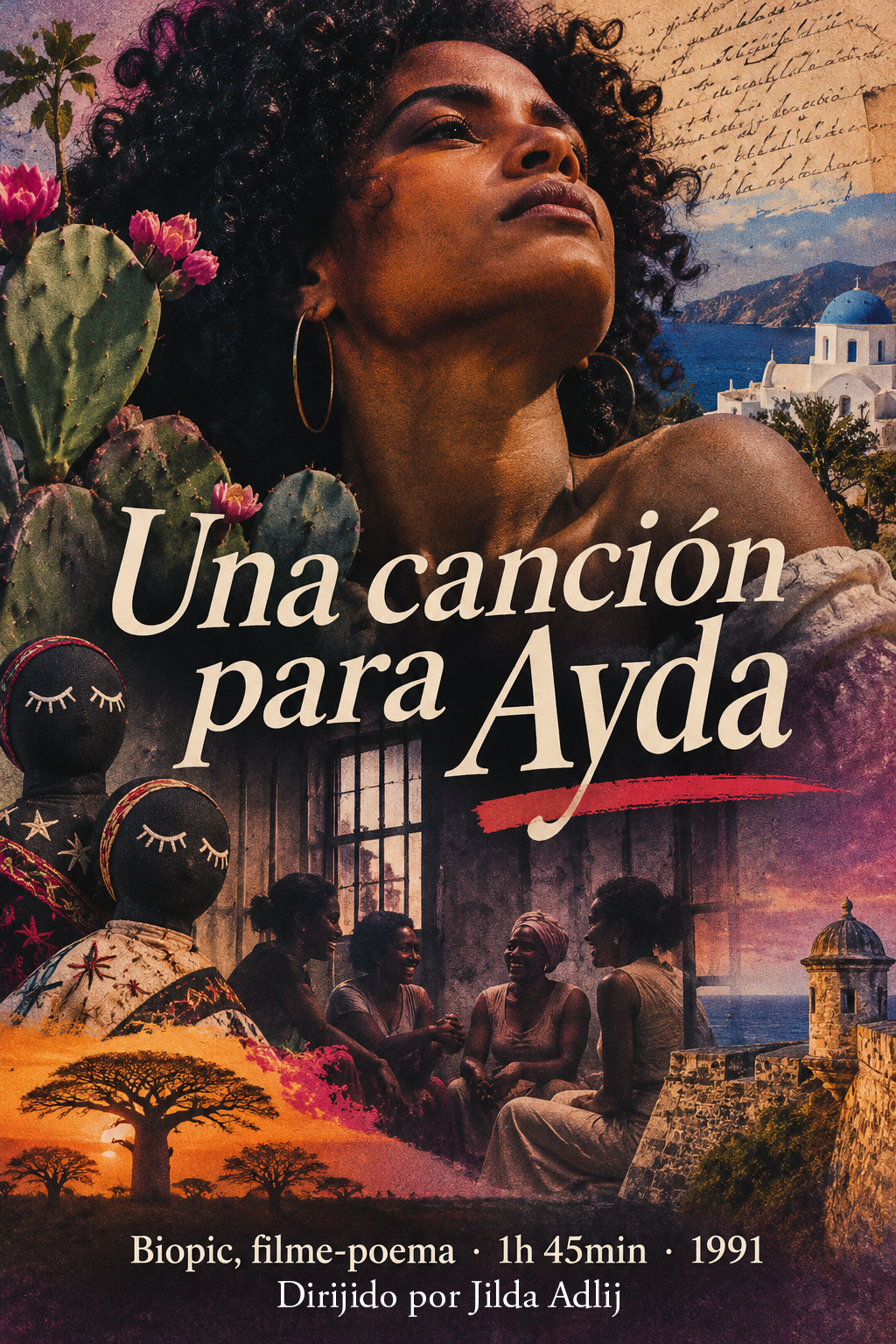
Movie Poster (AI Content)
A Song for Ayda (1991)
Directed by Jilda Adlij
Biopic, filme-poème
1h 45 min.
A Song for Ayda (1991)
This film depicts the protracted struggle of a poet for recognition in a patriarchal world. Challenging censorship and a repressive state apparatus, Ayda joins with others in the search for a lingua franca of desire to express same-sex love while writing, devising and performing aktion or secret codes in the name of total freedom. Imprisoned after doing something and siding with the enemies of the state, Ayda embarks on organizing other political prisoners who share old songs, riddles and the secret art of growing cacti. With the help of her new compañeras—who enjoy drawing stars and eyelashes on black, faceless dolls as well as role playing during trance sessions induced by herbal tea and sleepless nights—the poet is able to identify the man or literary critic and/or government bureaucrat, who snitched on her. Shot in Greece, Santo Domingo and Ghana over a period of five decades, equal parts travel-diary and biopic, and ultimately, a clearly expressive meditation on literature, the film is also a portrayal of the forgotten lives of rebels, thoughtcrime, love, sexual desire, joy, language and the plight of black Dominican/Caribbean women. Featuring some of the most erotic scenes set to celluloid in Caribbean cinema, this film is a triumph of human perseverance, beauty and survival under extreme duress.
____________________________
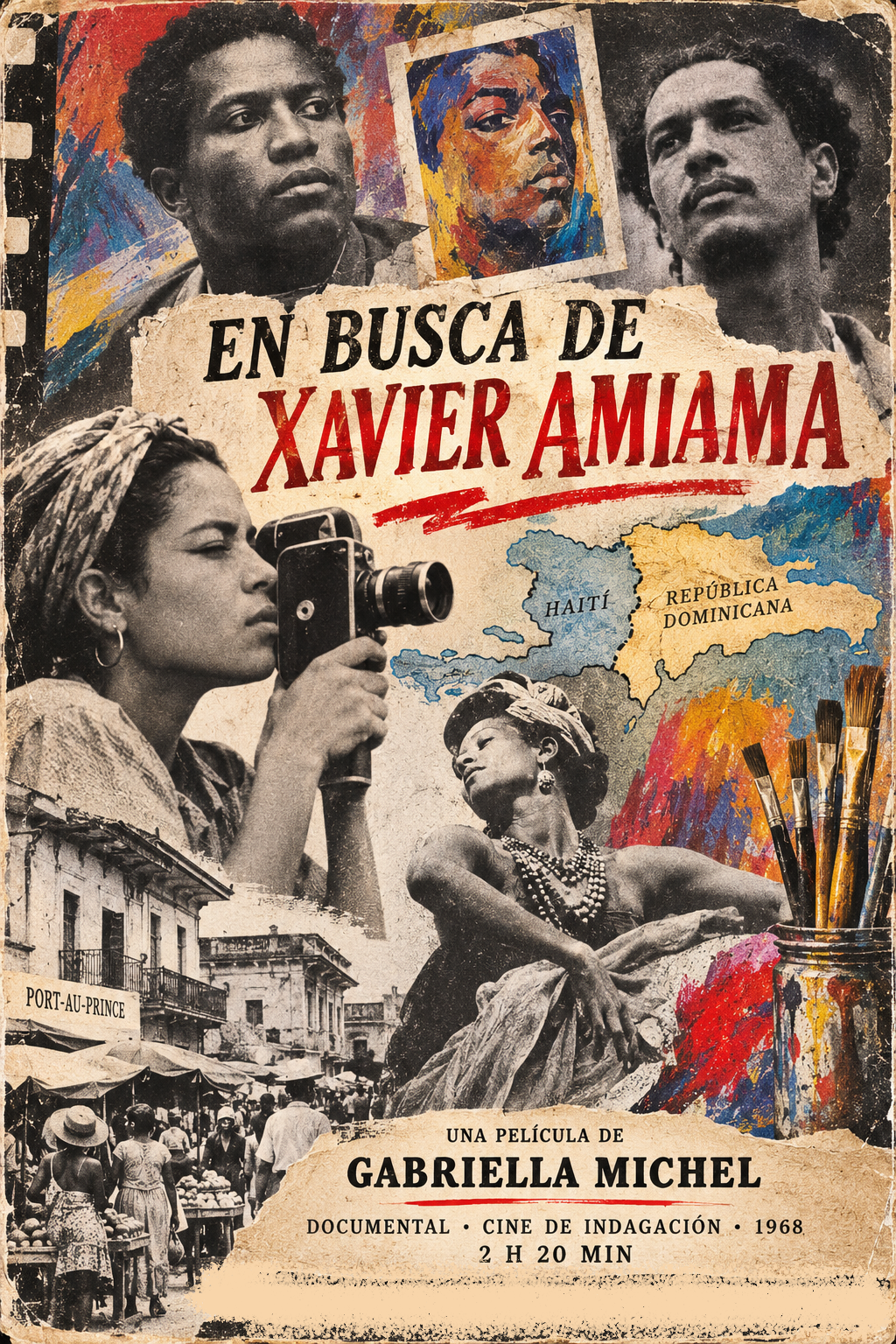
Movie Poster (AI Content)
In Search of Xavier Amiama (1968)
Directed by Gabriella Michel
Documentary, cinema of inquiry
2h 20 min.
Gabriella, an asthmatic art student, is visiting Haiti for her first time since her parents fled the country in the 1970s. In Port-Au-Prince, our young hero meets the abstract expressionist painter Dieudonné Cédor. Curious about his family background, artistic career and his predilection for a Caribbean color palette, the US-born art student decides to interview Cédor as well as his friends, relatives and the art historian Lerebours. At one point, and by mere chance at an old street market, Gabriella comes into contact with the Dominican-born painter Xavier Amiama, who turns out to be Cédor‘s long lost brother. However, upon meeting Gabriella, Amiama is too hesitant to share his life story, limiting his interaction with her to showcase a never-before seen series of gouache portraits of Cédor as a young artist, a project he has been working on for twenty years.
Bedridden after a sudden asthma attack during a four-hour long, memorable and cathartic tribute to Katherine Dunham, Gabrielle is soon coming to the realization that the artistic work of these two painters (one Haitian, the other Dominican) —born on separate sides of the island as a consequence of the “sharpening knife” of partition and colonial violence—kopleman one another. Afraid that the documentary will remain unfinished because of her worsening health prognosis, Gabriella is under the impression that her viewers won’t catch the profound meaning of the revelatory intent that is underlying her artistic work . Sooner or later, the young Haitian filmmaker will have to come to terms with her true identity in the hopes of passing on her cinematic work to others: others who will be able to fully complete her vision and add more findings to the public record of cinematic popular history. In the meantime, the two artists also worry for their niece’s health and ultimately, the possibility that their documentarian has only a few days to live.
____________________________
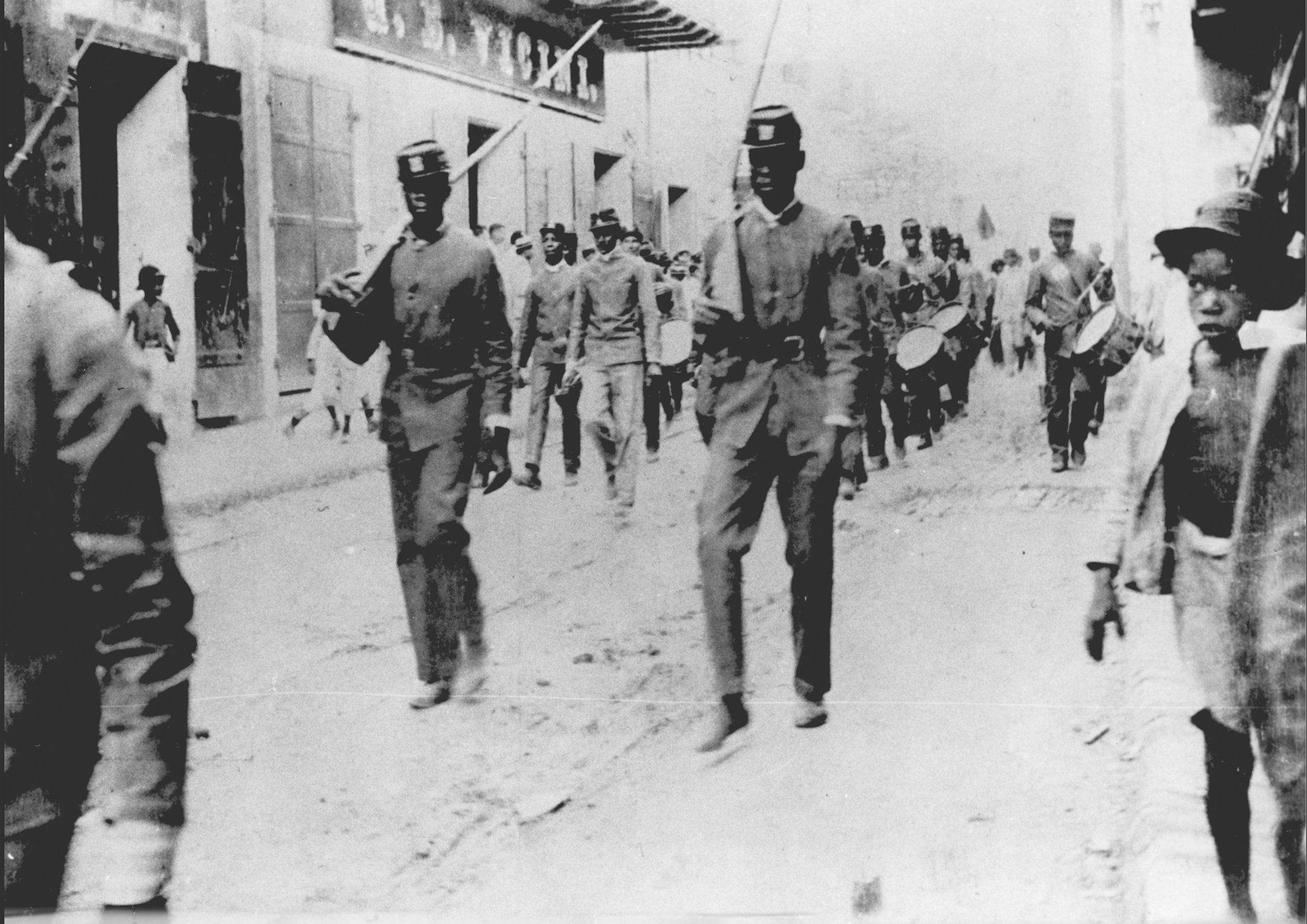
Still image of the lost Dominican film The Black Masons from 1946. Source: The Kiskeya Encarnación estate.
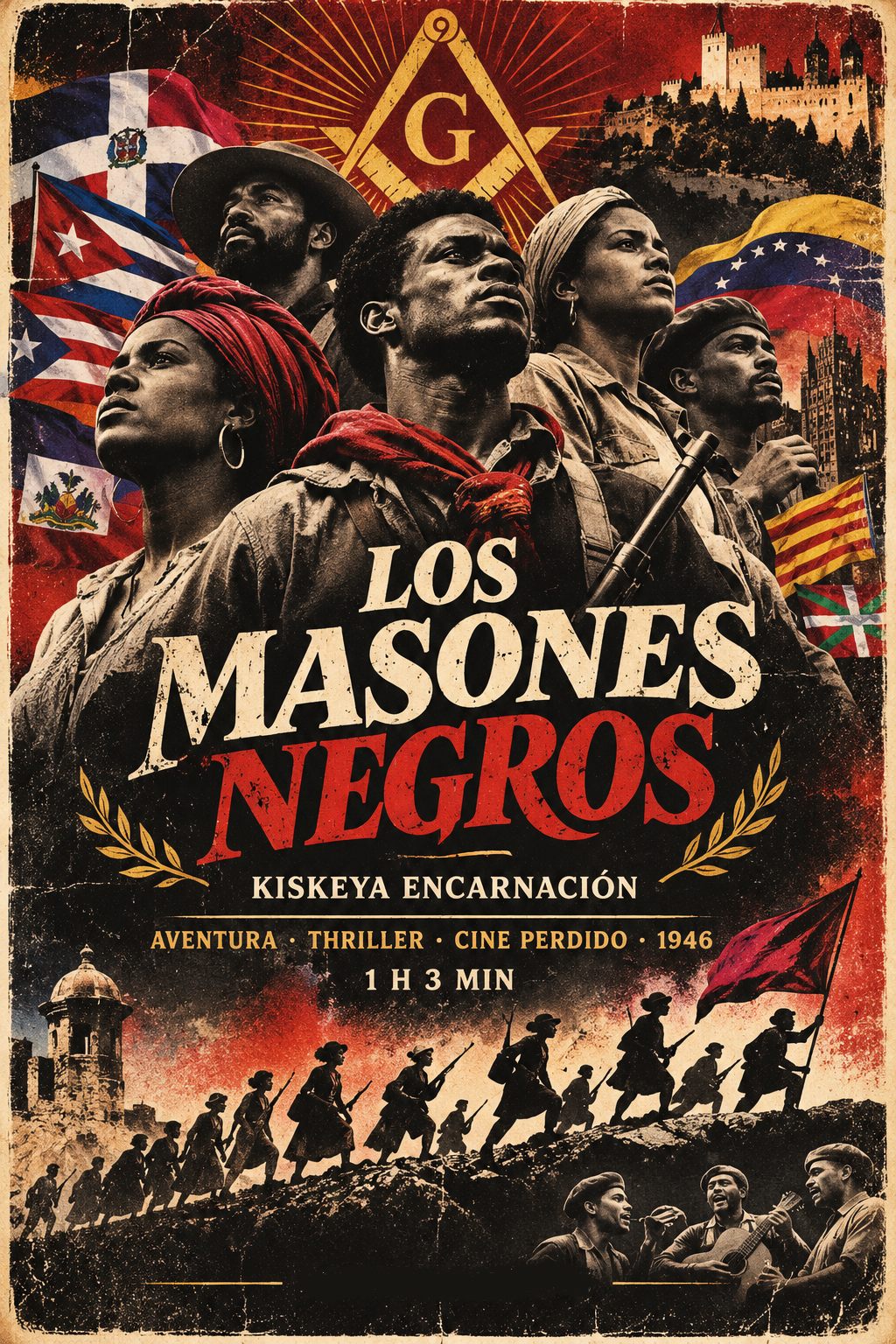
Movie Poster (AI Content)
The Black Masons (1946)
Directed by Kiskeya Encarnación
Adventure, Thriller, lost cinema
1h 3 min.
This lost film (originally titled Los masones negros) represents one of the most captivating portrayals of anti-colonialist resistance from a Dominican standpoint. The storyline is simple but complicated: a guerrilla expedition organized by black masons from Cuba, Puerto Rico, Santo Domingo, Venezuela, Haiti, New Orleans and Harlem is heading to Spain to overthrow the monarchy. The internationalist fighters fight in the people’s militias alongside the oppressed and colonized nationalities of the Spanish state who teach them songs in galego, habla canaria, euskera, català, etc. In reciprocity, the anti-imperialist masons share games, riddles, poetry, cooking recipes, guerilla warfare, art, music and dance. The rebel contingent also encounters moments of sadness after witnessing the faces of misery, the poverty, the despair of the old and the sick. In tandem with their political program, the black masons spread anti-colonialist and anti-monarchist revolts to neighboring Morocco. Although the Spanish title implies that the masons in this picture are all male, that is far from the truth as women play a central role in the convites (underground cells) sinking roots in Europe. The film delves into the secretive world of Caribbean masonry to deliver an action-packed movie that brings to the screen (for the first time) the hidden human drama and codes of conduct (known as códigos de resistencia negra) by which the underground resistance trained, organized and mobilized its fighters after the European conquest of Abya Yala.
____________________________
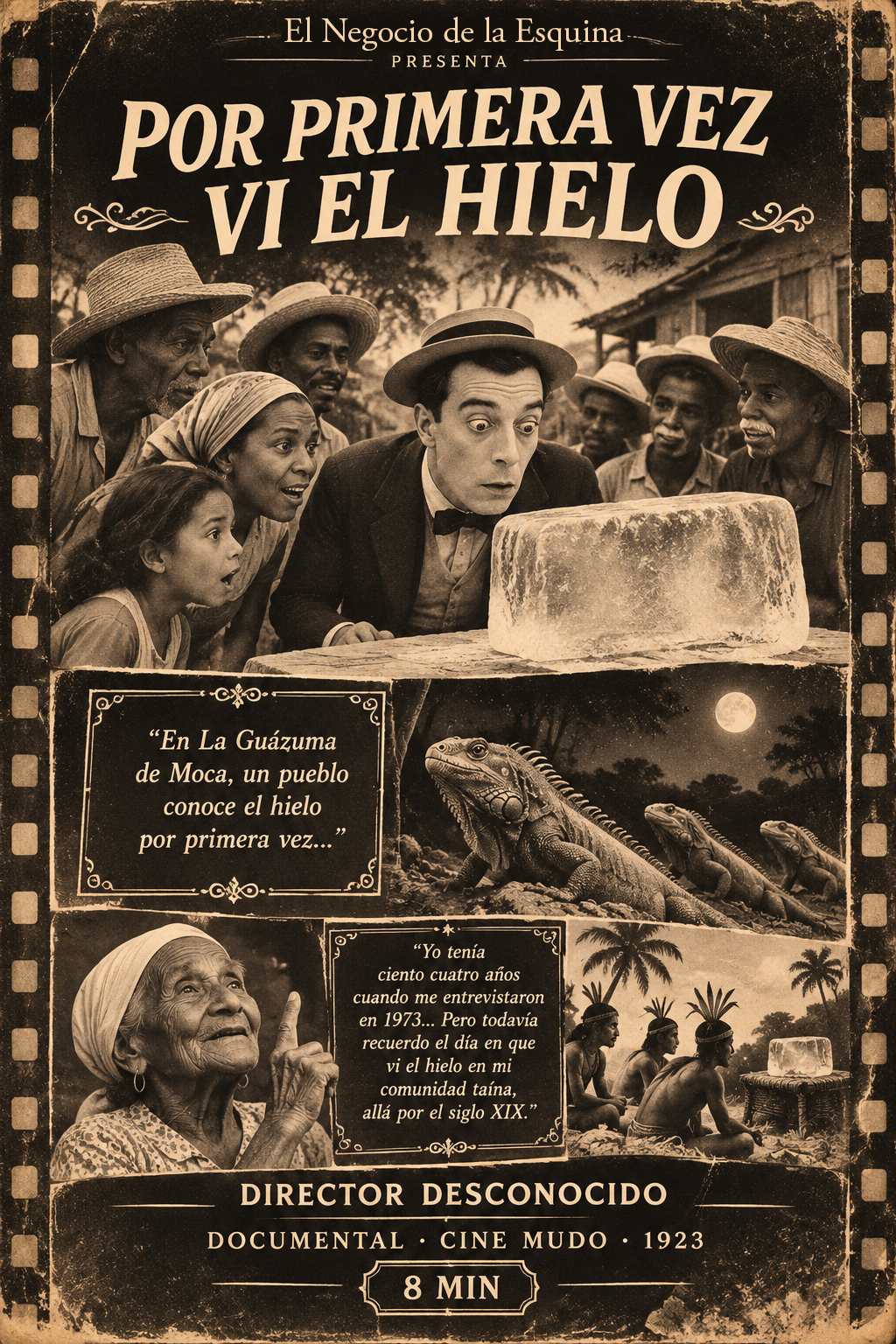
Movie Poster (AI Content)
Por primera vez vi el hielo (1923)
Director unknown
Documentary, silent film.
8min.
Baffled by seeing ice for the first time (as the title suggests), a rural community in la Guázuma de Moca welcomes a stranger (with a striking resemblance to Buster Keaton) who cannot get over the sight of slow-moving, gigantic iguanas that come out surreptitiously in the heat of the night. Unexpected plot twist: a second part of this film found in 1973 contains an interview with a 104 year old woman who shares her fond memories of seeing ice in her Taino community circa 1800s.
____________________________
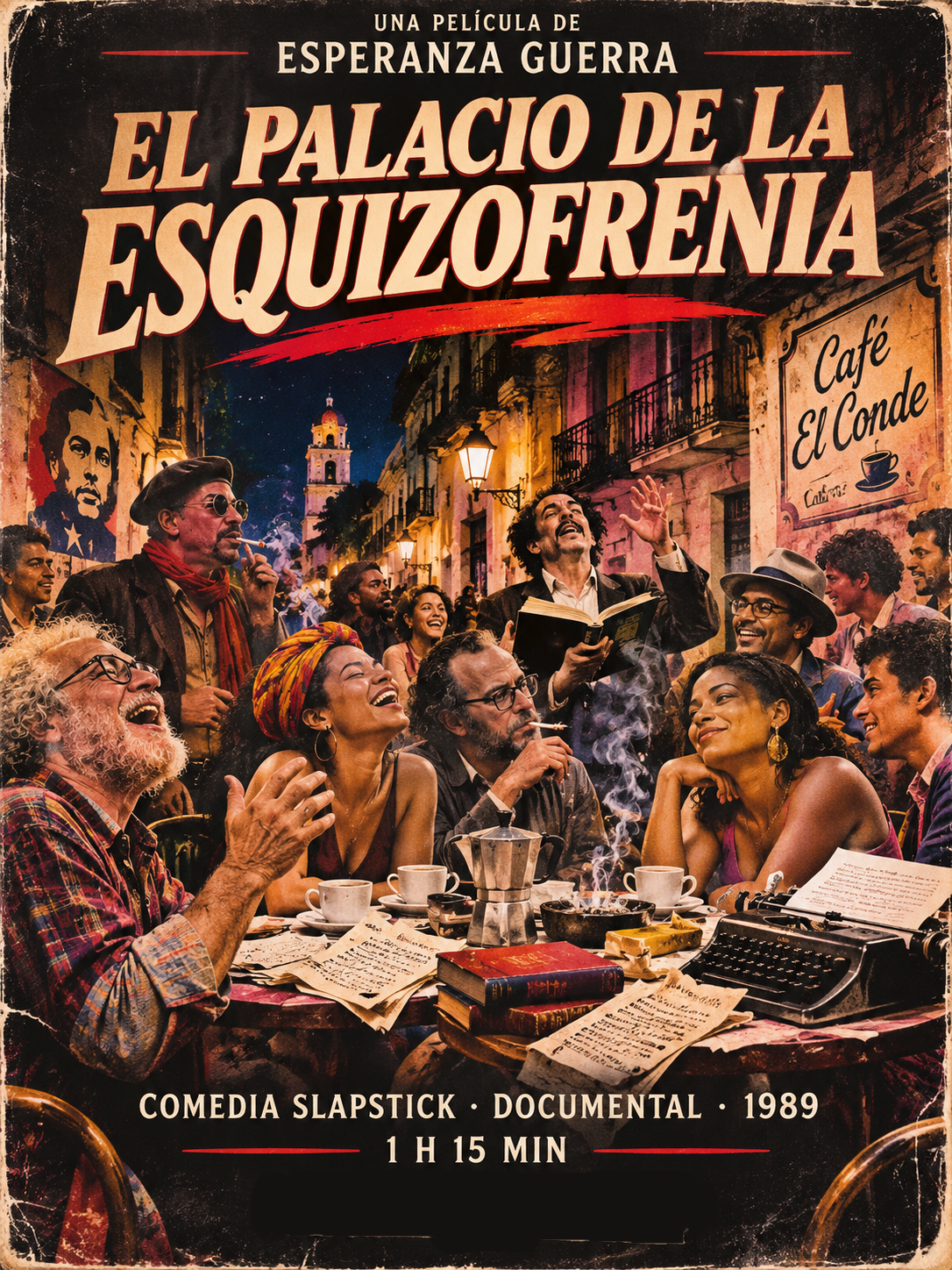
Movie Poster (AI Content)
The Palace of Schizophrenia (1989)
Directed by Esperanza Guerra
Slapstick comedy, documentary.
1h 15 min.
Taking its title from a short story by Pedro Conde Sturla (El palacio de la esquizofrenia), the main setting of this film is a café restaurant in the heart of bohemian Calle el Conde in the Dominican capital, the Palace of Schizophrenia, the place to be and be seen; it is where the old bohemian poets, politicians, heretics and professionals gather to discuss the pressing issues of the day over coffee. The year is 1989 at the very end of the Cold War. After calling for an emergency meeting, the poets of yesteryear and the young poets of today quarrel about the future of aesthetics, re-assessing the past at a time of transition, a period that brings to the fore the fragility of life and the lives of poets impacted by socio-political earthquakes. All seriousness aside, the film contains dashes of the absurd, cultural references, gossip, endless discussions and of course, poetry readings, jokes and pranks that the poets play on each other as they inflate their egos and poke fun at each other's egos. The film makes the viewer explore and fall in love with the need to interact/socialize as a prelude to creation. In The Palace of Schizophrenia (a glimpse of Caribbean society) ideas do matter. This documentary manages to preserve—despite all the chaos—the collective memory of a literary cultural scene in all its grand ridiculousness and utter greatness.
____________________________
The Painting that You See (1984)
Directed by R. Morel
Film collage, slapstick comedy
1h 20 min.
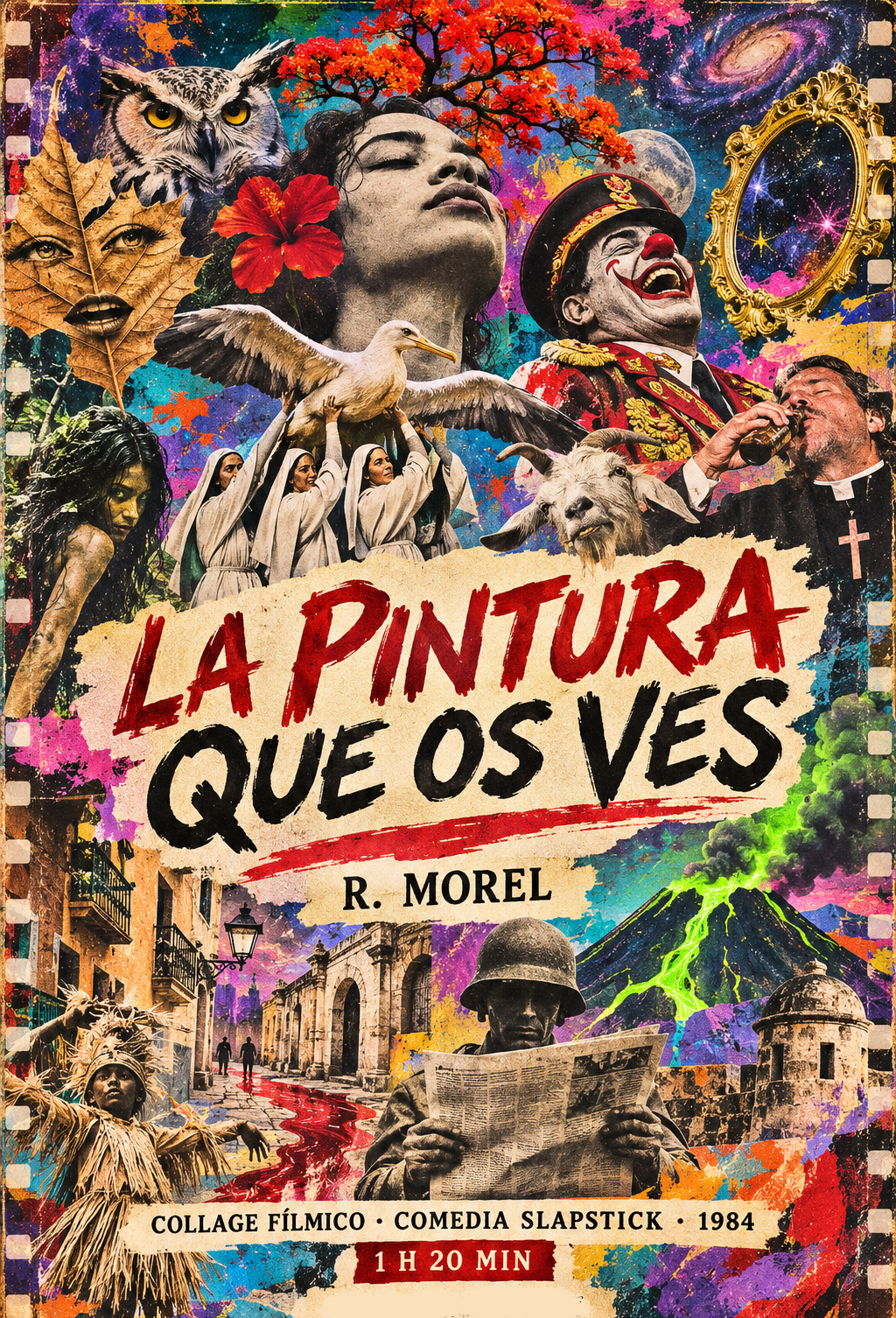
Movie Poster (AI Content)
This film (originally titled La pintura que os ves) is a collective work of pure madness and chance. The making of this film resembled a chain letter as local and international artists responded to a call to paint over found footage and create personal, intricate narratives. The end result will astound the viewer: from talking dried foliage and owls to clown dictators and drunken priests giving lap dances during military parades. Goats running away from the rainy season. Blood walking in circles in the Old Colonial city. Two knaves chase the capital city to the edge. The last areito dance, repetition repetition. Fractals. And flashbacks, it’s all in here. Ambar stones make love, generating unknown color combinations from fossilized DNA, neo paraules morphing/trying a jump into the screen as in a drip painting. Per one single tutumpote 100 beggars on the streets. Aubergine trees form a tight chorus. Loud molondrones asesinos pose as a national dish. Flying framboyanes, vengeance is theirs (jazz trumpets and raï harmonies in the background) contra axe murder. Punta Cana bombed: by bird droppings.
Chapita waste within compost playing cards with toxic earth. Rios de agua viva full of rotten corpses. Rendering of children (niñxs raiz) as espantapajaros protecting towns from conquistadores and their swords. King Carles and heir trapped inside a watercolor dream sweeping the floor. Eating waste. Letrina-like buffets prepared for the Spanish crown. Combo deguabinao, broken speak via music via intransigent pores. Then calm sets in. But only momentarily. A state of abreaction is the name of the hour: groups of nuns carrying a giant albatross on their backs climb a ceiba tree and commit mass suicide. Several ciguapas force a tyrant to eat frogs, kindly proceeding to shoot him on the head. The Caribbean Sea flicks like a lamp until it is emptied out of water. A crater appears. Green lava buries a mass grave. The Unknown Soldier reads a newspaper editorial. At the end (or the beginning?), image and reality collide as in an impending dance crash and nothing is as it seems, the film transports viewers beyond the galaxy to invisible mirrors, doorways, ephemeral, incandescent and illuminating visiones on the big screen.
___